

Stretching and mobility are the most neglected aspects of gym training. Many athletes skip flexibility work entirely — and then wonder why their squat feels stiff, their shoulders ache after incline press, and their lower back tightens up on deadlifts. This guide shows how mobility training makes you a stronger, healthier, and better-performing athlete in 2026.
How Mobility Saved My Training
After four years in the gym, my body started rebelling. In the squat, I couldn't reach parallel without my heels rising. After incline press, my shoulder throbbed after every set. On the deadlift, my lower back rounded the moment the weight exceeded 120 kg.
I saw a physiotherapist, who told me directly: "You're strong but stiff as a board. Your hip flexors are like concrete, your thoracic spine has no rotation, and your ankles don't bend enough to squat properly."
I started doing 15 minutes of mobility work before every session and 10 minutes of stretching afterward. One month later, my squat deepened, the shoulder pain disappeared, and on the deadlift my back stayed neutral with weights 20 kg heavier.
I hadn't gained any strength — but I could use my existing strength better, because my movement patterns were free. It was an eye-opening experience.
"Mobility isn't the opposite of strength — it's the prerequisite for strength. Without adequate mobility, you can't use your strength optimally, and the body starts compensating in ways that lead to injury." – Pietari Risku, Founder of Tsemppi
Table of Contents
- Why is mobility so important for athletes?
- Stretching vs. flexibility vs. mobility — what's the difference?
- Types of stretching and when to use each
- Common problem areas and solutions
- Pre-workout mobility routine (dynamic)
- Post-workout stretching routine (static)
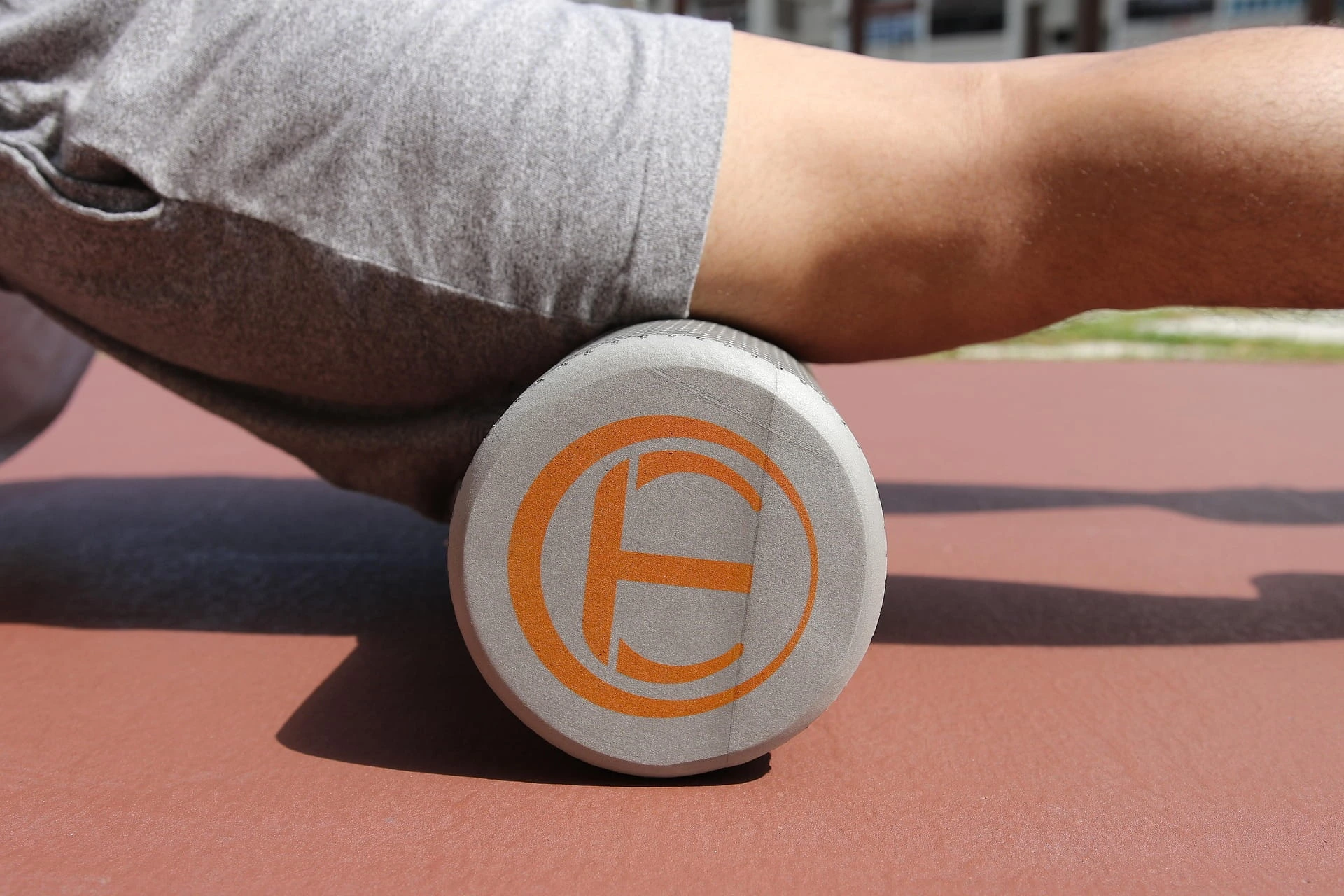
- Foam rolling — when and how?
- Mobility requirements for key lifts
- Complete weekly mobility program
- Mobility and injury prevention
- Mobility for desk workers
- FAQ
- Summary
Why Is Mobility So Important for Athletes?
Mobility isn't just "a yoga thing" — it's a foundational pillar of performance and health for every strength athlete.
The Science
Research demonstrates the benefits of mobility training for athletes: it improves range of motion (full ROM produces more muscle growth than limited ROM — Schoenfeld & Grgic, 2020), reduces injury risk by preventing compensatory movement patterns (Behm et al., 2016), improves performance (dynamic stretching before training increases force production — Behm & Chaouachi, 2011), and may speed up recovery by reducing muscle soreness.
Practical Benefits for Athletes
| Benefit | Practical example |
|---|---|
| Deeper squat | Ankle and hip mobility enables full depth |
| Pain-free bench | Thoracic and shoulder mobility eliminates pain |
| Better deadlift | Hip mobility enables a neutral spine |
| Fewer injuries | Adequate mobility prevents compensations |
| Better posture | Mobility balances tight muscles |
| Longer training career | Healthy joints = decades of training |
What Happens Without Mobility Work?
Strength training without mobility work typically follows this pattern: muscles get stronger but shorten, joints stiffen and range of motion decreases, the body starts compensating (lower back rounds in the squat, shoulder seeks extra movement in the bench), compensation leads to overuse injuries, and the injury forces a break — and you lose your gains.
Stretching vs. Flexibility vs. Mobility — What's the Difference?
These terms are often confused. Here's a clear breakdown:
Stretching: A passive or active elongation of a muscle. Goal: increasing muscle flexibility. Example: holding a static hamstring stretch for 30 seconds.
Flexibility: The passive range of motion of a joint — how far it moves with external assistance. Goal: increasing tissue extensibility. Example: how far someone else can push your leg during a straight leg raise.
Mobility: The active range of motion of a joint plus control throughout that range under load. Goal: the ability to use flexibility actively and in a controlled manner under load. Example: reaching full squat depth in a controlled manner with your own bodyweight.
Why Mobility Matters More Than Flexibility Alone
| Attribute | Stretching | Mobility |
|---|---|---|
| Type | Passive | Active |
| Effect | Muscle length | Muscle length + control + strength |
| Transfer to training | Poor | Direct |
| Injury protection | Moderate | High |
Practical rule: Passive stretching increases range of motion, but mobility work teaches your body to use that range under load. You need both.
Types of Stretching and When to Use Each
1. Dynamic Stretching
What: Controlled, movement-based stretches that take a joint repeatedly through its range.
When: Before training — always.
Why: Raises muscle temperature, activates the nervous system, improves performance, and prepares joints for loading (Behm & Chaouachi, 2011).
Examples: Leg swings (front-back and lateral), world's greatest stretch, arm circles, lunge with rotation.
2. Static Stretching
What: A stretch position held in place for 20–60 seconds.
When: After training or as a standalone session.
Why: Builds lasting mobility gains over time. Not before training — can temporarily reduce force production (Simic et al., 2013).
Examples: Hip flexor stretch, doorframe chest stretch, hamstring stretch, calf stretch.
3. PNF Stretching (Proprioceptive Neuromuscular Facilitation)
What: Alternates between static stretching and muscle contraction.
When: As a standalone session or after training. The single most effective method for increasing flexibility.
Why: Produces the fastest flexibility improvements (Sharman et al., 2006).
Basic technique (Contract-Relax): Stretch the muscle statically for 10 seconds, contract it isometrically for 6 seconds, relax and stretch deeper for 15–20 seconds, repeat 2–3 times.
4. Active Isolated Stretching (AIS)
What: Short (2-second), repeated stretches where the agonist contracts to stretch the antagonist.
When: Before training or as a standalone session.
Why: Uses reciprocal inhibition — when one muscle contracts, the opposing muscle relaxes.
When to Use Each
| Timing | Type | Duration | Purpose |
|---|---|---|---|
| Before training | Dynamic | 5–10 min | Range of motion prep, activation |
| After training | Static | 5–10 min | Maintaining and building mobility |
| Dedicated session | PNF, static, mobility | 20–30 min | Developing flexibility |
| Morning/evening | Easy static | 5–10 min | Relieving stiffness, posture |
Common Problem Areas and Solutions
Strength athletes tend to have predictable patterns of tightness from both training and desk work.
1. Hip Flexors (Iliopsoas)
Problem: Tight from sitting and squatting. Causes lower back pain and anterior pelvic tilt.
Symptoms: Lower back tightness, butt wink in the squat, discomfort standing for long periods.
| Exercise | Type | Duration |
|---|---|---|
| Half-kneeling hip flexor stretch | Static | 2×30–45 sec/side |
| Couch stretch | Static/PNF | 2×45–60 sec/side |
| Spiderman stretch with rotation | Dynamic | 2×8/side |
2. Thoracic Spine
Problem: Rounded from desk work and chest-dominant training. Limits incline press, overhead press, and lat pulldown.
Symptoms: Shoulder pain on bench, inability to get arms straight overhead, rounded posture.
| Exercise | Type | Duration |
|---|---|---|
| Thoracic rotation with foam roller | Mobility | 2×10/side |
| Cat-cow | Dynamic | 2×10 |
| Open book | Dynamic | 2×8/side |
| Foam roller thoracic extension | Mobility | 2×30 sec |
3. Shoulders
Problem: Pectorals and lats pull the shoulder into internal rotation. Limits incline press and overhead press.
Symptoms: Pain on incline press, difficulty getting into overhead press position, "tight" shoulders.
| Exercise | Type | Duration |
|---|---|---|
| Doorframe chest stretch | Static | 2×30 sec/side |
| Pass-throughs (stick/band) | Dynamic | 2×10 |
| Sleeper stretch | Static | 2×30 sec/side |
| Dead hang | Passive | 2–3×20–30 sec |
4. Ankles
Problem: Limited dorsiflexion — the most common reason heels rise in the squat.
Symptoms: Heels rising in the squat, knees unable to track over toes, needing a heel wedge.
| Exercise | Type | Duration |
|---|---|---|
| Wall knee mobilization | Mobility | 3×15 sec/side |
| Banded ankle mobilization | Mobility | 2×10/side |
| Calf stretch (straight knee) | Static | 2×30 sec/side |
| Calf stretch (bent knee — soleus) | Static | 2×30 sec/side |
5. Hamstrings
Problem: Tight from sitting. Limits Romanian deadlift and can cause lower back pain.
Symptoms: Can't touch toes with straight legs, lower back rounds before feeling hamstring stretch in RDL.
| Exercise | Type | Duration |
|---|---|---|
| Active straight leg raise | Dynamic | 2×10/side |
| Foot on bench hamstring stretch | Static | 2×30 sec/side |
| Romanian deadlift with light weight | Dynamic/mobility | 2×12 |
| Jefferson curl (light weight) | Controlled | 2×8 |
 Stretching and mobility exercises 2026
Direct mobility work toward problem areas — hip flexors, thoracic spine, shoulders, and ankles are the most common challenges for strength athletes.
Stretching and mobility exercises 2026
Direct mobility work toward problem areas — hip flexors, thoracic spine, shoulders, and ankles are the most common challenges for strength athletes.
Pre-Workout Mobility Routine (Dynamic)
Do this 5–10 minute routine before every training session. It replaces passive stretching and enhances performance.
Universal Warm-Up (all training days)
| # | Exercise | Sets × Reps | Notes |
|---|---|---|---|
| 1 | Jumping jacks or easy rowing | 1×60 sec | Raises heart rate and body temperature |
| 2 | World's Greatest Stretch | 2×5/side | Hips, thoracic spine, hamstrings in one movement |
| 3 | Inchworm | 2×5 | Hamstrings, core, shoulders |
| 4 | Hip circles | 1×10/direction/side | Hip joint mobility |
| 5 | Arm circles | 1×10/direction | Shoulder range of motion |
Additional Movements for Squat/Leg Day
| # | Exercise | Sets × Reps | Notes |
|---|---|---|---|
| 1 | Goblet squat hold (10 sec at bottom) | 2×3 | Ankle and hip mobility |
| 2 | Wall knee mobilization | 2×10/side | Ankle dorsiflexion |
| 3 | 90/90 hip rotation | 2×8/side | Hip internal/external rotation |
| 4 | Banded hip abduction | 1×15 | Glute activation |
Additional Movements for Bench/Upper Body Day
| # | Exercise | Sets × Reps | Notes |
|---|---|---|---|
| 1 | Band pull-apart | 2×15 | Upper back activation, scapular control |
| 2 | Pass-throughs (stick) | 2×10 | Full shoulder range of motion |
| 3 | Cat-cow | 2×8 | Thoracic mobility |
| 4 | External rotation with band | 2×10/side | Rotator cuff activation |
Additional Movements for Pull Day (back/deadlift)
| # | Exercise | Sets × Reps | Notes |
|---|---|---|---|
| 1 | Straight leg swings | 2×10/side | Hamstrings, hip flexors |
| 2 | Dead hang | 2×20 sec | Spinal decompression, shoulders |
| 3 | Romanian deadlift with empty bar | 2×10 | Hip hinge pattern practice |
| 4 | Hip hinge with band | 2×10 | Glute activation for deadlift |
Post-Workout Stretching Routine (Static)
Do this 5–10 minute routine after every training session. Focus on the muscle groups you trained.
Universal Cool-Down
| # | Exercise | Duration | Target |
|---|---|---|---|
| 1 | Half-kneeling hip flexor stretch | 30 sec/side | Hip flexors |
| 2 | Chest stretch (doorframe or wall) | 30 sec/side | Pectorals, front deltoid |
| 3 | Hamstring stretch (foot elevated) | 30 sec/side | Hamstrings |
| 4 | Piriformis stretch (lying on back) | 30 sec/side | Glutes, deep hip rotators |
| 5 | Lat stretch (hand on doorframe/bar) | 30 sec/side | Latissimus dorsi |
Additional Stretches After Leg Day
| # | Exercise | Duration | Target |
|---|---|---|---|
| 1 | Couch stretch | 45–60 sec/side | Hip flexor + quad |
| 2 | Sumo squat hold | 45 sec | Hip adductors, ankles |
| 3 | Calf stretch (straight + bent knee) | 30+30 sec/side | Gastrocnemius + soleus |
Additional Stretches After Upper Body Day
| # | Exercise | Duration | Target |
|---|---|---|---|
| 1 | Cross-body shoulder stretch | 30 sec/side | Rear deltoid, infraspinatus |
| 2 | Overhead tricep stretch | 30 sec/side | Triceps, lat |
| 3 | Neck side tilt (ear to shoulder) | 20 sec/side | Upper traps, neck |
Foam Rolling — When and How?
Foam rolling is a popular self-care method, but understanding its benefits and limits is important.
What Does Foam Rolling Actually Do?
Research evidence shows (Wiewelhove et al., 2019) it temporarily increases range of motion without reducing force production, may reduce DOMS after training, does not permanently change muscle structures (the effect is neural — raising pain threshold), and does not "break up fascial adhesions" — this is a myth.
When to Foam Roll
| Timing | Benefit | Recommendation |
|---|---|---|
| Before training | Temporarily increases ROM, prepares muscles | ✅ 2–3 min on problem areas |
| After training | May reduce soreness, promotes relaxation | ✅ 5–10 min |
| Rest days | Supports recovery | ✅ 10–15 min |
| Before competition | May reduce explosiveness | ⚠️ Use cautiously |
Foam Rolling Program for Athletes
| # | Area | Time | Technique |
|---|---|---|---|
| 1 | Quads | 60 sec/side | Slow rolling, pause on tender spots |
| 2 | Hamstrings | 60 sec/side | Roll full length of thigh |
| 3 | Glutes | 60 sec/side | Sit on roller, rotate leg |
| 4 | IT band (outer thigh) | 60 sec/side | Gently — this area is sensitive |
| 5 | Upper back (thoracic) | 60–90 sec | Arms crossed, roll up/down |
| 6 | Lats | 60 sec/side | Side-lying position |
| 7 | Calves | 30 sec/side | Cross one leg over for added pressure |
Basic rules: Roll slowly (2–3 cm/second), pause on tender spots for 20–30 seconds, never roll directly over joints or bony prominences, never foam roll the lower back — use a ball or skip this area, and tolerable discomfort is fine (RPE 5–7) but sharp pain is not — stop immediately.
Mobility Requirements for Key Lifts
Squat Mobility Requirements
| Joint | Requirement | Test | Corrective exercise |
|---|---|---|---|
| Ankle | Adequate dorsiflexion | Knee-to-wall test (5+ cm) | Wall knee mobilization |
| Hip | Adequate flexion and abduction | Deep bodyweight squat | 90/90, goblet squat hold |
| Thoracic spine | Adequate extension | Bar stays on upper back | Foam roller extension, cat-cow |
If ankles are limiting: Use heel wedges or elevated-heel weightlifting shoes as a temporary aid while improving ankle mobility.
Read the full squat program.
Bench Press Mobility Requirements
| Joint | Requirement | Test | Corrective exercise |
|---|---|---|---|
| Shoulder | Adequate extension and external rotation | Arms overhead flat against wall | Pass-throughs, chest stretch |
| Thoracic spine | Adequate extension (arch into bench) | Thoracic extension over roller | Foam roller extension |
| Shoulder blades | Retraction and depression | Squeeze and hold 10 sec | Band pull-apart, face pull |
Deadlift Mobility Requirements
| Joint | Requirement | Test | Corrective exercise |
|---|---|---|---|
| Hip | Adequate flexion at the hip hinge | RDL with empty bar — back stays neutral | Straight leg swings, RDL stretch |
| Hamstrings | Adequate extensibility | Passive straight leg raise 70°+ | Hamstring stretches, PNF |
| Thoracic spine | Adequate extension | Upper back stays straight in pull | Cat-cow, thoracic rotation |
Read the full deadlift program.
Complete Weekly Mobility Program
Minimalist Routine (15 min/week, maintenance)
| Day | What | Duration |
|---|---|---|
| Every training session (before) | Dynamic warm-up | 5 min |
| Every training session (after) | Static stretching | 5 min |
Intermediate Routine (45–60 min/week, developing)
| Day | What | Duration |
|---|---|---|
| Every training session (before) | Dynamic warm-up + sport-specific | 8–10 min |
| Every training session (after) | Static stretching | 5–8 min |
| 1 rest day | Foam rolling + PNF stretching | 15–20 min |
Intensive Routine (90+ min/week, active development)
| Day | What | Duration |
|---|---|---|
| Every training session (before) | Dynamic warm-up + sport-specific | 10 min |
| Every training session (after) | Static stretching | 8–10 min |
| 2 rest days | Foam rolling + PNF + mobility | 20–30 min |
| Daily (morning/evening) | 5 min mini-routine (hip flexor + thoracic) | 5 min |
Patience Is the Key
Mobility develops slowly — meaningful change takes 4–8 weeks of consistent work. Don't expect results in a week. But when they come, they're lasting and directly improve your training quality.
 Mobility routine 2026
A consistent mobility routine — 10–15 minutes daily — makes an enormous difference to training quality and long-term health.
Mobility routine 2026
A consistent mobility routine — 10–15 minutes daily — makes an enormous difference to training quality and long-term health.
Mobility and Injury Prevention
Common Strength Training Injuries and Their Mobility Connection
| Injury | Common cause | Mobility solution |
|---|---|---|
| Shoulder impingement | Tight pectorals, weak external rotation | Chest stretch, face pull, external rotation exercises |
| Lower back pain | Tight hip flexors and hamstrings | Hip flexor stretch, couch stretch, hamstring stretches |
| Knee pain | Tight quads and IT band | Quad stretch, IT band foam rolling, ankle mobilization |
| Elbow pain | Tight forearm muscles | Forearm stretches (flexor + extensor) |
| Neck pain | Tight upper traps and thoracic stiffness | Thoracic mobilization, upper trap stretch |
Prehab vs. Rehab
Prehab: Preventive mobility work. 10–15 min/session. Inexpensive insurance. Rehab: Post-injury rehabilitation. Weeks or months. Expensive and frustrating.
15 minutes of daily prehab can save months of rehab. The choice is clear.
Mobility for Desk Workers
Desk work is a strength athlete's worst enemy for mobility. 8 hours of sitting per day causes: hip flexors to tighten (leading to pelvic tilt and lower back pain), thoracic spine to round (affecting posture and causing shoulder problems), glutes to "switch off" (gluteal amnesia), hamstrings to tighten (limiting deadlifts and squats), and neck stiffness (headaches, neck pain).
Office Mobility Routine (5 min, doable at your desk)
Do 2–3 times during the workday:
| # | Exercise | Duration | Notes |
|---|---|---|---|
| 1 | Standing hip flexor stretch (using chair) | 30 sec/side | One foot on chair behind you |
| 2 | Seated thoracic rotation | 8/side | Arms crossed, rotate |
| 3 | Neck side tilt | 20 sec/side | Ear toward shoulder, gentle |
| 4 | Doorframe chest stretch | 30 sec/side | Hand on doorframe, rotate away |
| 5 | Stand up + bodyweight squat | 5 reps | Activates glutes, breaks up sitting |
Walking Pad Option
A treadmill under your standing desk is an excellent way to reduce the negative effects of prolonged sitting. Read the walking pad workout for office workers.
FAQ
Should I stretch before training?
Yes — but dynamically, not statically. Dynamic stretching (leg swings, world's greatest stretch, arm circles) raises performance and prepares joints. Static stretching before training can temporarily reduce force production (Simic et al., 2013).
Should I stretch after training?
Recommended but not mandatory. Static stretching after training builds long-term mobility and may speed recovery. 5–10 minutes is enough. Target the muscle groups you just trained.
Does stretching reduce muscle soreness?
The research evidence is mixed. Stretching may slightly reduce perceived soreness (DOMS), but doesn't significantly speed up the structural repair of muscles (Herbert et al., 2011). Light movement and foam rolling are equally or more effective.
Does stretching reduce muscle strength or growth?
No — as long as you do it at the right time. Static stretching BEFORE training can temporarily reduce force production. After training or as a standalone session, stretching doesn't impair muscle growth or strength. Recent research even suggests mobility training may enhance muscle growth by enabling greater range of motion (Schoenfeld & Grgic, 2020).
How often should I stretch?
For maintenance: with every training session (before + after, 10–15 min total). For development: add 2–3 dedicated mobility sessions per week (15–20 min each). Daily light stretching (5 min) is ideal, especially for desk workers.
Does yoga help with mobility?
Yes — yoga is an excellent form of mobility training. It combines static and dynamic stretching, body control, and breathing. One to two yoga sessions per week alongside training is a great addition. It doesn't replace sport-specific mobility work (like ankle mobilization for squatting), though.
Do I need a mobility coach?
Not necessarily. The routines in this guide are sufficient for most people. But if you have chronic mobility issues or pain, a physiotherapist assessment is recommended before self-treating.
How quickly does mobility improve?
Initial improvements (neural, not structural) come within 1–2 weeks. Lasting structural changes require 4–8 weeks of consistent training. Significant changes (e.g., a deeper squat or achieving a missing range of motion) may take 2–6 months.
Summary
Stretching and mobility aren't optional extras — they're the foundation on which a strong and healthy body is built. Here are the key takeaways:
The pillars of mobility:
- Dynamic stretching before training — 5–10 min, raises performance
- Static stretching after training — 5–10 min, develops mobility
- Target problem areas — hip flexors, thoracic spine, ankles, shoulders
- Foam rolling is a tool, not a miracle cure — helps temporarily, doesn't replace stretching
- Mobility > passive flexibility — active control is more important than passive range
- Consistency wins — 10 min/day beats 60 min once a week
Minimum mobility standards for lifters:
| Area | Target | Test |
|---|---|---|
| Ankles | 5+ cm wall knee test | Knee over toes against wall |
| Hips | Deep bodyweight squat without compensation | Thighs parallel, heels down |
| Thoracic spine | Arms straight overhead against wall | Both arms flat on wall, back touching |
| Shoulders | Pain-free incline press and overhead press | No pain or restriction |
Start today — 10 minutes of mobility work per day can transform your training quality and keep you healthy for decades.
Also read these guides:
- Recovery from Training: The Science-Backed Guide
- Squat Program: Technique and Programming
- Deadlift Program
- Shoulder Workout Exercises
- Low Impact Workout: Protecting Your Joints
- Workout for Anxiety at Home
References
-
Behm, D.G., & Chaouachi, A. (2011). A review of the acute effects of static and dynamic stretching on performance. European Journal of Applied Physiology, 111(11), 2633-2651. PubMed
-
Behm, D.G., et al. (2016). Acute effects of muscle stretching on physical performance, range of motion, and injury incidence in healthy active individuals: a systematic review. Applied Physiology, Nutrition, and Metabolism, 41(1), 1-11. PubMed
-
Schoenfeld, B.J., & Grgic, J. (2020). Effects of range of motion on muscle development during resistance training interventions: A systematic review. SAGE Open Medicine, 8. PubMed
-
Simic, L., et al. (2013). Does pre-exercise static stretching inhibit maximal muscular performance? A meta-analytical review. Scandinavian Journal of Medicine & Science in Sports, 23(2), 131-148. PubMed
-
Sharman, M.J., et al. (2006). Proprioceptive neuromuscular facilitation stretching: mechanisms and clinical implications. Sports Medicine, 36(11), 929-939. PubMed
-
Wiewelhove, T., et al. (2019). A Meta-Analysis of the Effects of Foam Rolling on Performance and Recovery. Frontiers in Physiology, 10, 376. PubMed
-
Herbert, R.D., et al. (2011). Stretching to prevent or reduce muscle soreness after exercise. Cochrane Database of Systematic Reviews, (7). PubMed
-
Konrad, A., et al. (2021). The Accumulated Effects of Foam Rolling on Range of Motion and Performance: A Systematic Review and Meta-Analysis. Journal of Sports Science and Medicine, 20(3), 445-455. PubMed
Want a training program that includes mobility work? Join Tsemppi — the AI builds a personalized program that includes warm-ups, training, and cool-downs tailored to your goals. Start your 7-day free trial today, no credit card required.


