

You're training hard but the results don't match your expectations? The problem might not be your training — it might be your recovery. Research suggests that up to 60% of athletes underestimate the importance of recovery (Kellmann et al., 2018). The truth is: muscles don't grow during training — they grow during rest.
My Recovery Wake-Up Call
In my early years as an athlete, I made the classic mistake: more is better. I trained six times a week, slept five to six hours, and wondered why progress had stalled and I was constantly exhausted.
The turning point came when I forced myself to reduce training sessions and prioritize sleep. I cut back to four sessions per week, started sleeping eight hours — and the results exploded. Weights went up, muscles grew, and energy came back.
That taught me something important: training is just the stimulus. Growth happens at rest.
"Recovery isn't laziness — it's the moment when your body actually builds itself stronger. Without it, training is just breaking down without building back up." – Pietari Risku, Founder of Tsemppi
Table of Contents
- What does recovery mean?
- The science of recovery — how the body repairs itself
- Sleep — the most important recovery tool
- Nutrition and recovery
- Active recovery
- Recovery methods — what works, what doesn't
- How quickly do different muscle groups recover?
- Signs of overtraining and how to avoid it
- FAQ
- Summary
What Does Recovery Mean?
Recovery from training is the process by which the body repairs training-induced damage and rebuilds itself stronger. Without adequate recovery, progress stalls and injury risk increases.
The Phases of Recovery
| Phase | Time after training | What happens |
|---|---|---|
| Acute phase | 0–2 hours | Heart rate drops, glycogen stores depleted |
| Repair phase | 2–48 hours | Muscle microtrauma repairs |
| Growth phase | 24–72 hours | Supercompensation — muscle rebuilds stronger |
| Recovered | 48–96 hours | Ready for the next hard session |
Supercompensation — the Core of Recovery
When you train, you "break down" the muscle. During rest, the body repairs the damage — but not just back to baseline. It builds slightly above baseline. This is called supercompensation.
The key to results: Train again at the peak of supercompensation — not too soon (not yet recovered), not too late (supercompensation has faded).
The Science of Recovery — How the Body Repairs Itself
The Muscle Repair Process
Research identifies three phases of muscle cell repair (Tidball, 2005): inflammation (0–24h), where the immune system activates, blood flow increases, and waste products are cleared; regeneration (24–72h), where satellite cells activate, damaged fibers are repaired, and protein synthesis peaks; and remodeling (72h+), where the muscle strengthens and adapts, connective tissue renews, and neural connections improve.
Why Does Muscle Growth Happen at Rest?
Muscle protein synthesis (MPS) — the process that builds new muscle — is highest 24–48 hours after training. Research shows MPS remains elevated for up to 72 hours after a hard session (Phillips et al., 2012).
| Time after training | Muscle protein synthesis |
|---|---|
| 0–3 hours | +50–100% |
| 3–24 hours | +100–150% (peak) |
| 24–48 hours | +50–100% |
| 48–72 hours | +25–50% |
| 72+ hours | Returns to baseline |
Sleep — The Most Important Recovery Tool
Sleep is by far the most important recovery tool. Nothing else replaces sufficient sleep.
What Happens During Sleep?
| Sleep stage | What happens | Why it matters |
|---|---|---|
| Light sleep (N1–N2) | Body relaxes, heart rate drops | Preparation for deep sleep |
| Deep sleep (N3) | Growth hormone released, tissue repairs | 70–80% of physical recovery |
| REM sleep | Brain processes, memory consolidates | Motor learning, coordination |
Growth Hormone and Sleep
Research shows that 70–80% of daily growth hormone is released during deep sleep (Van Cauter et al., 2000). Growth hormone is critical for muscle growth and recovery.
What happens with too little sleep:
| Sleep duration | Effect |
|---|---|
| 8+ hours | Optimal recovery |
| 7 hours | Mildly reduced |
| 6 hours | Growth hormone −30% |
| 5 hours | Testosterone −10–15% |
| 4 hours | Muscle protein synthesis −20% |
Sleep Optimization for Athletes
Amount: 7–9 hours per night (8–10 hours recommended for serious athletes)
Quality — how to improve it:
| Tip | Why it works |
|---|---|
| Consistent bedtime | Stabilizes the circadian rhythm |
| Cool bedroom (16–19°C) | Body temperature drops during sleep |
| Dark room | Maximizes melatonin production |
| No screens 1 hour before bed | Blue light disrupts melatonin |
| No caffeine 6 hours before bed | Caffeine half-life is 5–6 hours |
| Avoid hard training in the evening | Cortisol and adrenaline disrupt sleep |
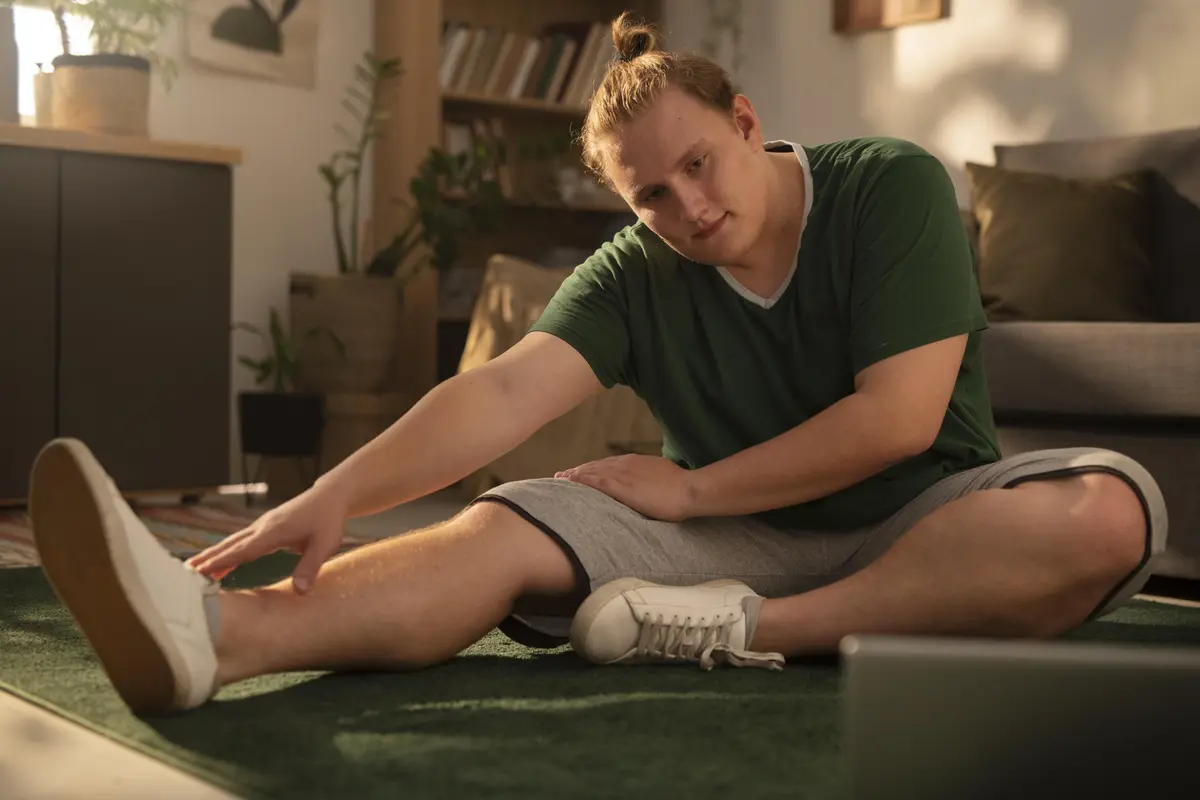 Sleep and muscle recovery
Sleep is the most important recovery tool — growth hormone is released during deep sleep and muscles repair.
Sleep and muscle recovery
Sleep is the most important recovery tool — growth hormone is released during deep sleep and muscles repair.
Nutrition and Recovery
Nutrition provides the building blocks for recovery. Without proper nutrition, the body can't repair itself efficiently.
Protein — the Building Block
Protein is the muscle's building block. After training, muscle protein balance is negative — protein turns it positive.
| Timing | Recommendation |
|---|---|
| Before training (2–3h) | 20–40 g protein |
| After training (0–2h) | 20–40 g fast-absorbing (whey) |
| Before bed | 30–40 g slow-digesting (casein, cottage cheese) |
| Daily total | 1.6–2.2 g/kg/day |
Carbohydrates — Energy and Glycogen
Training depletes muscle glycogen stores. Carbohydrates replenish them.
| Training level | Carbohydrate needs |
|---|---|
| Light training | 3–5 g/kg/day |
| Moderate training | 5–7 g/kg/day |
| Hard training | 6–10 g/kg/day |
| Very intense | 8–12 g/kg/day |
Post-workout meal: 20–40 g protein, 0.5–1 g/kg carbohydrates, within 2–3 hours of training.
Hydration
Dehydration significantly slows recovery. Research shows that just 2% dehydration impairs both performance and recovery (Sawka et al., 2007).
| Situation | Fluid needs |
|---|---|
| Baseline hydration | 30–35 ml/kg/day |
| Training day | +500–1,000 ml |
| Hot/humid conditions | +500–1,000 ml |
| Hard training | +1–1.5 liters |
Tip: Weigh yourself before and after training. Drink 1.5 liters for every kilogram lost.
Recovery-Supporting Nutrients
| Nutrient | Benefit | Source |
|---|---|---|
| Omega-3 | Reduces inflammation | Fatty fish, nuts |
| Vitamin D | Muscle function | Sunlight, fish, supplements |
| Magnesium | Muscle relaxation, sleep | Dark chocolate, nuts, leafy greens |
| Zinc | Protein synthesis | Meat, shellfish, seeds |
| Tart cherry | Reduces muscle soreness | Tart cherry juice |
Active Recovery
Active recovery means light exercise on rest days. It can speed up recovery compared to complete rest.
How Active Recovery Works
It increases blood flow (nutrients in, waste products out), reduces muscle tightness, improves mood through endorphin release, and helps maintain routine so it's easier to return to training.
Best Forms of Active Recovery
| Activity | Duration | Intensity |
|---|---|---|
| Walking | 20–40 min | Easy (no elevated heart rate) |
| Easy cycling | 20–30 min | Easy (conversational) |
| Swimming | 20–30 min | Easy (relaxed pace) |
| Yoga | 30–60 min | Easy to moderate |
| Stretching | 15–30 min | Easy |
| Foam rolling | 10–20 min | Moderate |
When Active Recovery Is Not Appropriate
- In the first 24 hours after an extremely hard session
- When you're in serious pain
- After an acute injury
- When showing signs of overtraining
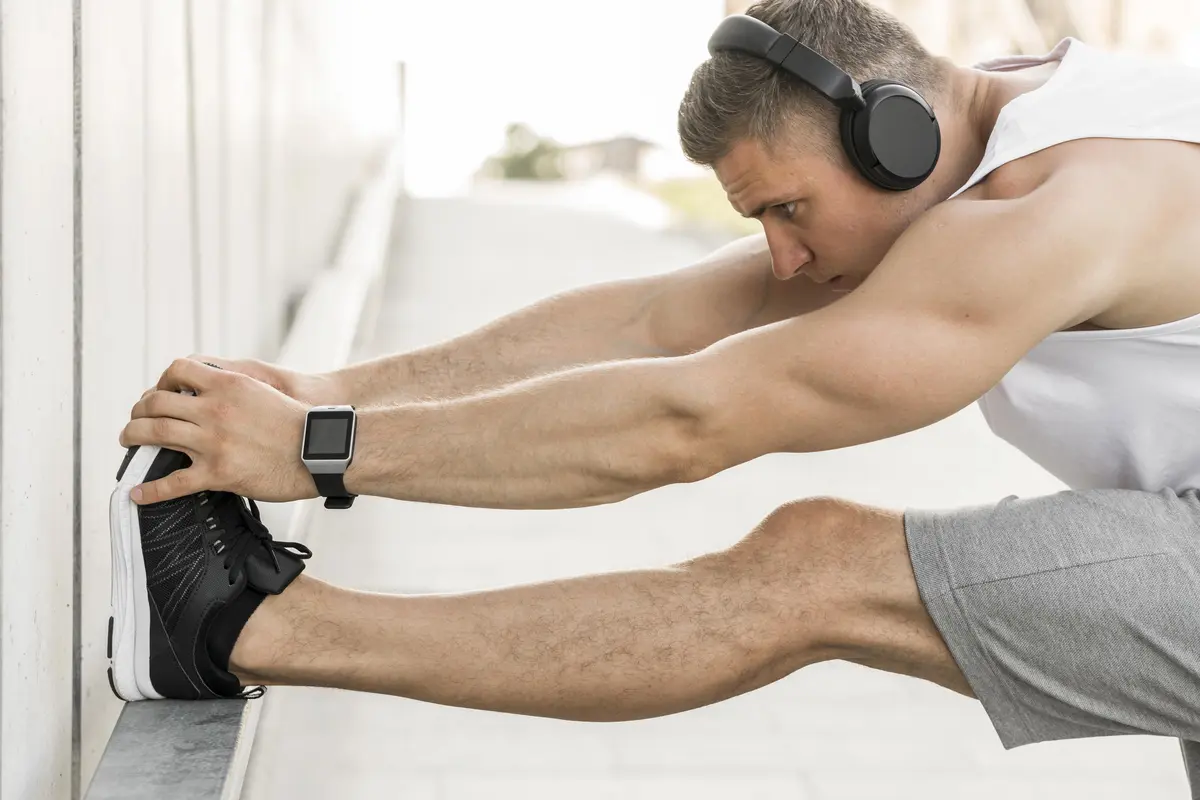 Stretching and foam rolling for recovery
Stretching and foam rolling can speed up recovery and reduce muscle tightness.
Stretching and foam rolling for recovery
Stretching and foam rolling can speed up recovery and reduce muscle tightness.
Recovery Methods — What Works, What Doesn't
Scientific Evidence on Recovery Methods
| Method | Evidence | Effect | Recommendation |
|---|---|---|---|
| Sleep | ⭐⭐⭐⭐⭐ | Very high | Essential |
| Nutrition (protein) | ⭐⭐⭐⭐⭐ | Very high | Essential |
| Active recovery | ⭐⭐⭐⭐ | High | Recommended |
| Foam rolling | ⭐⭐⭐ | Moderate | Useful |
| Stretching | ⭐⭐⭐ | Moderate | Useful |
| Cold therapy | ⭐⭐⭐ | Moderate | Situational |
| Massage | ⭐⭐⭐ | Moderate | Useful |
| Compression garments | ⭐⭐ | Low | Marginal |
| EMS (electrical stimulation) | ⭐⭐ | Low | Marginal |
| Cryotherapy | ⭐⭐ | Low | Expensive, little evidence |
Cold Therapy — When and How?
Cold therapy (ice bath, cold shower) reduces inflammation and pain, but research suggests it may impair muscle growth over the long term (Roberts et al., 2015).
Use cold therapy: after acute injury, during competition season when recovery is the priority, or after an extremely hard session.
Avoid cold therapy: when muscle growth is the goal, or as a regular routine after every workout.
Foam Rolling — What Does Science Say?
A meta-analysis found that foam rolling (Wiewelhove et al., 2019) significantly reduces DOMS, temporarily improves range of motion, but does not improve actual recovery or performance.
Recommendation: Use foam rolling for muscle soreness and mobility — don't expect miracles for recovery.
How Quickly Do Different Muscle Groups Recover?
Recovery Times by Muscle Group
| Muscle group | Recovery time | Reason |
|---|---|---|
| Biceps, triceps | 24–48 hours | Small muscles |
| Shoulders | 24–48 hours | Small muscles |
| Chest | 48–72 hours | Medium-sized |
| Back | 48–72 hours | Large muscles |
| Quadriceps | 72–96 hours | Very large |
| Hamstrings | 72–96 hours | Large, often tight |
| Glutes | 48–72 hours | Large muscles |
Factors That Affect Recovery Speed
| Factor | Effect on recovery |
|---|---|
| Training volume | More sets = longer recovery |
| Training intensity | Heavier weights = longer recovery |
| Eccentric loading | Increases muscle damage = longer recovery |
| Training experience | More experienced recovers faster |
| Age | Older athletes recover more slowly |
| Sleep | Poor sleep = slower recovery |
| Stress | High stress = slower recovery |
| Nutrition | Inadequate = slower recovery |
How Do You Know You're Recovered?
| Sign | Recovered | Not recovered |
|---|---|---|
| Muscle soreness | None or mild | Significant pain |
| Strength | At normal levels | Noticeably reduced |
| Motivation | Want to train | Can't think about it |
| Sleep | Sleeping well | Poor sleep, fatigue |
| Mood | Normal | Irritable, low |
| HRV | Normal/high | Low |
Signs of Overtraining and How to Avoid It
What Is Overtraining?
Overtraining syndrome is a state where the body can't recover between sessions. It leads to prolonged performance decline and health issues.
Warning Signs of Overtraining
Physical signs: persistent fatigue, declining performance (weights feel heavy), elevated resting heart rate, frequent illness, sleep disturbances, loss of appetite, and muscle or joint pain that won't resolve.
Psychological signs: loss of motivation, irritability, anxiety, difficulty concentrating, and depressed mood.
How to Avoid Overtraining
| Strategy | How to implement |
|---|---|
| Deload weeks | Lighter week every 4–6 weeks |
| Progressive increase | Don't add volume too quickly |
| Adequate sleep | 7–9 hours every night |
| Proper nutrition | Enough calories and protein |
| Stress management | Life stress also loads the body |
| Listen to your body | If something feels wrong, take a break |
Read more about progressive overload.
Deload Week Program
Take a lighter week when: progression has slowed for 2–3 weeks, you feel fatigue and lack of motivation, or routinely every 4–6 weeks.
Deload week rules: same program but 50–60% of normal weights, same or fewer reps, fewer sets (−30–50%), full focus on technique.
FAQ
How long does recovery from training take?
Depends on training intensity and muscle group. Small muscles (biceps, shoulders) recover in 24–48 hours. Large muscles (legs, back) need 48–96 hours. Beginners recover more slowly than experienced athletes.
Can I train if I'm still sore?
Mild soreness (DOMS) doesn't prevent training — light exercise can actually speed recovery. If pain is severe or limits movement, wait until it eases. Never train through an acute injury.
What is the single most important recovery tool?
Sleep, without question. Nothing replaces sufficient sleep. Second most important is nutrition — especially adequate protein intake.
Does stretching help recovery?
Stretching improves mobility and can reduce the feeling of muscle tightness, but doesn't significantly speed up actual recovery. It's still a useful part of the overall picture.
Should rest days be completely inactive?
No. Light active recovery (walking, easy cycling) can speed up recovery better than complete rest. Just avoid hard exertion.
How often should I take a deload week?
Typically every 4–6 weeks. Listen to your body — if you feel fatigued, progress has stalled, or motivation has dropped, a deload may be needed sooner.
Summary
Recovery from training is just as important as the training itself — without it, development doesn't happen. Here are the key takeaways:
- Sleep is king: 7–9 hours of quality sleep every night — non-negotiable
- Nutrition supports recovery: sufficient protein (1.6–2.2 g/kg), carbohydrates, and fluids
- Active recovery: light movement on rest days speeds up the process
- Listen to your body: fatigue, loss of motivation, and declining performance are warning signs
- Deload regularly: a lighter week every 4–6 weeks prevents overtraining
Good recovery combined with smart programming and progressive overload is the recipe for continuous development.
References
-
Kellmann, M., et al. (2018). Recovery and performance in sport: consensus statement. International Journal of Sports Physiology and Performance, 13(2), 240-245. PubMed
-
Tidball, J.G. (2005). Inflammatory processes in muscle injury and repair. American Journal of Physiology-Regulatory, Integrative and Comparative Physiology, 288(2), R345-R353. PubMed
-
Phillips, S.M., et al. (2012). Dietary protein for athletes: from requirements to optimum adaptation. Journal of Sports Sciences, 29(sup1), S29-S38. PubMed
-
Van Cauter, E., et al. (2000). Age-related changes in slow wave sleep and REM sleep and relationship with growth hormone. JAMA, 284(7), 861-868. PubMed
-
Sawka, M.N., et al. (2007). American College of Sports Medicine position stand. Exercise and fluid replacement. Medicine & Science in Sports & Exercise, 39(2), 377-390. PubMed
-
Roberts, L.A., et al. (2015). Post-exercise cold water immersion attenuates acute anabolic signalling and long-term adaptations in muscle to strength training. Journal of Physiology, 593(18), 4285-4301. PubMed
-
Wiewelhove, T., et al. (2019). A meta-analysis of the effects of foam rolling on performance and recovery. Frontiers in Physiology, 10, 376. PubMed
Want a personalized workout program that accounts for your recovery? Join Tsemppi — the AI monitors your development and adjusts the program based on your recovery. Start your 7-day free trial today, no credit card required.


