

The deadlift is one of the most effective movements for building total-body strength. Research shows it activates more muscles than any other single exercise — back, legs, glutes, core, and arms all work together (Kubo et al., 2019).
In this guide you'll learn correct deadlift technique, the most common mistakes, and effective training programs.
My Relationship with the Deadlift
For a long time the deadlift was a movement I avoided. I was afraid of back injury, didn't understand the technique, and it just felt "dangerous." My first years in the gym I did everything else — except deadlift.
The turning point came when I finally learned proper technique. I started with light weights, filmed my lifts, and corrected mistakes one at a time. Now the deadlift is one of my favorite movements — and I understand why it's called the "king."
"The deadlift teaches you something important: when you lift the weight off the floor, it's 100% your own doing. No momentum, no assistance — pure strength. It's an honest movement." – Pietari Risku, Founder of Tsemppi
This guide is based on my own learning journey, scientific research, and the experiences of hundreds of Tsemppi users.
Table of Contents
- Why Is the Deadlift So Effective?
- Deadlift Technique Step by Step
- Most Common Mistakes and Fixes
- Deadlift Variations
- Training Program for Deadlift Development
- FAQ
Why Is the Deadlift So Effective?
The deadlift is a full-body movement that activates:
- Back muscles — erector spinae, latissimus dorsi
- Legs — quadriceps, hamstrings
- Glutes — gluteus maximus
- Core — abdominals, obliques
- Arms — forearms, biceps (isometrically)
Research shows the deadlift acutely raises testosterone levels more than isolation exercises, supporting muscle growth (Kraemer & Ratamess, 2005).
Deadlift Benefits
| Benefit | Explanation |
|---|---|
| Full-body strength | Activates over 70% of the body's muscles |
| Functional strength | Transfers to daily life (lifting, carrying) |
| Back strengthening | Prevents back pain when performed correctly |
| Time efficiency | One exercise, tremendous benefit |
Deadlift Technique Step by Step
1. Starting Position
- Feet hip-width apart, toes pointing straight ahead or slightly outward
- Bar over mid-foot (about 2–3 cm from the shins)
- Take a shoulder-width grip on the bar
2. Setting Up
- Lower your hips until your shins touch the bar
- Chest up, shoulders directly over the bar
- Back straight — neutral spine
- Gaze forward and slightly down (about 2 meters ahead)
3. The Pull
- Push your feet through the floor — think "push the floor away"
- Extend knees and hips simultaneously
- Keep the bar close to your body throughout the entire movement
- Lock out the hips at the top — don't hyperextend your lower back
4. The Descent
- Push the hips back
- Allow the bar to travel straight down
- Controlled descent — don't drop it
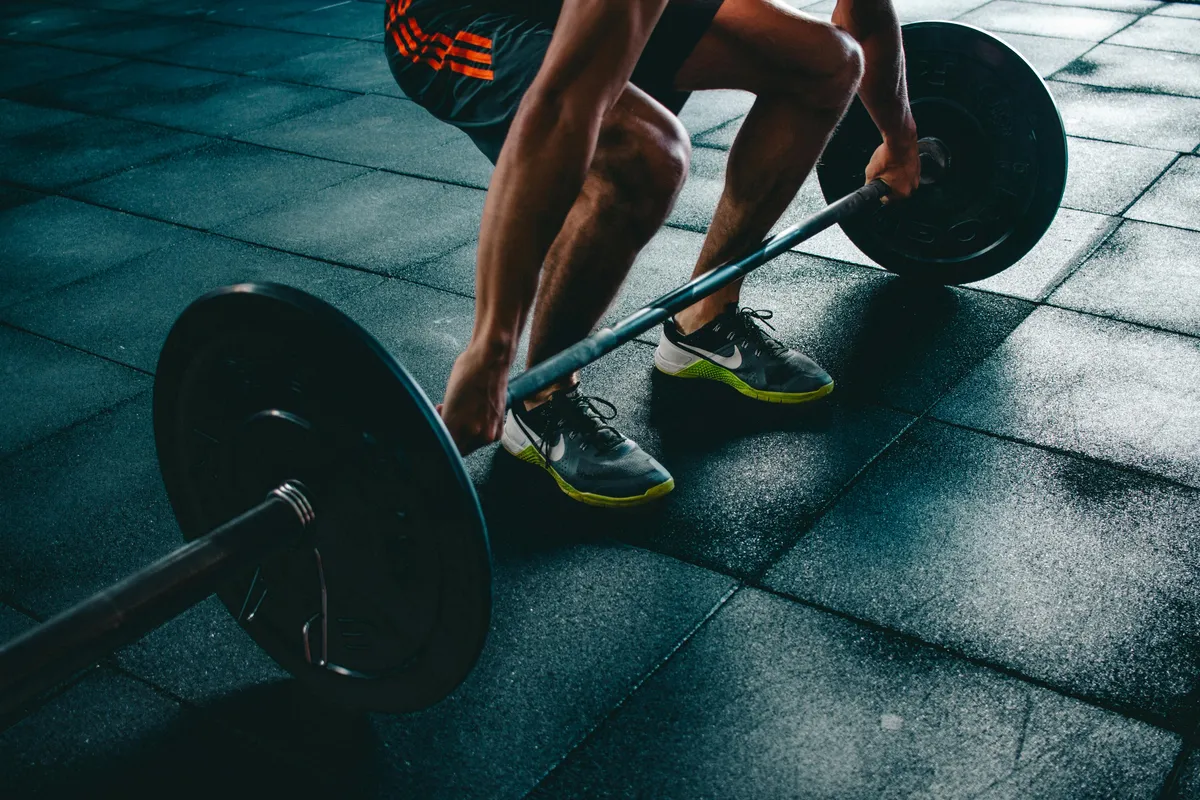 Correct deadlift technique
Key deadlift positions: spine neutral, bar close to the body, legs driving through the floor.
Correct deadlift technique
Key deadlift positions: spine neutral, bar close to the body, legs driving through the floor.
Most Common Mistakes and Fixes
1. Lower Back Rounds
Problem: The lower back rounds during the pull — disc injury risk.
Fix:
- Reduce the weight
- Strengthen core muscles
- Focus on the "chest up" cue
2. Bar Drifts Away from the Body
Problem: The bar moves away from the legs — places excessive stress on the lower back.
Fix:
- Pull the bar toward yourself throughout the movement
- Engage the lats ("put your shoulder blades in your back pockets")
3. Hips Rise Before the Chest
Problem: The hips shoot up before the chest — the lift turns into a stiff-leg deadlift.
Fix:
- Think "push the floor away" with your legs
- Keep the chest up from the very start
4. Hyperextending at Lockout
Problem: Leaning back at the top position — places strain on the lower back.
Fix:
- Lock out the hips in a neutral position
- Squeeze the glutes at the top, don't lean backward
Deadlift Variations
Sumo Deadlift
- Wide stance with hands inside the legs
- Less stress on the lower back
- Suits people with long limbs or limited hip mobility
Romanian Deadlift (RDL)
- Slight knee bend, weight descends through a hip hinge
- Targets the hamstrings and glutes
- Excellent hamstring development movement
Trap Bar Deadlift
- Hexagonal bar where you stand in the center
- Easier technique, less spinal loading
- Great option for beginners
Deficit and Block Pulls
- Deficit: Stand on a platform — greater range of motion
- Block pull: Bar elevated on blocks — shorter range of motion, allows heavier weight
Training Program for Deadlift Development
Beginner (0–6 months)
| Week | Sets × Reps | Weight |
|---|---|---|
| 1–2 | 3 × 8 | 50% of bodyweight |
| 3–4 | 3 × 6 | +5 kg |
| 5–6 | 4 × 5 | +5 kg |
| 7–8 | 4 × 5 | +2.5 kg/week |
Train the deadlift 1–2× per week. Read more in the beginner gym workout program.
Intermediate (6 months – 2 years)
Weekly structure:
| Day | Exercise | Sets × Reps |
|---|---|---|
| Monday | Deadlift (heavy) | 5 × 3 @ 85% |
| Thursday | Romanian Deadlift | 3 × 10 @ 60% |
Read more about progressive overload training.
Advanced
4-week cycle:
| Week | Intensity | Sets × Reps |
|---|---|---|
| 1 | 75% | 5 × 5 |
| 2 | 80% | 5 × 4 |
| 3 | 85% | 5 × 3 |
| 4 (deload) | 60% | 3 × 5 |
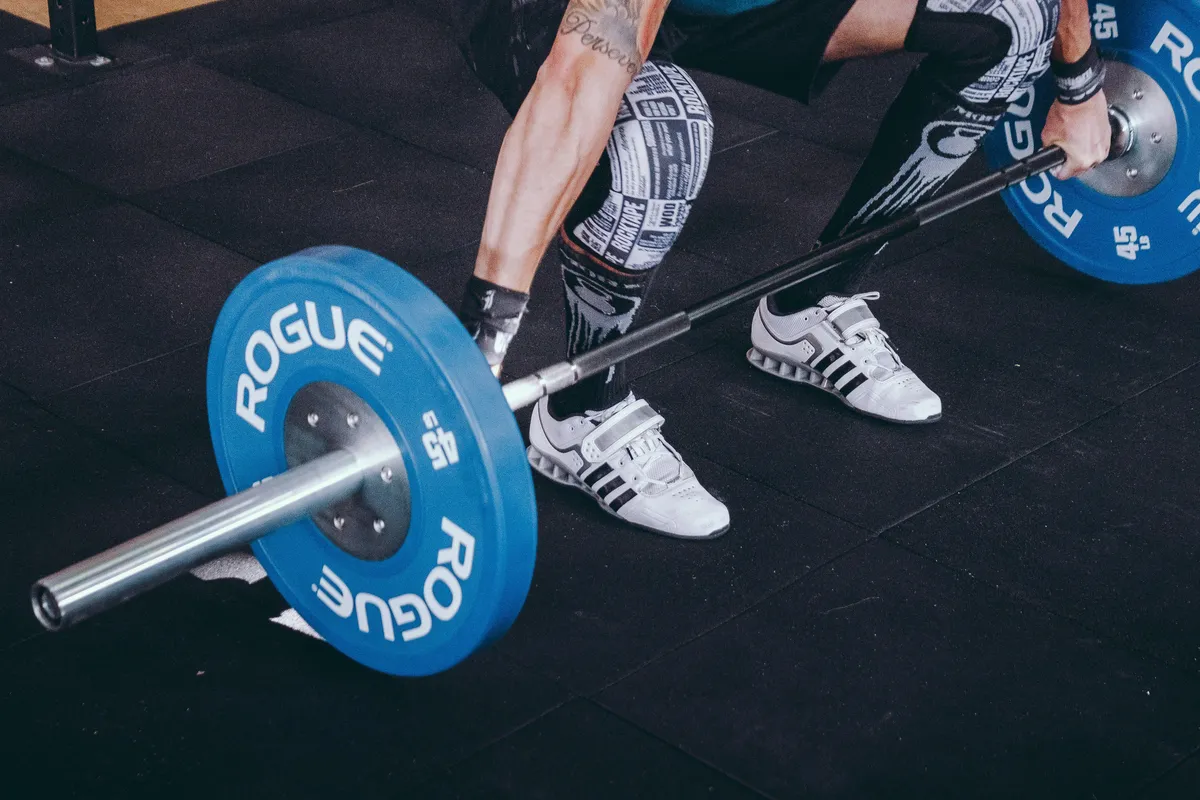 Deadlift training at the gym
Progressive overload is the key to deadlift development.
Deadlift training at the gym
Progressive overload is the key to deadlift development.
FAQ
Is the deadlift dangerous for the back?
No, when technique is correct. Research shows the deadlift strengthens the back and can prevent back pain (Berglund et al., 2015). What's dangerous is poor technique — a rounded spine under load.
How often should I deadlift?
1–2 times per week is sufficient for most people. The deadlift is a demanding movement that requires recovery. For beginners, once per week is a good starting point. Read more about recovery from training.
Sumo vs. conventional — which is better?
Both are effective. The choice depends on your body structure:
- Long legs/short torso: Sumo may feel more natural
- Short legs/long torso: Conventional often suits better
Try both and use whichever feels more natural and allows better technique.
Do I need to use a belt?
A belt is not mandatory, but it can help for heavy lifts (over 80% of max). It increases intra-abdominal pressure and supports the spine (Lander et al., 1992). Beginners should first learn the technique without a belt.
Should I use an alternate grip for deadlifts?
Double overhand grip (both hands pronated) is the safest and develops grip strength. Mixed grip (one hand over, one under) allows heavier weights but increases the risk of bicep tears. Use mixed grip only when necessary for very heavy loads.
What muscles does the deadlift work most?
The deadlift primarily targets the posterior chain: erector spinae (lower back), glutes, and hamstrings. The lats, traps, and quadriceps also contribute significantly. It's genuinely a whole-body movement — core, arms, and upper back are also working hard to stabilize throughout.
When will I see results from deadlift training?
Beginners typically see strength gains within 2–4 weeks of consistent training. Visible muscle development takes 6–12 weeks. The key is progressive overload — gradually increasing the weight or reps session by session.
Summary
The deadlift is one of the best movements for building total-body strength. Remember:
- Technique first — neutral spine, bar close to the body
- Progressive overload — add weight gradually
- Recovery — 1–2× per week is sufficient
- Variations — use different versions for variety
Also read these guides to support your deadlift training:
- Back Workout Program 2026
- Squat Program
- Progressive Overload Training
- Pull-Up Program for Beginners
- Recovery from Training
References
-
Kubo, K., et al. (2019). Effects of squat training with different depths on lower limb muscle volumes. European Journal of Applied Physiology, 119(9), 1933–1942. PubMed
-
Kraemer, W.J. & Ratamess, N.A. (2005). Hormonal responses and adaptations to resistance exercise and training. Sports Medicine, 35(4), 339–361. PubMed
-
Berglund, L., et al. (2015). Which patients with low back pain benefit from deadlift training? Journal of Strength and Conditioning Research, 29(7), 1803–1811. PubMed
-
Lander, J.E., et al. (1992). The effectiveness of weight-belts during the squat exercise. Medicine & Science in Sports & Exercise, 24(5), 603–609. PubMed
-
Escamilla, R.F., et al. (2002). A three-dimensional biomechanical analysis of sumo and conventional style deadlifts. Medicine & Science in Sports & Exercise, 34(4), 682–688.
-
Cholewicki, J., et al. (1991). Lumbar spine loads during the lifting of extremely heavy weights. Medicine & Science in Sports & Exercise, 23(10), 1179–1186.
Want a personalized training program? Join Tsemppi — our AI creates a program that adapts to your development and tells you exactly when to increase the weight.


