

Starting at the gym can feel intimidating — the machines are unfamiliar, everyone else seems to know what they're doing, and the programs you find online are confusing. Good news: getting started is much easier than you think.
In this guide you'll get a complete ready-made program, clear instructions, and everything you need for your first months of training.
My Experience as a Beginner
I remember my first time at the gym — I walked in, looked around at the equipment, and had no idea where to start. I made the mistake of downloading some advanced bodybuilder's program from the internet and trying to do overly complex movements with too much weight.
The result? A week of muscle soreness, a crash in motivation, and a two-week break.
The turning point came when I simplified everything: basic movements, light weights, get the technique right. After that, progress started and the enthusiasm came back. This guide is built on those lessons — and feedback from hundreds of Tsemppi users.
"A simple program executed consistently will always beat a complex program that never gets done." – Pietari Risku, Founder of Tsemppi
Table of Contents
- Why Strength Training Is Worth It
- Before You Go to the Gym
- Beginner Gym Workout Program
- Exercise Instructions
- Your First 8 Weeks
- Most Common Mistakes
- FAQ
Why Strength Training Is Worth It
Strength training isn't just for bodybuilders. Westcott (2012) demonstrated in a comprehensive review that regular resistance training:
- Builds muscle mass and increases resting metabolic rate
- Strengthens bones and prevents osteoporosis
- Improves posture and reduces back pain
- Boosts mood and reduces stress
- Improves sleep and energy levels
As a beginner, you'll develop fast. The first 6–12 months are the time of "newbie gains" — enjoy every bit of it.
Before You Go to the Gym
What Do You Need?
Essential:
- Indoor training shoes
- Comfortable workout clothes
- Water bottle
- Towel
Optional:
- Workout gloves
- Your own lock for the locker
Your First Gym Visit
- Go to explore — most gyms offer a free trial session
- Ask for guidance — staff are happy to show you around the equipment
- Start light — your first visit is about orientation, not breaking records
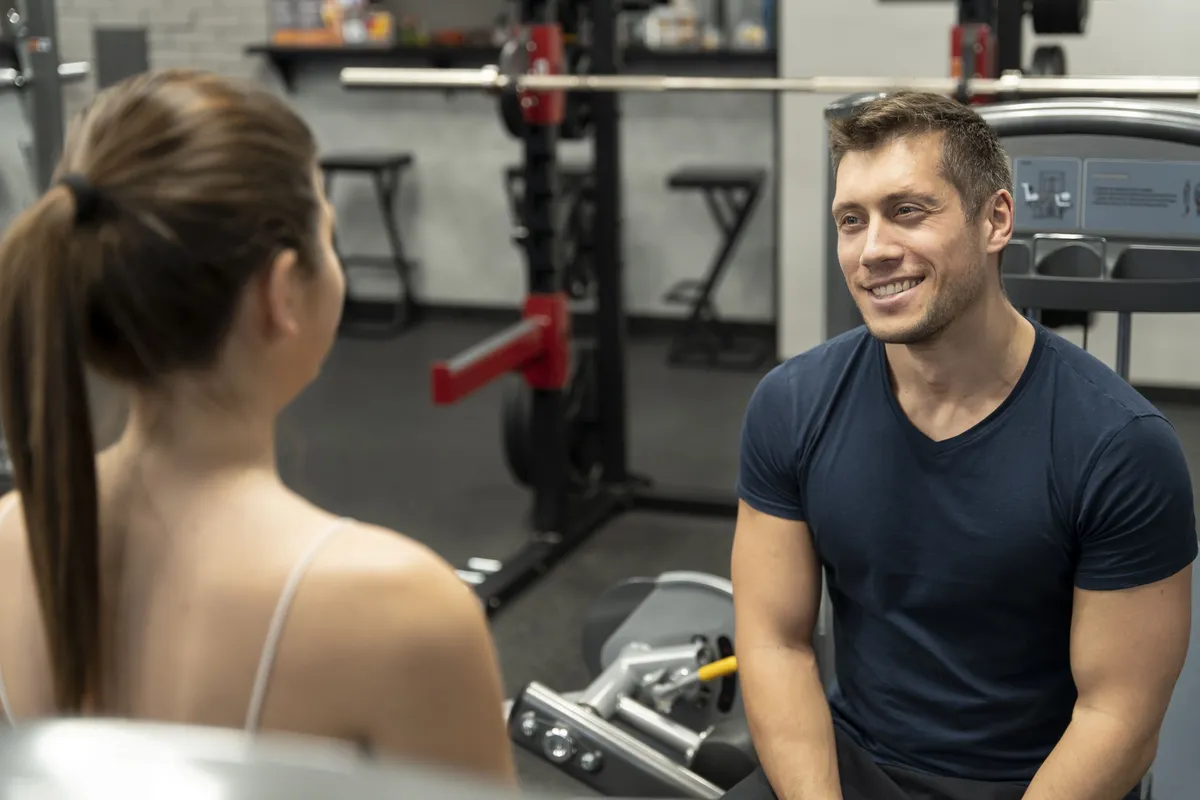 Gym equipment for beginners
Start with the basic movements and get comfortable with the equipment at your own pace.
Gym equipment for beginners
Start with the basic movements and get comfortable with the equipment at your own pace.
Beginner Gym Workout Program
This program is designed for people training 2–3 times per week. It's a full body program, which is proven to be the most effective approach for beginners (Schoenfeld et al., 2016).
Workout A
| Exercise | Sets | Reps | Rest |
|---|---|---|---|
| Leg Press | 3 | 10–12 | 90 sec |
| Bench Press (Smith machine or dumbbells) | 3 | 10–12 | 90 sec |
| Lat Pulldown (wide grip) | 3 | 10–12 | 90 sec |
| Shoulder Press (machine) | 2 | 12–15 | 60 sec |
| Crunch | 2 | 15–20 | 60 sec |
Workout B
| Exercise | Sets | Reps | Rest |
|---|---|---|---|
| Leg Extension | 3 | 12–15 | 90 sec |
| Leg Curl | 3 | 12–15 | 90 sec |
| Seated Cable Row (machine) | 3 | 10–12 | 90 sec |
| Chest Press (machine) | 3 | 10–12 | 90 sec |
| Plank | 3 | 30–45 sec | 60 sec |
Weekly Schedule
| Week | Mon | Tue | Wed | Thu | Fri | Sat | Sun |
|---|---|---|---|---|---|---|---|
| Option 1 | A | — | B | — | A | — | — |
| Option 2 | A | — | — | B | — | — | — |
Alternate between Workout A and Workout B. Keep at least one rest day between sessions.
Exercise Instructions
Leg Press
- Sit in the machine with your back flat against the pad
- Place feet hip-width apart in the center of the platform
- Press the weight up — don't lock your knees at the top
- Lower in a controlled manner until knees reach 90 degrees
Bench Press (Dumbbells)
- Lie on the bench with feet flat on the floor
- Hold dumbbells at chest height, elbows at 45-degree angle
- Press up — weights come together at the top
- Lower in a controlled manner back to chest level
Lat Pulldown
- Sit in the machine with thighs under the pad
- Take a wide grip on the bar
- Pull bar to upper chest — lead the movement with your elbows
- Return in a controlled manner
Seated Cable Row
- Lean your chest against the support pad
- Grip the handles
- Pull elbows back — squeeze your shoulder blades together
- Return in a controlled manner
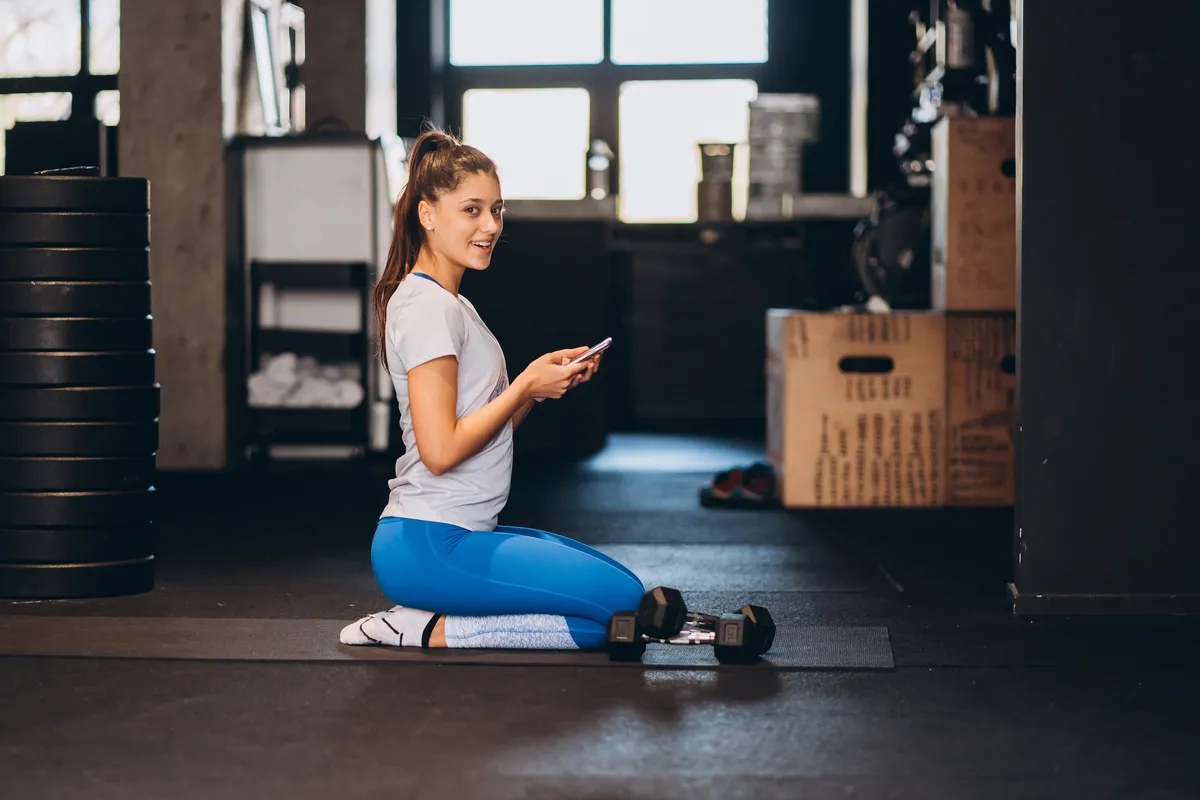 Gym workout for beginners
Focus on technique — the weights will come with time.
Gym workout for beginners
Focus on technique — the weights will come with time.
Your First 8 Weeks
Weeks 1–2: Getting Comfortable
- Goal: Learn the movements and let your body adapt
- Weights: Light — you should be able to do 15+ reps
- Focus: Technique, not load
Weeks 3–4: Refining Technique
- Goal: Improve your range of motion
- Weights: Add just enough so that 12 reps feels challenging
- Focus: Controlled movement, no rushing
Weeks 5–6: Progression Begins
- Goal: Start increasing the weights
- Weights: When you hit 12 reps, add 2.5–5 kg
- Focus: Log what you do each session
Weeks 7–8: Routine Sets In
- Goal: Training feels normal and enjoyable
- Weights: Continue increasing progressively
- Focus: Consistency above all else
Most Common Mistakes
1. Too Much Too Soon
Problem: You train 6 days a week and do 10 exercises per muscle group.
Fix: 2–3 sessions per week is enough. Recovery is part of the process.
2. Ego Lifting
Problem: You use weights that are too heavy with poor technique.
Fix: Lighter weights + good technique = better results and fewer injuries.
3. No Progression
Problem: You use the same weights for months.
Fix: Log every workout. Try to do a little more each week. Read more about progressive overload.
4. Switching Programs Too Often
Problem: You try a new program every week.
Fix: Stick with the same program for at least 8–12 weeks before changing anything.
5. Poor Nutrition
Problem: You train hard but don't eat enough.
Fix: Eat sufficient protein (1.6g/kg bodyweight) and total calories. Read more about protein intake for muscle growth.
FAQ
How often should a beginner train?
2–3 times per week is optimal. This provides enough stimulus for muscle growth and enough time for recovery. More is not better in the early stages.
Do I need to do cardio?
Cardio is not mandatory, but 2–3 light 20–30 minute walks per week is great for your health. Avoid intense cardio before strength training.
When will I see results?
- 2–4 weeks: You feel noticeably stronger
- 4–8 weeks: You can see changes yourself
- 8–12 weeks: Others notice the difference
Can I train on machines?
Yes! Machines are excellent for beginners — they guide your range of motion and are safe to use. You can move to free weights later once your technique is solid.
Do I need supplements?
You don't need any supplements as a beginner. Focus on a solid diet: enough protein, carbohydrates, and healthy fats. Later you can consider whey protein and creatine.
How do I track my progress?
Log every workout: exercises, weights, sets, and reps. This lets you see your progression clearly. The Tsemppi app does this automatically and suggests when to increase your weights.
Summary
As a beginner, you're entering the best phase for development. Remember:
- Start light — technique first, always
- Train 2–3x per week — consistency wins
- Progress — increase weights gradually
- Recovery — sleep and nutrition are part of training
- Patience — results come with time
References
-
Westcott, W.L. (2012). Resistance training is medicine: effects of strength training on health. Current Sports Medicine Reports, 11(4), 209–216. PubMed
-
Schoenfeld, B.J., Ogborn, D., & Krieger, J.W. (2016). Effects of Resistance Training Frequency on Measures of Muscle Hypertrophy: A Systematic Review and Meta-Analysis. Sports Medicine, 46(11), 1689–1697. PubMed
-
Fisher, J., Steele, J., Bruce-Low, S., & Smith, D. (2011). Evidence-based resistance training recommendations. Medicina Sportiva, 15(3), 147–162.
-
Morton, R.W., et al. (2018). A systematic review, meta-analysis and meta-regression of the effect of protein supplementation on resistance training-induced gains in muscle mass and strength. British Journal of Sports Medicine, 52(6), 376–384. PubMed
Want a personalized workout program? Join Tsemppi — our AI creates a program that grows with you.


