

If you could choose only one supplement for the rest of your life, the answer would be clear: creatine. It is the world's most researched, safest, and most effective supplement for muscle growth and strength output — and it's not even a close competition. Yet in 2026 creatine is still surrounded by myths, misconceptions, and unnecessary fear. This guide tells you everything you actually need to know: what creatine is, how it works, how to use it, and what the research says.
Why Creatine Changed My Training
I had been training for about two years when a friend recommended creatine. I was skeptical — "supplements don't do anything," I thought. But I decided to try it because the research evidence was so compelling.
After the first month, my bench press went up 5 kg and my squat went up 7.5 kg — without any other change to my training or diet. Workouts felt different: I could manage that one extra rep in every set and I recovered faster between sessions.
Not a magic bullet. No overnight results. But a small, consistent edge that compounds over months and years into a meaningful difference.
Creatine is the only supplement I've used continuously for over five years — because it simply works.
"Creatine doesn't make you strong. Training does. But creatine gives you a little more fuel for every set — and over the long term, that difference is enormous." – Pietari Risku, Founder of Tsemppi
Table of Contents
- What Is Creatine?
- How Does Creatine Work in the Body?
- Proven Benefits of Creatine
- Creatine Dosing and Usage
- Different Forms of Creatine
- Creatine Side Effects and Safety
- Creatine and Muscle Growth
- Creatine and Strength
- Creatine and Fat Loss
- Creatine for Women
- Creatine and Other Supplements
- Creatine Myths and Facts
- How to Choose a Good Creatine Product
- FAQ
- Summary
What Is Creatine?
Creatine is a natural compound that the body produces itself and obtains from food. It is not a steroid, hormone, or drug — it is part of normal energy metabolism.
Creatine Basics
| Property | Details |
|---|---|
| Chemical name | Methylguanidoacetic acid |
| Natural sources | Red meat, fish, organ meats |
| Body's own production | About 1–2 g/day (liver, kidneys, pancreas) |
| Body stores | About 120–140 g (95% in muscles) |
| Nutrients needed for production | Arginine, glycine, methionine (amino acids) |
| Research studies | Over 1,000 peer-reviewed studies |
Creatine in Food
Creatine occurs naturally in animal protein sources:
| Food | Creatine per kg |
|---|---|
| Herring | 6.5–10 g |
| Pork | 5 g |
| Beef | 4.5 g |
| Salmon | 4.5 g |
| Tuna | 4 g |
| Cod | 3 g |
| Chicken | 3.4 g |
| Milk | 0.1 g |
The problem: To get 5 g of creatine (the optimal daily dose) from food, you would need to eat about 1 kg of meat or fish per day. That's why supplementation is practical and cost-effective.
Vegetarians and vegans get a particularly large benefit from creatine supplementation because their stores are often lower due to the absence of animal-based sources (Burke et al., 2003).
How Does Creatine Work in the Body?
Creatine's mechanism of action is simple and well understood — unlike many other supplements.
The ATP-CP Energy System
Muscles use ATP (adenosine triphosphate) as their energy source. One ATP molecule provides energy for one muscle contraction. The problem: muscles only have enough ATP for about 2–3 seconds of maximal effort.
This is where creatine comes in:
- ATP donates energy → becomes ADP (adenosine diphosphate)
- Creatine phosphate (CP) donates a phosphate group to ADP
- ADP becomes ATP again → more energy available
- This cycle lasts about 8–12 seconds
What Does Creatine Supplementation Do?
Creatine supplementation raises the amount of phosphocreatine in muscles by about 20–40% (Hultman et al., 1996). In practice this means:
- More ATP available → you can perform more reps with heavy weights
- Faster ATP regeneration → you recover between sets more quickly
- Greater total work per session → more volume = greater growth stimulus
Practical Example
Without creatine you might bench press 80 kg for 7, 7, 6 reps. With creatine the same weight might produce 8, 8, 7 reps. That one extra rep per set accumulates into a significant difference in total training volume — and therefore results — over weeks and months.
Creatine Timeline
| Timeframe | What Happens |
|---|---|
| Day 1–7 | Creatine stores begin filling |
| Day 7–28 | Stores reach saturation |
| Week 4+ | Full benefit to performance and recovery |
Proven Benefits of Creatine
Creatine is the most researched supplement in the world. The International Society of Sports Nutrition (ISSN) classifies it as "clearly effective and safe" (Kreider et al., 2017).
1. Strength and Power Gains
Creatine improves maximal force output and explosive power.
- Meta-analysis (Branch, 2003): Creatine increased strength by an average of 8% and power by 14% compared to placebo
- Greatest benefit: In short-duration, high-intensity efforts (1–6 rep sets, sprints)
2. Muscle Mass Gains
Creatine promotes muscle growth through two mechanisms:
- Directly: Increases cell water content (cell volumization), which activates protein synthesis (Safdar et al., 2008)
- Indirectly: Enables greater training volume → more growth stimulus
Research finding: A 12-week resistance training program + creatine produced an average of 1–2 kg more lean mass gain compared to placebo (Rawson & Volek, 2003).
3. Faster Recovery
Creatine reduces muscle damage and inflammation after training (Santos et al., 2004), which means:
- Less muscle soreness (DOMS) after workouts
- Faster recovery between training sessions
- Ability to train more frequently or with greater volume
4. Brain Function
The brain consumes significant amounts of ATP. Research shows creatine benefits:
- Improved working memory and cognitive performance, especially during sleep deprivation (McMorris et al., 2006)
- Protection against neurodegenerative diseases (preliminary evidence)
- Especially significant cognitive benefit for vegetarians (Rae et al., 2003)
5. Other Researched Benefits
| Benefit | Strength of Evidence |
|---|---|
| Bone health (combined with resistance training) | Moderate |
| Blood sugar management | Moderate |
| Slowing skin aging | Preliminary |
| Reducing depression symptoms | Preliminary |
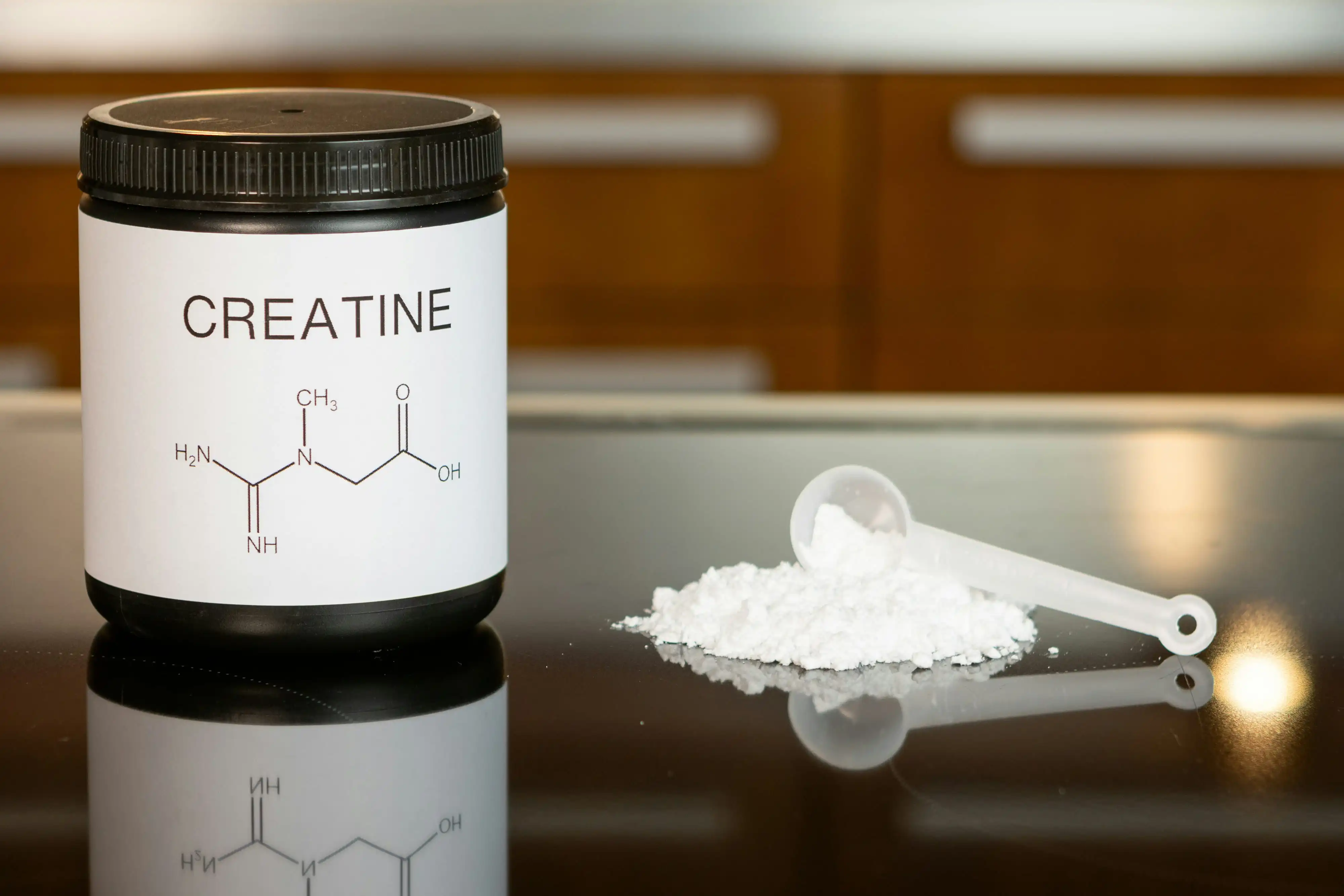 Creatine benefits 2026
Creatine is proven to be the most effective supplement for improving strength, muscle mass, and recovery.
Creatine benefits 2026
Creatine is proven to be the most effective supplement for improving strength, muscle mass, and recovery.
Creatine Dosing and Usage
Standard Dosing (Recommended for Most People)
5 grams of creatine monohydrate per day, every day.
It really is that simple. No complex protocols needed.
| Dosing | Amount | Timing |
|---|---|---|
| Daily dose | 5 g (one level teaspoon) | Any time of day |
| Loading protocol (optional) | 20 g/day (4 × 5 g) for 5–7 days | Speeds up store saturation |
| Maintenance dose | 3–5 g/day | Ongoing use |
Loading Protocol vs. Standard Dosing
Loading (20 g/day, 5–7 days):
- Fills stores in 5–7 days
- May cause GI discomfort from large single doses
- Not necessary — useful if you want results as quickly as possible
Standard dosing (5 g/day):
- Fills stores in about 3–4 weeks
- No GI issues
- Recommended for most people — the simplest and most gentle approach
Timing — When to Take Creatine?
Short answer: it doesn't matter much. The most important thing is to take it every day.
Research shows a small advantage to post-workout dosing compared to pre-workout (Antonio & Ciccone, 2013), but the difference is marginal. Choose the timing that's easiest for you to remember:
- At breakfast — mix into your oatmeal or smoothie
- Post-workout — mix into your protein shake
- In the evening — mix into water
How to Take Creatine
- Measure 5 g (one level teaspoon or measuring scoop)
- Mix into water, juice, a protein shake, or any other drink
- Drink immediately — creatine doesn't dissolve completely but that's fine
- Drink adequate water throughout the day (2–3 liters)
Tip: Creatine dissolves better in warm liquid. You can mix it into tea or warm water.
Should You Cycle Creatine?
No. This is an outdated myth. Current research shows that continuous daily use is safe and effective (Kreider et al., 2017). Breaks are not necessary.
Different Forms of Creatine
There are many creatine forms on the market, but the truth is clear.
Creatine Monohydrate — The Only One You Need
| Form | Effectiveness | Price | Recommendation |
|---|---|---|---|
| Creatine monohydrate | ⭐⭐⭐ Best research evidence | € | ✅ RECOMMENDED |
| Creatine HCl | ⭐⭐ Moderate | €€€ | Alternative if stomach can't tolerate monohydrate |
| Creatine ethyl ester | ⭐ Poor | €€ | ❌ Not recommended |
| Buffered creatine (Kre-Alkalyn) | ⭐⭐ Moderate | €€€ | ❌ Not better than monohydrate |
| Creatine nitrate | ⭐ Little research | €€ | ❌ Not enough evidence |
| Creatine pyruvate | ⭐ Little research | €€€ | ❌ Not enough evidence |
Why creatine monohydrate wins:
- 99% of all creatine research has been conducted with monohydrate
- No alternative form has been shown to be more effective (Jäger et al., 2011)
- The cheapest option on the market
- Safety profile is best understood
"Creapure" is a creatine monohydrate brand made by Germany's AlzChem, which offers the highest purity in the industry (99.99%). If you want the best quality, choose a product with the Creapure label.
Creatine Side Effects and Safety
Safety Profile
Creatine is one of the most studied and safest supplements in the world. The ISSN position paper (Kreider et al., 2017) states:
- No adverse effects in healthy individuals at recommended doses
- Safety demonstrated with up to 5 years of continuous use
- Not harmful to kidneys in healthy individuals (Poortmans & Francaux, 1999)
- Does not cause dehydration or muscle cramps (Lopez et al., 2009)
Possible Side Effects
| Side Effect | Frequency | Cause | Solution |
|---|---|---|---|
| Weight gain (1–2 kg) | Very common | Water retention in muscles | Normal and desired — not fat |
| GI discomfort | Rare | Too large a single dose | Split into smaller doses, take with food |
| Feeling of bloating | Rare | Initial water retention | Disappears within 1–2 weeks |
Who Should NOT Take Creatine?
- Those with kidney disease: Consult a doctor before use
- Under 18: Insufficient safety research — creatine from food is sufficient
Weight Gain — Good or Bad?
The 1–2 kg weight gain from creatine in the first few weeks is intramuscular water, not fat and not subcutaneous bloating. This increase in cell water content:
- Makes muscles appear fuller and larger
- Activates protein synthesis (a growth signal)
- Improves cellular function
If your goal is muscle growth or strength, this weight gain is entirely desirable.
Creatine and Muscle Growth
Creatine is the most effective legal supplement for promoting muscle growth. Here's how it works:
Mechanisms
- Greater training volume: You can perform more reps → more mechanical tension → greater growth stimulus
- Cell volumization: Water binds inside muscle cells → cell "swells" → activates protein synthesis and the mTOR pathway
- Myostatin reduction: Preliminary evidence suggests creatine may reduce myostatin — a protein that limits muscle growth (Saremi et al., 2010)
- Faster recovery: Less muscle damage → you can train more frequently
Research Results
| Study | Duration | Creatine Group | Placebo Group | Difference |
|---|---|---|---|---|
| Rawson & Volek (2003), meta-analysis | 12 weeks | +2.2 kg lean mass | +0.6 kg | +1.6 kg |
| Buford et al. (2007) | 12 weeks | +1.9 kg lean mass | +0.5 kg | +1.4 kg |
| Chilibeck et al. (2017) | 12 weeks | Significant difference | Control | Women's muscle gain |
Practical Recommendation for Muscle Growth
Combine creatine with this complete package:
- Creatine: 5 g/day, every day
- Protein: 1.6–2.2 g/kg/day (read protein guide)
- Calories: Slight surplus (200–400 kcal/day)
- Training: Progressive resistance training 3–5×/week (read workout guide)
- Sleep: 7–9 hours (read recovery guide)
Creatine and Strength
Creatine's effect on strength is more quickly noticeable than its effect on muscle size.
Research Results
Meta-analysis (Branch, 2003) showed:
- Maximum strength (1RM): +8% on average
- Maximum power: +14% on average
- Rep maximum: Significantly better in the creatine group
Practical Strength Example
If your bench press is 80 kg without creatine:
- With creatine (average): 80 kg + 8% = approximately 86–87 kg potential 1RM
- Rep increase: 80 kg × 6 → 80 kg × 7–8
This extra volume accumulates into a meaningful advantage over weeks and months.
Creatine for Powerlifting
If you compete or are chasing maximum strength in the main lifts:
- Creatine is practically a mandatory supplement
- Greatest benefit comes in 1–5 rep sets
- Combine with progressive overload
Creatine and Fat Loss
Creatine can and should be used during fat loss phases, but it's important to understand how it affects things.
Creatine's Role During a Diet
Benefits:
- Preserves strength and muscle mass during a calorie deficit
- Enables more effective training even while dieting
- Protects muscles from catabolism (breakdown)
Important to note:
- Weight may increase 1–2 kg initially (water, not fat) → doesn't mean you're gaining fat
- The scale doesn't tell the whole story — track waist circumference and progress photos
- If you start creatine and a diet simultaneously, actual fat loss may be masked by water retention
Practical Recommendation for Fat Loss
- Start creatine before your diet (allow stores to fill for 3–4 weeks)
- Continue 5 g/day throughout the entire diet
- Don't rely solely on the scale — use a tape measure and progress photos
- Train heavy during your diet — creatine helps maintain strength levels
Creatine for Women
Creatine is not a "men's supplement" — it works equally well for women, and women get some specific benefits.
Research Evidence in Women
- Strength gains: Similar to men relative to starting point (Chilibeck et al., 2017)
- Muscle growth: Significant benefit without "too much muscle" — creatine doesn't alter hormonal profile
- Bone health: Special benefit for postmenopausal women combined with resistance training
Common Concerns
"Will creatine make me bloated?"
The fluid retention from creatine happens inside the muscles — not under the skin. Most women don't notice significant bloating. If the initial slight weight gain concerns you, start with 3 g per day and gradually increase.
"Will I get too muscular?"
Creatine doesn't alter hormone levels and won't make anyone accidentally too muscular. Women's testosterone levels are a fraction of men's, so massive muscle growth doesn't happen by accident — with creatine or without.
"Does creatine fit my training program?"
Yes — regardless of what type of training you do. Creatine benefits gym training, HIIT workouts, Hyrox training, or any other intensive exercise.
Also read the workout program for women.
 Creatine usage 2026
5 grams of creatine monohydrate per day — a simple routine that delivers meaningful results over time.
Creatine usage 2026
5 grams of creatine monohydrate per day — a simple routine that delivers meaningful results over time.
Creatine and Other Supplements
Creatine works independently, but it can be combined with other supplements.
Effective Combinations
| Supplement | Combined Benefit | Recommendation |
|---|---|---|
| Protein powder | Creatine + protein = muscle growth + recovery | Mix into the same shake |
| Caffeine | Both improve performance through different mechanisms | Can be used together |
| Beta-alanine | Creatine for short sets, beta-alanine for longer ones | Complementary |
| Vitamin D | Supports bone health and immune function | Both recommended |
| Omega-3 | Inflammation management + recovery | No direct interaction, both beneficial |
Caffeine and Creatine — Is There a Conflict?
Old belief: caffeine cancels out creatine's effects. Current research does not support this. You can drink coffee and use creatine without concern (Trexler & Smith-Ryan, 2015).
What You Don't Need with Creatine
- "Transport" products: Creatine doesn't need to be taken with sugar or an insulin spike. It absorbs effectively without "carriers."
- Loading phase "boosters": No supplement meaningfully accelerates creatine store saturation.
Creatine Myths and Facts
Myth 1: "Creatine is harmful to the kidneys"
Fact: Over 1,000 studies have not shown creatine to harm the kidneys of healthy individuals (Poortmans & Francaux, 1999). Creatine raises serum creatinine levels (a kidney function marker), but this results from creatine's metabolism — not kidney damage. If you're healthy, the concern is unfounded.
Myth 2: "Creatine causes water retention and bloating"
Fact: Creatine binds water inside muscle cells, not under the skin. The result: muscles look fuller and larger, not bloated. The mild overall weight gain in the first few weeks is normal and desirable.
Myth 3: "Creatine needs to be cycled"
Fact: No scientific basis for cycling. Continuous use at 5 g/day is safe and most effective. Breaks just empty the stores unnecessarily.
Myth 4: "Creatine is a steroid"
Fact: Creatine is a natural compound that the body produces itself at about 1–2 g per day. It doesn't affect hormones, it isn't banned in any sport, and it has nothing to do with steroids.
Myth 5: "All gains from creatine disappear when you stop"
Fact: Some weight (1–2 kg of water) leaves when you stop. But the extra training volume that creatine enabled has led to real muscle growth that remains as long as you continue training.
Myth 6: "Creatine causes muscle cramps"
Fact: Research doesn't support this claim. In fact, creatine may even reduce the risk of cramps and muscle injuries (Lopez et al., 2009).
Myth 7: "More expensive creatine forms are better"
Fact: Creatine monohydrate is the most studied, most effective, and cheapest form. No alternative form has been shown to be superior (Jäger et al., 2011).
How to Choose a Good Creatine Product
Selection Criteria
- Form: Creatine monohydrate — nothing else needed
- Purity: Creapure label guarantees the highest quality
- Additives: The fewer the better. Plain creatine is sufficient
- Price: Creatine is cheap. Good monohydrate costs about €15–25 per 500 g (100-day supply)
- Flavoring: Unflavored powder is best — you can mix it into anything
What to Avoid
- "Creatine blends" where creatine is just a small component of an expensive product
- Capsules that cost several times more per gram than powder
- "New and improved" creatine forms where you're paying for brand marketing
Budget Calculation
| Product | Price (approx.) | Duration | Price per day |
|---|---|---|---|
| Creatine monohydrate 500 g | €15–25 | 100 days | €0.15–0.25/day |
| Creatine HCl 120 capsules | €25–35 | 40 days | €0.63–0.88/day |
| "Premium" creatine blend | €40–60 | 30 days | €1.33–2.00/day |
Creatine monohydrate is by far the most cost-effective option — about €5–8 per month.
FAQ
How much creatine per day?
5 grams of creatine monohydrate per day is the optimal dose for most people. This is based on decades of research evidence (Kreider et al., 2017). Larger individuals (over 100 kg) may benefit from 7–10 grams per day.
When should I take creatine?
Timing doesn't matter much. The most important thing is to take it consistently every day. If you want to optimize, take it post-workout with a protein shake — research shows a small advantage over other timings (Antonio & Ciccone, 2013).
Should I take creatine on rest days?
Yes. Creatine works cumulatively — stores need to be kept full. Take 5 g every day regardless of whether you train.
How quickly does creatine start working?
With standard dosing (5 g/day), stores fill in about 3–4 weeks. With a loading protocol (20 g/day), in 5–7 days. You'll notice the first performance improvements as stores become saturated.
Does creatine cause hair loss?
One study (van der Merwe et al., 2009) reported a rise in DHT levels during creatine use, but a direct link to hair loss has not been proven. More research is needed. If you have a genetic predisposition to hair loss and are concerned, discuss it with your doctor.
Is creatine suitable for vegans?
Yes — and vegans get a particularly large benefit because their natural creatine stores are often lower due to the absence of animal-based sources (Burke et al., 2003). Creatine monohydrate is synthetically manufactured and contains no animal-derived ingredients.
Can people under 18 use creatine?
Research on creatine use in young people is limited, so official recommendations are cautious. Creatine from food (meat, fish) is safe for everyone. Supplementation in young people should be discussed with a doctor.
Can I use creatine and caffeine together?
Yes. The old belief about a conflict between caffeine and creatine has been refuted by current research. You can drink coffee and use creatine without concern (Trexler & Smith-Ryan, 2015).
How should I store creatine?
In a dry, cool place in a sealed container. Creatine monohydrate is an extremely stable compound — it keeps for years when stored properly. No refrigeration needed.
Summary
Creatine is the king of supplements — the most researched, most effective, safest, and cheapest. In 2026 there is no reason not to use it if your goal is muscle growth, strength, or athletic performance. Remember these key points:
Creatine fundamentals:
- 5 g creatine monohydrate per day — every day, including rest days
- Choose creatine monohydrate — Creapure quality if you want the best
- Timing doesn't matter — as long as you take it every day
- No need to cycle — continuous use is safe
- Weight gain is normal — it's intramuscular water, not fat
- Safe for healthy people — over 1,000 studies support the safety
Creatine by the numbers:
| Metric | Average Benefit |
|---|---|
| Strength increase | +8% |
| Power increase | +14% |
| Muscle mass gain (12 weeks) | +1–2 kg more than without |
| Cost | €0.15–0.25/day |
| Safety studies | 1,000+ |
If you're not already using creatine, start today. It's the simplest, cheapest, and most effective thing you can do to support your training.
Also read these guides:
- Protein Intake for Muscle Growth
- Workout Program 2026: The Complete Guide
- Workout Program for Muscle Growth
- Recovery from Training
- Progressive Overload Training
References
-
Kreider, R.B., et al. (2017). International Society of Sports Nutrition position stand: safety and efficacy of creatine supplementation in exercise, sport, and medicine. Journal of the International Society of Sports Nutrition, 14, 18. PubMed
-
Branch, J.D. (2003). Effect of creatine supplementation on body composition and performance: a meta-analysis. International Journal of Sport Nutrition and Exercise Metabolism, 13(2), 198–226. PubMed
-
Rawson, E.S., & Volek, J.S. (2003). Effects of creatine supplementation and resistance training on muscle strength and weightlifting performance. Journal of Strength and Conditioning Research, 17(4), 822–831. PubMed
-
Hultman, E., et al. (1996). Muscle creatine loading in men. Journal of Applied Physiology, 81(1), 232–237. PubMed
-
Burke, D.G., et al. (2003). Effect of creatine and weight training on muscle creatine and performance in vegetarians. Medicine & Science in Sports & Exercise, 35(11), 1946–1955. PubMed
-
Safdar, A., et al. (2008). Global and targeted gene expression and protein content in skeletal muscle of young men following short-term creatine monohydrate supplementation. Physiological Genomics, 32(2), 219–228. PubMed
-
Santos, R.V., et al. (2004). The effect of creatine supplementation upon inflammatory and muscle soreness markers after a 30km race. Life Sciences, 75(16), 1917–1924. PubMed
-
Poortmans, J.R., & Francaux, M. (1999). Long-term oral creatine supplementation does not impair renal function in healthy athletes. Medicine & Science in Sports & Exercise, 31(8), 1108–1110. PubMed
-
Lopez, R.M., et al. (2009). Does creatine supplementation hinder exercise heat tolerance or hydration status? Journal of Athletic Training, 44(2), 215–223. PubMed
-
Jäger, R., et al. (2011). Analysis of the efficacy, safety, and regulatory status of novel forms of creatine. Amino Acids, 40(5), 1369–1383. PubMed
-
Antonio, J., & Ciccone, V. (2013). The effects of pre versus post workout supplementation of creatine monohydrate on body composition and strength. Journal of the International Society of Sports Nutrition, 10, 36. PubMed
-
Rae, C., et al. (2003). Oral creatine monohydrate supplementation improves brain performance. Proceedings of the Royal Society B, 270(1529), 2147–2150. PubMed
-
McMorris, T., et al. (2006). Effect of creatine supplementation and sleep deprivation on cognitive and psychomotor performance. Psychopharmacology, 185(1), 93–103. PubMed
-
Saremi, A., et al. (2010). Effects of oral creatine and resistance training on serum myostatin and GASP-1. Molecular and Cellular Endocrinology, 317(1-2), 25–30. PubMed
Want to optimize supplement use as part of your training program? Join Tsemppi — our AI builds you a personalized training program and tracks your progression automatically, so creatine's benefits show up as concrete results.


