

January is here — and millions of people are setting new fitness goals right now. Unfortunately, research shows that 80% of New Year's resolutions fail by mid-February (Norcross et al., 2002). But you don't have to be part of that majority. This guide shows you how to set fitness goals that actually work — and how to stick to them throughout 2026.
Why Goals Are Personal to Me
In 2016 I set my first "real" fitness goal: "I want to get in better shape." In January I went to the gym 12 times. In February, 6 times. In March, 2 times. By April I couldn't even remember where my gym was.
The problem? My goal was completely useless.
"Better shape" means nothing. You can't measure it. You can't track it. You can't achieve it — because you never know when you've arrived.
The turning point came when I started setting concrete, measurable goals. Instead of "wanting to be stronger," I set a goal to "squat 100 kg by the end of the year." Suddenly I knew exactly what I was working toward — and I could track my progress week by week.
That one change — from a vague wish to a concrete goal — changed everything. Now I'm going to help you do the same.
"A goal without a plan is just a wish. But a concrete goal with a clear path? That's your future reality." – Pietari Risku, Founder of Tsemppi
Table of Contents
- Why Fitness Goals Fail
- SMART Goals for Lifters
- The Best Fitness Goals for 2026
- Setting Goals by Experience Level
- How to Measure Progress
- Maintaining Motivation Throughout the Year
- The Science of Goal Achievement
- Tools for Tracking Goals
- FAQ
- Summary
Why Fitness Goals Fail
Before learning how to set goals that work, it's important to understand why most fail.
The 5 Most Common Reasons for Failure
| Reason | Example | Why It Doesn't Work |
|---|---|---|
| Too vague | "I want to get in better shape" | Not measurable, no way to know when achieved |
| Too ambitious | "I want to lose 30 kg in two months" | Unrealistic, leads to disappointment |
| No plan | "I want to build muscle" | A goal without a method is just a wish |
| No tracking | "I want to train more" | Without measurement you don't know if you're progressing |
| External motivation | "I want to look good for others" | Doesn't survive setbacks |
Research Reveals the Truth
Locke & Latham (2002) showed in their meta-analysis that specific and challenging goals produce 90% better results than vague "do your best" goals.
In other words: the way you set a goal matters more than the goal itself.
SMART Goals for Lifters
The SMART framework is the most research-backed approach to goal setting. Let's apply it to fitness:
S — Specific
Bad: "I want to be stronger"
Good: "I want to bench press 80 kg"
The more specific, the better. Define the exercise, weight, reps, or another concrete metric.
M — Measurable
Bad: "I want to build muscle"
Good: "I want to increase my arm circumference by 2 cm"
If you can't measure it, you can't track progress. Use kilograms, centimeters, reps, or percentages.
A — Achievable
Bad: "I want to squat 200 kg in one year" (as a beginner)
Good: "I want to squat 100 kg in one year" (as a beginner)
The goal needs to be challenging but realistic. Too easy doesn't motivate; too hard discourages.
R — Relevant
Bad: "I want to run a marathon" (when your goal is muscle growth)
Good: "I want to increase my training frequency from 3 to 4 sessions per week"
The goal needs to support your bigger objective. Don't scatter your focus.
T — Time-Bound
Bad: "I want to bench 100 kg someday"
Good: "I want to bench 100 kg by December 31, 2026"
A deadline creates a sense of urgency and forces action.
Example of a Perfect SMART Goal
"I want to increase my squat from 60 kg to 100 kg by December 31, 2026, by training 3 times per week and applying progressive overload."
This goal is:
- ✅ Specific (squat, exact weight)
- ✅ Measurable (60 → 100 kg)
- ✅ Achievable (40 kg in a year is realistic for a beginner)
- ✅ Relevant (supports strength development)
- ✅ Time-bound (end of 2026)
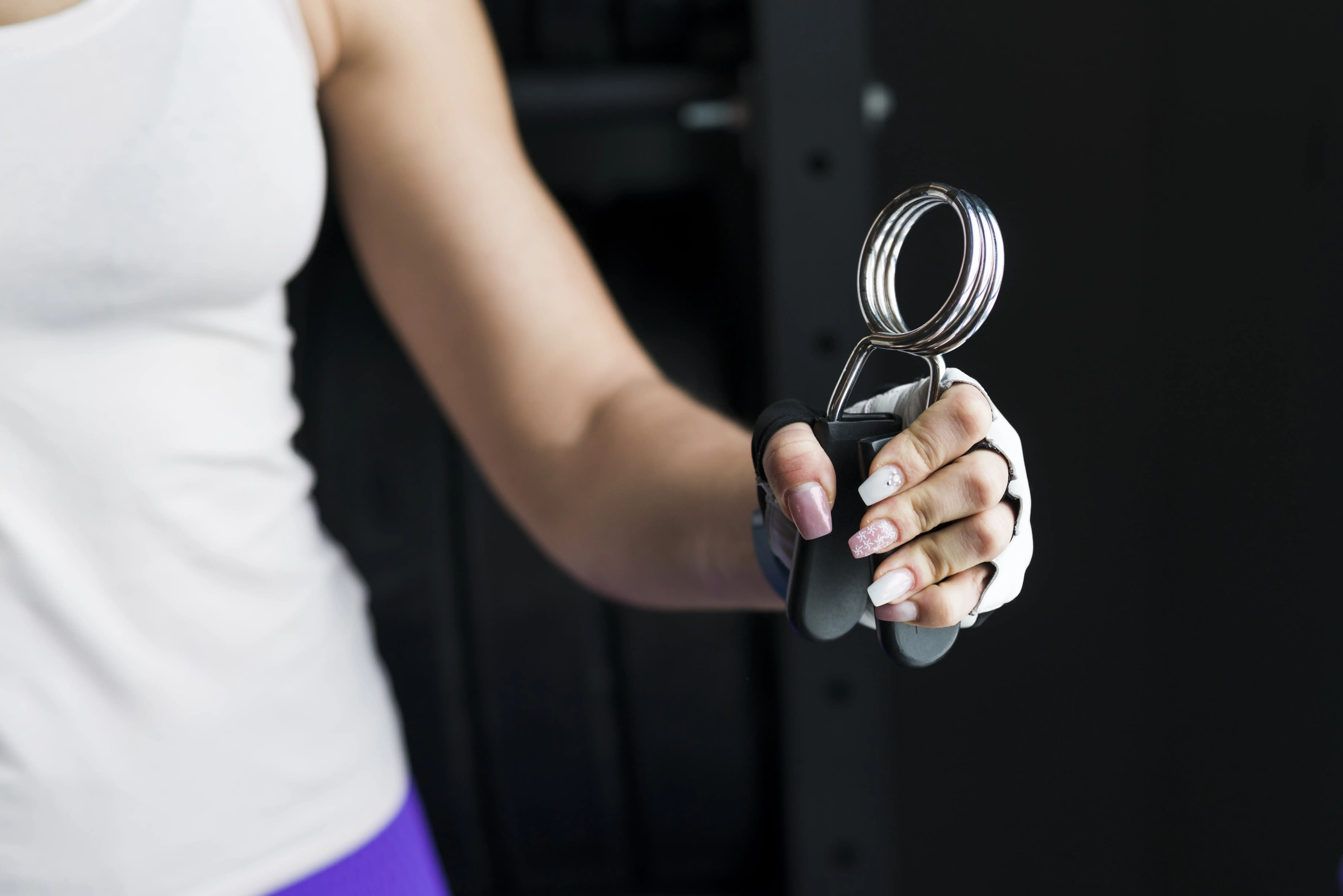 Fitness goal tracking 2026
Measurable goals are the key to success — track your progress with concrete metrics.
Fitness goal tracking 2026
Measurable goals are the key to success — track your progress with concrete metrics.
The Best Fitness Goals for 2026
Here are concrete goal examples across different categories:
Strength Goals
| Lift | Beginner | Intermediate | Advanced |
|---|---|---|---|
| Bench Press | +20–30 kg/year | +10–15 kg/year | +5–10 kg/year |
| Squat | +30–40 kg/year | +15–20 kg/year | +5–15 kg/year |
| Deadlift | +30–50 kg/year | +15–25 kg/year | +10–15 kg/year |
Read more about bench press, squats, and deadlifts.
Body Composition Goals
Muscle building:
- Beginner: 5–10 kg of muscle per year (realistic)
- Intermediate: 2–5 kg per year
- Advanced: 1–2 kg per year
Fat loss:
- Healthy rate: 0.5–1 kg per week
- Annual goal: 10–25 kg (if a lot to lose)
Read more about muscle growth programs.
Performance Goals
- First pull-up (or 10 consecutive pull-ups)
- First dip
- Squat your own bodyweight
- Bench press your own bodyweight
- Deadlift 2× your bodyweight
Consistency Goals
These are often the most important — especially for beginners:
- "I will train at least 3× per week for 52 weeks"
- "I won't take more than a 7-day break from training all year"
- "I will log every single workout"
Learning Goals
- Learn correct technique for squat, bench press, and deadlift
- Learn to track progressive overload
- Understand protein requirements and optimize my nutrition
Setting Goals by Experience Level
🆕 Beginner (0–12 months experience)
Priority: Consistency and technique
Recommended goals:
- Main goal: "Train 3× per week for 12 consecutive months"
- Strength goal: "Increase my total strength by 50%" (bench + squat + deadlift combined)
- Learning goal: "Master the technique of the fundamental movements"
Why these?
As a beginner, your biggest challenge is building the habit of training regularly. Overly ambitious strength goals can lead to poor technique and injury.
Read the beginner gym workout program.
💪 Intermediate Lifter (1–3 years experience)
Priority: Progression and specialization
Recommended goals:
- Strength goal: A specific number in your main lifts (e.g., "100 kg bench press")
- Body composition: "Gain 3 kg of muscle while maintaining body fat percentage"
- Performance goal: "10 clean pull-ups with added weight"
Why these?
At intermediate level, progress slows. You need more specific goals and more structured training.
🏆 Advanced Lifter (3+ years experience)
Priority: Fine-tuning and addressing weaknesses
Recommended goals:
- Specific strength goal: "Increase my competition deadlift by 5 kg"
- Technical goal: "Fix squat depth"
- Long-term: "Stay healthy and injury-free all year"
Why these?
As an advanced lifter, every kilogram is harder to earn. Small improvements and maintaining health become the priority.
How to Measure Progress
A goal without tracking is just a wish. Here are concrete measurement methods:
Strength Goals
How to measure:
- Log every session's weights and reps
- Test 1RM (or calculate an estimate) every 8–12 weeks
- Use a workout app for automatic tracking
Sample tracking table:
| Date | Bench 1RM | Squat 1RM | Deadlift 1RM | Total |
|---|---|---|---|---|
| Jan 1, 2026 | 60 kg | 80 kg | 100 kg | 240 kg |
| Apr 1, 2026 | 70 kg | 95 kg | 120 kg | 285 kg |
| Jul 1, 2026 | 77.5 kg | 105 kg | 135 kg | 317.5 kg |
| Oct 1, 2026 | 82.5 kg | 115 kg | 145 kg | 342.5 kg |
Body Composition
How to measure:
- Weight: Same time, same conditions (morning, empty stomach)
- Circumference: Chest, waist, hips, thighs, arms
- Progress photos: Same lighting, same place, every 4 weeks
- Body fat %: Calipers or bioimpedance scale (track the trend)
Tip: Weight fluctuates 1–2 kg daily. Track the weekly average, not individual days.
Consistency
How to measure:
- Mark every training day on a calendar
- Count completed sessions vs. planned at month's end
- Target: at least 80% completion rate
Maintaining Motivation Throughout the Year
January enthusiasm is easy. The real challenge is October. Here are research-backed methods for sustaining motivation:
1. Break Your Goal into Milestones
A year-long goal feels distant. Break it down:
- Annual goal: Bench press 60 → 100 kg
- Quarterly milestone: +10 kg per 3 months
- Monthly target: +3–4 kg per month
- Weekly target: Train 3×, add 1 rep or 1.25 kg
2. Celebrate Small Wins
Research shows that acknowledging small achievements significantly increases motivation (Amabile & Kramer, 2011).
Examples of moments worth celebrating:
- Adding the first plate to the bar
- A new personal record on any lift
- 4 consecutive weeks without missing a session
- The first time someone comments on your progress
3. Make Training Part of Your Identity
Don't say: "I'm trying to go to the gym."
Say: "I'm someone who trains."
When training is part of your identity, it's no longer a choice — it's simply what you do.
4. Surround Yourself with the Right People
- Find a training partner
- Join a gym where you feel comfortable
- Follow inspiring accounts (but avoid unhealthy comparison)
5. Plan for Setbacks
They will come. Illness, injury, a busy period, loss of motivation.
Plan ahead:
- "If I get sick, I'll return to the gym as soon as I recover — starting light"
- "If I miss a week, I won't give up — I'll restart the following Monday"
- "If motivation disappears, I'll do at least a 20-minute session"
 Training motivation 2026
Motivation fluctuates — but consistency and the right goals will carry you to the finish line.
Training motivation 2026
Motivation fluctuates — but consistency and the right goals will carry you to the finish line.
The Science of Goal Achievement
The Psychology of Commitment
Research shows that public commitment increases the probability of achieving a goal by 65% (Matthews, 2015).
In practice:
- Tell your goal to a friend or family member
- Write it down and put it somewhere visible
- Share your progress on social media (if that works for you)
The Power of Habits
Willpower runs out. Habits don't. Clear (2018) showed that habit formation takes an average of 66 days.
Turning training into a habit:
- Cue: Same time, same place, same routine
- Routine: The training session itself
- Reward: The good feeling, seeing progress, a small treat
Implementation Intentions
"If-then" plans significantly improve goal achievement (Gollwitzer, 1999).
Examples:
- "IF it's Monday at 5 PM, THEN I go to the gym"
- "IF I don't feel up to a full session, THEN I'll at least do the warm-up"
- "IF training goes well, THEN I reward myself with a sauna"
Tools for Tracking Goals
Workout Apps
The best way to track training is an app that:
- Automatically logs weights and reps
- Shows progression graphs
- Sends training reminders
Read our comparison of the best workout apps and best free gym apps.
Tsemppi — Your Goal Achievement Partner
Tsemppi is an AI-powered workout app that helps with goal setting and tracking:
- 🎯 Set your goals in the app
- 📊 AI tracks your progression automatically
- 🔔 Get notified when it's time to increase the weight
- 📈 See your development in clear graphs
- 🆓 7-day free trial, no credit card required
Traditional Methods
If you prefer not to use an app:
- Training journal: A notebook where you log every session
- Excel/Google Sheets: Create your own tracking spreadsheet
- Calendar: Mark every training day
FAQ
How many fitness goals should I set?
No more than 2–3. Too many goals fragments your focus. Choose one main goal and 1–2 supporting goals.
What if I don't achieve my goal?
That's normal — and valuable information. Analyze why:
- Was the goal unrealistic?
- Was the plan wrong?
- Did life circumstances change?
Adjust the goal and keep going. Failure is part of the process.
Do goals always have to be numbers?
Not necessarily. Consistency goals ("train 3× per week") and learning goals ("master squat technique") are equally valuable.
When should goals be updated?
- Quarterly: Check if you're on track
- When you achieve a goal: Set a new one
- When circumstances change: Adjust to be more realistic or more ambitious
How do I handle setbacks?
- Accept that they're part of the process
- Don't dramatize — one bad week doesn't ruin a year
- Analyze the reason and learn from it
- Return as soon as possible
Can a goal be too easy?
Yes. A goal that's too easy doesn't motivate and won't produce maximum development. The goal should feel challenging but achievable.
Summary
2026 can be your best training year — if you set the right goals and commit to them.
Key takeaways:
- Use the SMART framework — specific, measurable, achievable, relevant, time-bound
- Choose 2–3 goals — focus beats spreading yourself thin
- Break into milestones — annual goals into monthly and weekly targets
- Measure and track — use an app or training journal
- Celebrate small wins — motivation grows from success
- Plan for setbacks — they're part of the process, don't quit
Concrete action step:
Write down ONE SMART goal for 2026 right now. Set it as your phone wallpaper. Tell one person about it. You're already 65% more likely to achieve it.
References
-
Norcross, J.C., et al. (2002). Auld lang syne: Success predictors, change processes, and self-reported outcomes of New Year's resolvers. Journal of Clinical Psychology, 58(4), 397–405. PubMed
-
Locke, E.A., & Latham, G.P. (2002). Building a practically useful theory of goal setting and task motivation. American Psychologist, 57(9), 705–717. PubMed
-
Matthews, G. (2015). Goal Research Summary. Dominican University of California.
-
Clear, J. (2018). Atomic Habits: An Easy & Proven Way to Build Good Habits & Break Bad Ones. Penguin Random House.
-
Gollwitzer, P.M. (1999). Implementation intentions: Strong effects of simple plans. American Psychologist, 54(7), 493–503. PubMed
-
Amabile, T., & Kramer, S. (2011). The Progress Principle. Harvard Business Review Press.
-
Schoenfeld, B.J., et al. (2017). Dose-response relationship between weekly resistance training volume and increases in muscle mass. Journal of Sports Sciences, 35(11), 1073–1082. PubMed
Want AI to help you achieve your goals? Join Tsemppi — the app sets realistic goals for you, tracks your progression, and tells you exactly what to do in every session. 7-day free trial, no credit card required.


