

A wide, V-shaped back is the most iconic feature in bodybuilding — but back training is about far more than aesthetics. A strong back is the foundation of posture, health, and total-body strength. Yet back training is often overshadowed by chest day and bicep curls. This guide changes that in 2026: ready-made programs, the best exercises, technique tips, and a progression model to build a back that looks and performs.
Why Back Training Changed Everything for Me
My first two years in the gym I made the same mistake as most people: bench press, biceps, and shoulders. Back day was the session I did at half effort — a few lat pulldown sets and then home.
The consequences? Shoulders rounded forward, posture suffered, and my bench press stalled. Worst of all was chronic upper back pain that bothered me every evening at my desk.
The turning point came when a personal trainer told me straight: "Your back is too weak relative to your chest. That's why your shoulders hurt and your bench isn't going up."
I started rowing seriously. Six months later my bench press went up 10 kg — purely because my back could stabilize the movement better. Posture improved, pain disappeared, and for the first time I could see muscles in my back I didn't know existed.
The back is the body's rear armor. When it's strong, everything else works better.
"Back training is the best investment you can make at the gym. It improves posture, protects the spine, and elevates every other lift. Yet it's the most underrated training day." – Pietari Risku, Founder of Tsemppi
Table of Contents
- Why Is Back Training So Important?
- Back Anatomy for Lifters
- Best Back Workout Exercises
- Back Workout Program for Beginners
- Back Workout Program for Intermediate Lifters
- Back Workout Program for Advanced Lifters
- Back Training Within Different Programs
- Back Training Progression Model
- Technique Tips for Key Exercises
- Most Common Mistakes in Back Training
- Back Training and Posture
- Back Training Without a Gym
- FAQ
- Summary
Why Is Back Training So Important?
The back isn't just one muscle group among many — it's the entire upper body's support structure. Here's why you can't skip back training:
The Science
The back musculature is the largest muscle group complex in the upper body. Research demonstrates the benefits of back training:
- Significantly improves posture and reduces neck and shoulder pain (Kim et al., 2015)
- Prevents lower back pain — a strong back protects the spine under load (Steele et al., 2015)
- Elevates performance in other lifts — bench press, overhead press, and deadlift all improve
- Balances the upper body — prevents the postural faults caused by chest-dominant training
Practical Benefits
| Benefit | Explanation |
|---|---|
| Posture | Pulling muscles keep shoulders back and chest open |
| Shoulder health | A strong upper back prevents rotator cuff problems |
| Bench press | The back creates a stable base — stronger back = stronger bench |
| Total strength | Deadlift, rows, and pull-ups are fundamental strength movements |
| Daily function | Lifting, carrying, sitting — all require a strong back |
| V-shaped appearance | A wide back creates the illusion of a narrower waist |
What Happens When You Neglect Back Training?
The most common scenario: chest and shoulders get stronger, but the back falls behind. This leads to:
- Rounded shoulders — pecs pull shoulders forward, back can't pull them back
- Neck and shoulder pain — asymmetry stresses the cervical spine
- Shoulder injuries — rotator cuff must compensate for a weak upper back
- Bench press stagnation — without a stable back platform, the chest can't produce maximum force
- Lower back pain — weak spinal erectors can't support the spine
Back Anatomy for Lifters
The back consists of many muscle layers. Effective back training requires understanding what you're training and with which movement.
Latissimus Dorsi
The largest back muscle and the creator of the V-shape. Extends broadly from the sides to the upper arm.
- Function: Shoulder adduction, internal rotation, and extension
- Key exercises: Lat pulldown, pull-up, barbell row, deadlift
- Why it matters: Creates the wide silhouette and accounts for the majority of back strength output
Trapezius
A three-part muscle covering the upper back and neck area:
- Upper traps: Elevate the shoulders — shrugging
- Mid traps: Retract the shoulder blades — rowing movements
- Lower traps: Depress and retract the shoulder blades — face pulls, Y-raises
Why it matters: Scapular control and shoulder health. Most people have overdeveloped upper traps relative to the mid and lower portions.
Rhomboids
Between the shoulder blades, beneath the trapezius:
- Function: Retract the shoulder blades toward the spine
- Key exercises: Rowing movements, especially face pulls and scapular retraction exercises
- Why it matters: Maintaining posture and scapular stability
Erector Spinae
The muscle group running along both sides of the spine:
- Function: Spinal extension and stabilization
- Key exercises: Deadlift, good morning, hyperextension
- Why it matters: Protects the spine in all lifts and daily activities
Teres Major
From the lower edge of the scapula to the upper arm:
- Function: Assists the lat in shoulder adduction
- Key exercises: Lat pulldown, pull-up, row
- Why it matters: Complements the lat and adds back thickness
Infraspinatus and Rotator Cuff Muscles
On the posterior surface of the scapula:
- Function: External rotation and stabilization of the shoulder
- Key exercises: Face pull, external rotation exercises
- Why it matters: Injury prevention
Practical Implications of Anatomy
The back requires varied training because different movements target different muscles:
| Movement Type | Primary Target |
|---|---|
| Vertical pull (lat pulldown, pull-up) | Latissimus dorsi (width) |
| Horizontal pull (row) | Mid-traps, rhomboids, lats (thickness) |
| Hip extension (deadlift) | Erector spinae, posterior chain |
| Scapular retraction (face pull) | Mid/lower traps, rhomboids |
That's why lat pulldowns alone aren't enough — you need both vertical and horizontal pulling and hip extension.
Best Back Workout Exercises
Vertical Pull (Width)
1. Pull-Up / Chin-Up
The king of bodyweight exercises. Activates the lats, biceps, and core.
| Feature | Details |
|---|---|
| Target muscles | Lats, biceps, teres major |
| Type | Compound, bodyweight |
| Variations | Supinated grip (chin-up, more biceps), pronated grip (pull-up, more back), wide grip |
| Difficulty | Intermediate–advanced |
Read the complete pull-up program for beginners.
2. Lat Pulldown
The machine version of the pull-up. Excellent for beginners and those who can't yet do pull-ups.
| Feature | Details |
|---|---|
| Target muscles | Lats, biceps, teres major |
| Type | Compound, machine |
| Variations | Wide grip, close grip, pronated, neutral grip |
| Difficulty | Beginner–advanced |
3. Straight-Arm Pulldown
Isolates the lat without bicep assistance.
| Feature | Details |
|---|---|
| Target muscles | Latissimus dorsi |
| Type | Isolation |
| Equipment | Cable machine, straight bar or rope |
| Difficulty | Intermediate |
Horizontal Pull (Thickness)
4. Barbell Row
The foundational back exercise. Builds massive thickness throughout the entire back.
| Feature | Details |
|---|---|
| Target muscles | Lats, traps, rhomboids, biceps |
| Type | Compound |
| Equipment | Barbell |
| Difficulty | Intermediate–advanced |
5. Dumbbell Row
Unilateral version that reveals and corrects side-to-side imbalances.
| Feature | Details |
|---|---|
| Target muscles | Lats, traps, rhomboids |
| Type | Compound, unilateral |
| Equipment | Dumbbell + bench |
| Difficulty | Beginner–advanced |
6. Seated Cable Row
Safe and controlled rowing movement that allows excellent muscle connection.
| Feature | Details |
|---|---|
| Target muscles | Lats, mid-traps, rhomboids |
| Type | Compound, machine |
| Variations | Narrow V-bar, wide bar, rope attachment |
| Difficulty | Beginner–advanced |
7. T-Bar Row
Stable position allows heavy loads with emphasis on the mid-back.
| Feature | Details |
|---|---|
| Target muscles | Lats, traps, rhomboids |
| Type | Compound |
| Equipment | T-bar machine or landmine |
| Difficulty | Intermediate–advanced |
Hip Extension (Posterior Chain + Erectors)
8. Deadlift
The most comprehensive strength movement. Loads the entire posterior chain from spinal erectors to glutes.
| Feature | Details |
|---|---|
| Target muscles | Erector spinae, glutes, hamstrings, traps |
| Type | Compound |
| Equipment | Barbell |
| Difficulty | Intermediate–advanced |
Read the complete deadlift guide.
9. Hyperextension
Isolates the spinal erectors and glutes safely.
| Feature | Details |
|---|---|
| Target muscles | Erector spinae, glutes |
| Type | Isolation/compound |
| Equipment | Hyperextension bench |
| Difficulty | Beginner–advanced |
Scapular Health and Posture
10. Face Pull
Possibly the single most important exercise for long-term shoulder health and posture. Every lifter should be doing this.
| Feature | Details |
|---|---|
| Target muscles | Lower/mid traps, rhomboids, infraspinatus |
| Type | Isolation |
| Equipment | Cable machine, rope attachment |
| Difficulty | Beginner–advanced |
Exercise Summary
| Exercise | Primary Target | Movement Type | Priority |
|---|---|---|---|
| Pull-Up | Lats | Vertical pull | ⭐⭐⭐ Highest |
| Barbell Row | Full back | Horizontal pull | ⭐⭐⭐ Highest |
| Deadlift | Posterior chain + erectors | Hip extension | ⭐⭐⭐ Highest |
| Lat Pulldown | Lats | Vertical pull | ⭐⭐ High |
| Dumbbell Row | Full back | Horizontal pull | ⭐⭐ High |
| Seated Cable Row | Full back | Horizontal pull | ⭐⭐ High |
| Face Pull | Traps, rhomboids | Scapular retraction | ⭐⭐ High |
| Hyperextension | Erector spinae | Hip extension | ⭐ Moderate |
| Straight-Arm Pulldown | Lats | Isolation | ⭐ Moderate |
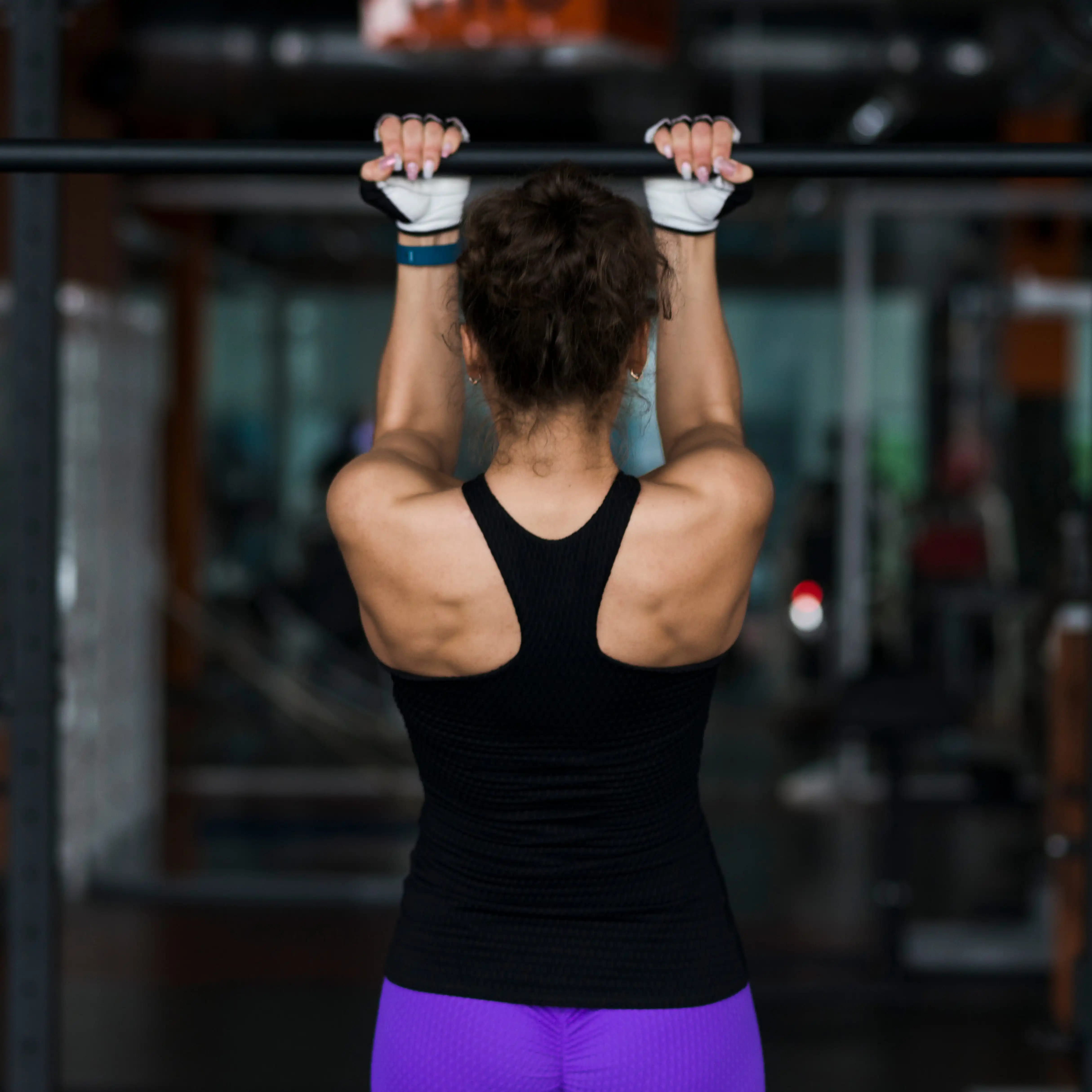 Back workout exercises 2026
Effective back training combines vertical pulling, horizontal pulling, and hip extension into a complete stimulus.
Back workout exercises 2026
Effective back training combines vertical pulling, horizontal pulling, and hip extension into a complete stimulus.
Back Workout Program for Beginners
With less than one year of training, focus on learning the basic movements with correct technique. Machines and dumbbells are your friends.
Beginner Back Workout (1x per week, dedicated back day)
| Exercise | Sets × Reps | Rest | Notes |
|---|---|---|---|
| Lat Pulldown (wide grip) | 3 × 10–12 | 90 sec | Pull with elbows, not hands |
| Seated Cable Row (V-bar) | 3 × 10–12 | 90 sec | Squeeze shoulder blades at top |
| Dumbbell Row | 3 × 10–12/side | 60 sec | Stable position, bench for support |
| Hyperextension | 2 × 12–15 | 60 sec | Bodyweight is enough to start |
| Face Pull | 3 × 15–20 | 45 sec | Light weight, feel the movement |
Total volume: 14 sets Duration: Approximately 40–50 minutes
Beginner Back Work (as part of a full body program)
If you train with a full body program 3 times per week:
| Exercise | Sets × Reps | Rest |
|---|---|---|
| Lat Pulldown or assisted pull-up | 3 × 8–10 | 90 sec |
| Barbell row or dumbbell row | 3 × 10–12 | 90 sec |
| Face Pull | 2 × 15–20 | 45 sec |
This gives the back work 3 times per week, which is optimal for beginners (Schoenfeld et al., 2016).
Tips for Beginners
Learn to "pull with your back." The biggest challenge for beginners is bicep dominance in back exercises. Think about pulling with your elbows, not your hands. Imagine your hands are just hooks on the bar.
Start with machines and cables. Lat pulldown and seated cable row teach the correct movement pattern safely before moving to free weight rowing.
Face pull every session. Do 2–3 sets of face pulls at the end of every workout. It pays for itself in posture and shoulder health.
Pull-ups are the goal, not the starting point. If you can't do pull-ups yet, start with assisted pull-ups (band or assisted machine) or negative pull-ups. Read the pull-up program for beginners.
Back Workout Program for Intermediate Lifters
With 1–3 years of training experience, it's time to add volume, free weights, and intensity.
Intermediate Back Workout A (Width Focus)
| Exercise | Sets × Reps | Rest | RPE |
|---|---|---|---|
| Pull-Up (weighted or bodyweight) | 4 × 6–10 | 2 min | 8 |
| Barbell Row | 4 × 8–10 | 2 min | 7–8 |
| Seated Cable Row (wide rope) | 3 × 10–12 | 90 sec | 8 |
| Straight-Arm Pulldown | 3 × 12–15 | 60 sec | 8–9 |
| Face Pull | 3 × 15–20 | 45 sec | 7–8 |
Intermediate Back Workout B (Thickness Focus)
| Exercise | Sets × Reps | Rest | RPE |
|---|---|---|---|
| Deadlift | 4 × 4–6 | 3 min | 8 |
| T-Bar Row or Meadows Row | 4 × 8–10 | 2 min | 8 |
| Lat Pulldown (close supinated grip) | 3 × 10–12 | 90 sec | 7–8 |
| Dumbbell Row | 3 × 10–12/side | 60 sec | 8 |
| Hyperextension (added weight) | 3 × 10–12 | 60 sec | 7–8 |
Weekly Structure (as part of Upper/Lower)
This program works best in a 2-day Upper/Lower split or PPL split:
Upper/Lower:
| Day | Workout | Back Work |
|---|---|---|
| Monday | Upper A | Back A (width) + chest + shoulders |
| Tuesday | Lower A | — |
| Wednesday | Rest | — |
| Thursday | Upper B | Back B (thickness) + chest + shoulders |
| Friday | Lower B | Deadlift (back gets work) |
| Saturday | Rest | — |
| Sunday | Rest | — |
In PPL: Back work comes on Pull day. Read the PPL guide.
Total volume: 17 sets per back session, 34 sets per week
Back Workout Program for Advanced Lifters
With over 3 years of training, you need more volume, variation, and specialized techniques.
Advanced Back Workout A (Strength + Width)
| Exercise | Sets × Reps | Rest | RPE |
|---|---|---|---|
| Weighted Pull-Up | 5 × 4–6 | 3 min | 8–9 |
| Barbell Row (Pendlay style) | 4 × 5–7 | 2–3 min | 8–9 |
| Lat Pulldown (wide grip, pause at bottom) | 3 × 8–10 | 90 sec | 8 |
| Single-Arm Cable Row | 3 × 10–12/side | 60 sec | 8–9 |
| Face Pull | 3 × 15–20 | 45 sec | 7–8 |
| Straight-Arm Pulldown (drop set) | 2 × 12–15 + drop | 60 sec | 9–10 |
Advanced Back Workout B (Thickness + Posterior Chain)
| Exercise | Sets × Reps | Rest | RPE |
|---|---|---|---|
| Deadlift | 5 × 3–5 | 3–4 min | 8–9 |
| T-Bar Row (heavy) | 4 × 6–8 | 2 min | 8–9 |
| Dumbbell Row (Kroc-style) | 3 × 12–15/side | 90 sec | 9 |
| Lat Pulldown (close neutral grip) | 3 × 10–12 | 90 sec | 8 |
| Hyperextension (added weight) | 3 × 10–12 | 60 sec | 8 |
| Barbell Shrug | 3 × 10–12 | 60 sec | 8 |
Advanced Techniques
Kroc Rows: Heavy dumbbell rows where a small amount of momentum is allowed, performed with high reps (12–20) and heavy weight. Builds exceptional grip strength and back thickness.
Pause reps: Pause at the contracted position for 1–2 seconds. Especially effective on lat pulldowns and seated rows — forces the back to do the work without momentum.
Dead Stop Row (Pendlay Row): Every rep starts from the floor. Eliminates the stretch reflex and forces every rep to be explosive. Excellent for power output.
Myo-reps: Activation set (12–15 reps), 5-second rest, 3–5 additional reps. Repeat 3–4 times. Especially effective on lat pulldowns and face pulls.
Supersets: Pair a vertical and horizontal pull: e.g. lat pulldown + seated cable row. Saves time and increases metabolic stress.
Back Training Within Different Programs
Full Body (3x per week)
2–3 back exercises in every session. Suitable for beginners.
| Session | Back Exercises |
|---|---|
| Session 1 | Barbell row 3×8, lat pulldown 3×10 |
| Session 2 | Dumbbell row 3×10, face pull 2×15 |
| Session 3 | Pull-up/lat pulldown 3×8, seated cable row 3×10 |
Weekly back volume: 14–17 sets
Upper/Lower (4x per week)
Two separate back-focused upper body sessions. Read the Upper/Lower guide.
Weekly back volume: 28–36 sets
Push/Pull/Legs (3–6x per week)
Pull day = back training + biceps. Read the PPL guide.
| PPL Rotation | Pull Day |
|---|---|
| 1x through (3 days/week) | 1 back session per week (15–18 sets) |
| 2x through (6 days/week) | 2 back sessions per week (30–36 sets) |
Optimal Weekly Back Volume
| Experience Level | Sets Per Week | Recommended Distribution |
|---|---|---|
| Beginner | 10–14 | 2–3 vertical + 2–3 horizontal + face pull |
| Intermediate | 16–20 | 4–5 vertical + 4–5 horizontal + face pull + deadlift |
| Advanced | 20–28+ | Varied across all movement categories |
(Schoenfeld et al., 2017)
Back Training Progression Model
Double Progression for Back Training
For pulling movements (pull-up, row, lat pulldown):
| Week | Barbell Row | Reps |
|---|---|---|
| 1 | 70 kg | 8, 8, 7, 7 |
| 2 | 70 kg | 8, 8, 8, 7 |
| 3 | 70 kg | 9, 8, 8, 8 |
| 4 | 70 kg | 9, 9, 9, 8 |
| 5 | 70 kg | 10, 10, 10, 10 → INCREASE WEIGHT |
| 6 | 72.5 kg | 8, 7, 7, 7 |
Pull-up progression:
- Bodyweight × max reps → when you get 3×10, add weight
- Add 2.5–5 kg plate via belt or between feet
- Restart at 3×6 and build back up
Linear Progression for Beginners
- Barbell Row: +2.5 kg per week
- Lat Pulldown: +2.5 kg per week (or one weight stack increment)
- Deadlift: +2.5–5 kg per week
Back Training Periodization
| Phase | Weeks | Emphasis | Example |
|---|---|---|---|
| Volume | 1–4 | More sets, moderate weight | 4×10 row, 4×10 lat pulldown |
| Intensity | 5–8 | Heavier weights, lower reps | 5×5 row, 5×5 weighted pull-up |
| Peak | 9–10 | New personal records | Test deadlift 1RM, max pull-ups |
| Deload | 11 | Light week | All weights at 60%, volume –50% |
Read more about progressive overload.
 Back workout progression 2026
Consistent progression in rows, pulls, and pull-ups is the key to a wider and stronger back.
Back workout progression 2026
Consistent progression in rows, pulls, and pull-ups is the key to a wider and stronger back.
Technique Tips for Key Exercises
Barbell Row Technique
- Starting position: Feet hip-width apart, knees slightly bent
- Torso angle: Approximately 45–60 degrees to the floor (nearly horizontal for Pendlay rows)
- Grip: Shoulder-width or slightly wider, pronated or supinated grip
- Pull direction: Pull the bar toward your lower abs/navel — not toward your chest
- Shoulder blades: Squeeze together at the top, control the descent
- Back: Neutral spine throughout the ENTIRE movement, no rounding
Most common mistake: Torso rising during the pull (momentum). Fix: reduce the weight and keep your torso angle constant.
Lat Pulldown Technique
- Grip: Slightly wider than shoulder-width (1.5×), thumbs over the bar (false grip)
- Starting position: Seated, feet anchored, chest tall
- Initiation: Pull shoulder blades down and together BEFORE bending your elbows
- Pull direction: Pull bar toward upper chest, elbows down and slightly back
- Bottom position: Squeeze for 1 second, feel the lat contraction
- Return: Controlled back to top, allow lats to stretch fully
Most common mistake: Pulling with the biceps, back doesn't activate. Fix: think "pull with your elbows" and initiate from the shoulder blades.
Pull-Up Technique
- Grip: Pull-up = wide pronated grip, Chin-up = narrow supinated grip
- Starting position: Dead hang — arms fully extended, shoulders actively engaged (not passively hanging)
- Initiation: Activate scapular depression before bending your arms
- Pull direction: Pull chest toward the bar, chin over bar
- Descent: Controlled all the way down, full range of motion
Most common mistake: Half reps — chin doesn't clear the bar or arms don't fully extend at the bottom. Fix: do fewer reps with full range of motion.
Face Pull Technique
- Setup: Cable set to upper position, rope attachment
- Grip: Thumbs facing back (external rotation)
- Pull direction: Pull rope toward your face, open elbows to the sides
- End position: Hands beside ears, elbows back, shoulder blades squeezed together
- Return: Controlled, don't let the weight pull you forward
Why this matters so much: Face pull trains the mid/lower traps, rhomboids, and rotator cuff — muscles that no other exercise targets as effectively. It's the single best exercise for improving posture and preventing shoulder injuries.
Most Common Mistakes in Back Training
1. Biceps Do All the Work
Mistake: In every pulling exercise, the biceps burn but the back feels nothing.
Fix: Develop the mind-muscle connection. Start every back session with straight-arm pulldowns or light cable rows — these force back activation without bicep dominance. Use straps to eliminate grip as a limiting factor.
2. Too Narrow Exercise Selection
Mistake: Only lat pulldowns every back session.
Fix: The back needs both vertical pulling (lat pulldown, pull-up) and horizontal pulling (rows). Include both in every back session. Rule: at least one vertical and one horizontal pull per workout.
3. No Face Pulls
Mistake: "Face pulls are a pointless accessory exercise."
Reality: Face pull is arguably the single most important exercise for long-term shoulder health and posture. Do it every session — it takes 5 minutes and can save your shoulders.
4. Too Much Momentum in Rows
Mistake: The entire body swings back and forth during barbell rows.
Fix: Drop the weight 20–30% and perform controlled reps. The torso stays nearly still — only the arms and shoulder blades move. Pause reps fix this effectively.
5. Half-Range Pull-Ups
Mistake: Chin doesn't clear the bar or arms don't fully extend at the bottom.
Fix: Reduce rep count and use full range of motion. One clean pull-up is worth more than five half-reps.
6. Neglecting the Erector Spinae
Mistake: Only pulling and rowing movements, no hyperextensions or good mornings.
Fix: The erector spinae need dedicated work. Add 2–3 sets of hyperextensions or deadlifts to your back training. Strong erectors protect the lower back in every movement.
7. Push/Pull Imbalance
Mistake: Three chest exercises and one back exercise per session.
Fix: Track your push-pull balance. Do at least as much — and preferably slightly more — pulling volume as pushing. A ratio of 1:1 or 1:1.5 (pull:push) is optimal.
Back Training and Posture
The modern lifestyle's greatest threat to the body is desk work. Back training is the best medicine.
Why Posture Suffers
Desk work leads to a typical pattern:
- Pec minor tightens and pulls shoulders forward
- Upper back muscles weaken and can't pull shoulders back
- Head drifts forward (forward head posture)
- Thoracic spine rounds (increased kyphosis)
- Result: neck and shoulder pain, headaches, back problems
Posture Correction Mini-Program
This 10-minute routine repairs the damage of desk work. Do it 3–4 times per week, for example at the end of your training session:
| Exercise | Sets × Reps | Notes |
|---|---|---|
| Face Pull | 3 × 15–20 | Light weight, perfect technique |
| Band Pull-Apart | 3 × 15–20 | Resistance band, squeeze shoulder blades |
| Dead Hang | 3 × 20–30 sec | Decompresses shoulders and spine |
| Wall Angel | 2 × 10 | Back and arms against wall, sliding movement |
The Posture Rule for Lifters
For every pushing movement, do at least one pulling movement. This means:
- Bench press → Barbell row or pull-up
- Overhead press → Face pull or lat pulldown
- Dips → Dumbbell row or seated cable row
If your posture is already poor, emphasize pulling movements at a 1.5:1 ratio until balance is restored.
Back Training Without a Gym
The back is challenging to train without equipment, but not impossible. The key piece of equipment: a pull-up bar (door-mounted costs roughly €20–30).
Bodyweight Back Workout (pull-up bar)
| Exercise | Sets × Reps | Rest |
|---|---|---|
| Pull-Up (or negative pull-up) | 4 × max | 2 min |
| Australian Row (under a table) | 4 × 10–15 | 90 sec |
| Superman Hold | 3 × 20–30 sec | 60 sec |
| Band Pull-Apart (resistance band) | 3 × 15–20 | 45 sec |
| Prone Y-T-W Raises | 2 × 10 each | 45 sec |
Minimal Equipment (dumbbells + resistance band)
| Exercise | Sets × Reps | Rest |
|---|---|---|
| Dumbbell Row | 4 × 10–12/side | 60 sec |
| Band Lat Pulldown (anchored high) | 3 × 12–15 | 60 sec |
| Dumbbell RDL (erector spinae) | 3 × 10–12 | 90 sec |
| Band Face Pull | 3 × 15–20 | 45 sec |
| Renegade Row | 3 × 8–10/side | 60 sec |
Read more about home workout programs.
FAQ
How often should I train my back?
Optimally 2 times per week. Research shows that 2x per week produces significantly better results than 1x per week (Schoenfeld et al., 2016). In practice this means two separate Pull days in an Upper/Lower or PPL program.
How many sets of back training per week?
For beginners 10–14 sets, intermediate 16–20 sets, advanced 20–28+ sets per week (Schoenfeld et al., 2017). Remember to distribute volume across movement categories: vertical pull, horizontal pull, and face pull.
Should I use straps for back training?
Yes — for back training. Straps remove grip strength as the limiting factor and allow better lat loading. Grip training matters, but not at the expense of back development. Use straps for heavy rows and lat pulldowns. For deadlifts, also train without straps to develop grip strength.
Pull-up vs. lat pulldown — which is better?
Both are excellent. Pull-ups are more comprehensive (stabilize the whole body, activate the core), but lat pulldowns allow more precise load management. Ideally both belong in your program. Beginners find lat pulldowns easier to learn; advanced lifters benefit from weighted pull-ups.
Does back training help with back pain?
Yes — in most cases. A strong back protects the spine and reduces pain (Steele et al., 2015). However: if you have acute back pain, consult a physiotherapist before starting with heavy loads. Begin lightly with hyperextensions and cable exercises, and increase load progressively.
How do I get a wider back?
Width comes from the latissimus dorsi. Best exercises: wide-grip lat pulldown, wide-grip pull-up, and straight-arm pulldown. Volume is key — do 10–14 sets of vertical pulling per week and increase weights progressively.
How do I get a thicker back?
Thickness comes from the trapezius, rhomboids, and erector spinae. Best exercises: barbell row, T-bar row, dumbbell row, and deadlift. Focus on horizontal pulling and squeeze your shoulder blades forcefully together on every rep.
Can I train back every day?
Not recommended with heavy weights. Back muscles need 48–72 hours to recover. Light postural work (face pulls, band pull-aparts) can be done daily.
What is a good barbell row target?
For men: rowing your bodyweight for 5 reps = solid intermediate level. 1.25× bodyweight = advanced. For women: 0.5× bodyweight = solid intermediate, 0.75× bodyweight = advanced.
Summary
Back training is the most important upper body training day — it builds posture, prevents pain, elevates all other lifts, and creates an impressive V-shaped silhouette. Remember these key points:
The pillars of back training:
- Train back 2x per week — the scientifically proven optimal frequency
- Combine vertical and horizontal pulling — both in every session
- Prioritize pull-ups, barbell rows, and deadlifts — the three cornerstones of back training
- Do face pulls every session — 5 minutes that pays for itself
- Learn to pull with your back, not your biceps — mind-muscle connection is key
- Maintain push-pull balance — at least 1:1, ideally 1:1.5
Realistic goals for 2026:
| Experience Level | Barbell Row Progress/Year | Pull-Ups |
|---|---|---|
| Beginner | +20–30 kg | 0 → 5–10 reps |
| Intermediate | +10–15 kg | 10 → weighted +10 kg |
| Advanced | +5–10 kg | Weighted +20–30 kg |
The back is the muscle group you can't see yourself in the mirror — but everyone else can. Build it strong, and your entire body will thank you.
Also read these guides to support your back training:
- Workout Program 2026: The Complete Guide
- Deadlift Guide: Technique and Programming
- Pull-Up Program for Beginners
- Push Pull Legs Program Guide
- 2-Day Split Upper/Lower Program
- Progressive Overload Training
References
-
Schoenfeld, B.J., et al. (2016). Effects of Resistance Training Frequency on Measures of Muscle Hypertrophy: A Systematic Review and Meta-Analysis. Sports Medicine, 46(11), 1689–1697. PubMed
-
Schoenfeld, B.J., et al. (2017). Dose-response relationship between weekly resistance training volume and increases in muscle mass. Journal of Sports Sciences, 35(11), 1073–1082. PubMed
-
Kim, D., et al. (2015). Effect of an exercise program for posture correction on musculoskeletal pain. Journal of Physical Therapy Science, 27(6), 1791–1794. PubMed
-
Steele, J., et al. (2015). A randomized controlled trial of limited range of motion lumbar extension exercise in chronic low back pain. Spine, 40(15), 1245–1253. PubMed
-
Lehman, G.J., et al. (2004). Variations in muscle activation levels during traditional latissimus dorsi weight training exercises. Dynamic Medicine, 3(1), 4. PubMed
-
Ratamess, N.A., et al. (2009). Progression Models in Resistance Training for Healthy Adults. Medicine & Science in Sports & Exercise, 41(3), 687–708. PubMed
-
Fenwick, C.M., et al. (2009). Comparison of different rowing exercises: trunk muscle activation and lumbar spine motion, load, and stiffness. Journal of Strength and Conditioning Research, 23(2), 350–358. PubMed
Want a personalized back workout program? Join Tsemppi — our AI builds you a complete back training plan based on your goals, tracks your progression, and tells you when it's time to increase the weight.


