

Have you ever downloaded the "perfect training program" online — only to realize after a week that it doesn't work for you? You're not alone. Research shows that up to 73% of people quit a new training program within the first month (Norcross et al., 2002). The reason? The program doesn't fit their life. A personal training plan solves this problem — it's built for you, not for the average person. This guide teaches you how to build a program that actually works for you.
Why Generic Programs Don't Work
Years ago I made the same mistake as most people: I searched for "the best training program" and tried to follow it religiously. My first find was a 6-day PPL program that some fitness influencer called perfect.
The problem? I had time to train 3–4 times per week. Family, work, and other responsibilities didn't bend to a six-day rhythm.
I tried anyway. The result was constant guilt over missed sessions, uneven progression, and eventually frustration. I quit the program after a month.
The turning point came when I understood one thing: the best training program is the one you can do consistently. Not the one that looks best on paper. Not the one elite athletes use. The one that fits your life.
Since then I've helped hundreds of people build their personal training plan. Everyone is different — and everyone's program should be different.
"A training program isn't an end in itself — it's a tool for reaching your goals. The tool needs to fit the user, not the other way around." – Pietari Risku, Founder of Tsemppi
Table of Contents
- What is a personal training plan?
- Why does an individual program produce better results?
- The 7 pillars of a personal training plan
- Step 1: Define your goals
- Step 2: Assess your starting point
- Step 3: Map your schedule and resources
- Step 4: Choose the right training split
- Step 5: Select exercises based on your goals
- Step 6: Plan your progression
- Step 7: Track and adjust
- Examples of personal training plans
- AI-assisted training plans
- Most common mistakes and how to avoid them
- FAQ
- Summary
What Is a Personal Training Plan?
A personal training plan is a workout program built around your individual factors:
Individual Factors
| Factor | What is considered |
|---|---|
| Goals | Muscle growth, strength, fat loss, endurance, health? |
| Experience | Beginner, intermediate, or advanced? |
| Schedule | How many sessions per week, how long? |
| Equipment | Gym, home, outdoors, minimal gear? |
| Limitations | Injuries, mobility issues, health factors? |
| Preferences | What you enjoy, what you dislike? |
| Life situation | Stress, sleep, work, family? |
Personal vs. Generic Program
| Generic program | Personal training plan |
|---|---|
| Same for everyone | Tailored to you |
| Assumes a fixed schedule | Adapts to your schedule |
| Ignores limitations | Works around your limitations |
| Static | Evolves with your progress |
| Often too demanding or too easy | Exactly the right challenge |
Why Does an Individual Program Produce Better Results?
The Research Evidence
Studies clearly show that personalized programs produce better results: personalized apps increased adherence by 27% (Romeo et al., 2019), individualized programs raised motivation by 34% (Direito et al., 2017), and tailored progression produced 40% better strength gains (Mann et al., 2014).
Why Personalization Works
When the program fits your life, it's easier to follow consistently — no constant guilt over missed sessions. The challenge is calibrated to exactly the right level (not too easy, not too hard). When you see results and training feels meaningful, motivation stays month after month. And a program that accounts for your limitations and recovery significantly reduces injury risk.
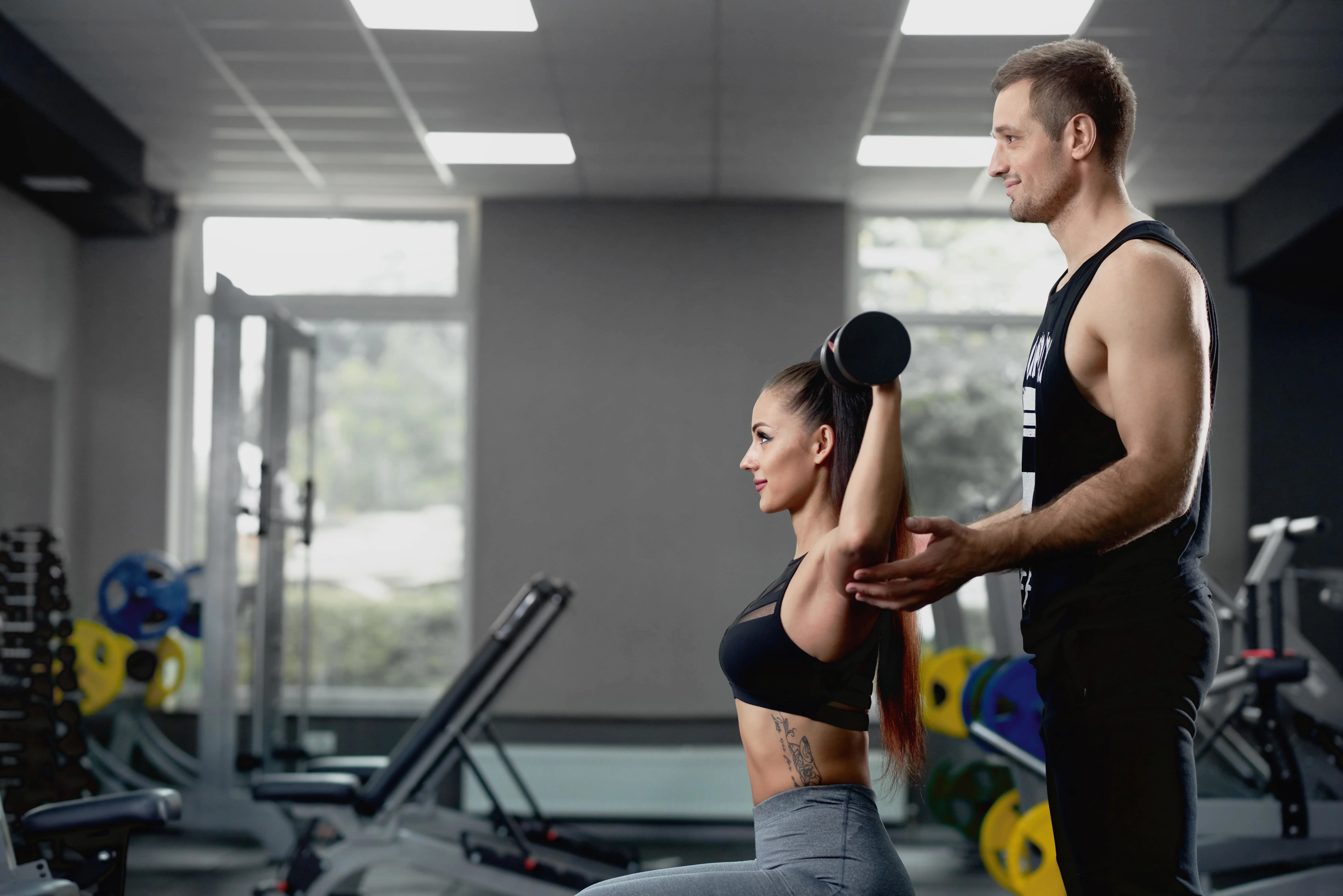
 Personal training plan goals
A personal training plan starts with clear, individual goals.
Personal training plan goals
A personal training plan starts with clear, individual goals.
The 7 Pillars of a Personal Training Plan
Pillar 1: Clear Goals
Without a goal you don't know what you're aiming for. Goals should be specific, measurable, realistic, and time-bound.
Pillar 2: Realistic Schedule
Better to do 3 sessions per week consistently than plan 6 and manage 2.
Pillar 3: Appropriate Volume
Too much = overtraining and injuries. Too little = no results. Optimal volume depends on your experience level and recovery capacity.
Pillar 4: The Right Exercises
Movements that support your goals and suit your body.
Pillar 5: Progressive Overload
To develop, you must gradually increase demands over time. Read more about progressive overload.
Pillar 6: Recovery Built In
Muscles grow at rest. The training plan must allow time for recovery. Read more about recovery from training.
Pillar 7: Ongoing Tracking and Adjustment
No program is perfect forever. Track your progress and adjust as needed.
Step 1: Define Your Goals
Primary Goal Categories
1. Muscle growth (hypertrophy): Building muscle mass. Priority: volume and muscle activation. Typical rep range: 6–12.
2. Strength development: Lifting heavier weights. Priority: intensity and technique. Typical rep range: 1–5.
3. Fat loss: Reducing body fat. Priority: energy expenditure + muscle preservation. Combination: strength + cardio + diet.
4. General health and fitness: Feeling better overall. Priority: variety and consistency. Balanced approach.
5. Athletic performance: Improving in a specific sport. Priority: sport specificity. Tailored to the demands of the activity.
Setting SMART Goals
| Letter | Meaning | Example |
|---|---|---|
| S | Specific | "I want to squat 100 kg" |
| M | Measurable | You can track the number |
| A | Achievable | Realistic for your timeline |
| R | Relevant | Supports a bigger objective |
| T | Time-bound | "By December 31, 2026" |
Weak goal: "I want to be in better shape"
Strong goal: "I want to squat 100 kg and run 5 km in under 25 minutes by the end of 2026"
Step 2: Assess Your Starting Point
Determining Your Experience Level
| Level | Training experience | Typical characteristics |
|---|---|---|
| Beginner | 0–12 months | Learning technique, rapid progress |
| Intermediate | 1–3 years | Competent with basic lifts, progress slowing |
| Advanced | 3+ years | Needs more sophisticated methods |
Strength Level Assessment
Men (1RM relative to bodyweight):
| Exercise | Beginner | Intermediate | Advanced |
|---|---|---|---|
| Squat | 0.75× | 1.25× | 1.75× |
| Bench press | 0.5× | 1.0× | 1.5× |
| Deadlift | 1.0× | 1.5× | 2.0× |
Women (1RM relative to bodyweight):
| Exercise | Beginner | Intermediate | Advanced |
|---|---|---|---|
| Squat | 0.5× | 1.0× | 1.5× |
| Bench press | 0.35× | 0.65× | 1.0× |
| Deadlift | 0.75× | 1.25× | 1.75× |
Mobility Assessment
Test basic movement capacity: Can you squat deeply with heels flat on the floor? Can you get both arms straight overhead? Can you touch your toes with straight legs?
Step 3: Map Your Schedule and Resources
Realistic Time Available
Ask yourself: how many times per week can I realistically train? How long can my sessions be? What time of day works? Which days are best?
Be honest. Better to plan 3×45 min and succeed than 6×90 min and fail.
Training Frequency and Program Type
| Sessions/week | Best for | Typical split |
|---|---|---|
| 2 | Busy people, beginners | Full body |
| 3 | Most people | Full body or PPL |
| 4 | Intermediate, committed | Upper/Lower |
| 5–6 | Advanced, dedicated | PPL or higher split |
Equipment Available
Full gym: All equipment available, most options, requires travel time.
Home gym: Limited equipment, saves commute time, requires creativity.
No equipment: Bodyweight training, limits strength development, works well for beginners and endurance.
Step 4: Choose the Right Training Split
Full Body (1 split)
Best for: Beginners, 2–3 sessions per week. Pros: Simple, high frequency, flexible. Cons: Longer sessions, less volume per muscle group.
Read more in the beginner gym workout program.
Upper/Lower (2 split)
Best for: Intermediate, 4 sessions per week. Pros: Good balance, sufficient volume, easy to remember. Cons: Requires 4 days, upper body sessions can be long.
Read more in the 2-day split workout guide.
Push/Pull/Legs (3 split)
Best for: Intermediate to advanced, 5–6 sessions per week. Pros: High volume, varied movements, optimal muscle growth. Cons: Requires 5–6 days, more complex.
Read more in the PPL program guide.
Which Split Is Right for You?
| Situation | Recommended split |
|---|---|
| 2 days/week | Full body |
| 3 days/week | Full body |
| 4 days/week | Upper/Lower ⭐ |
| 5 days/week | PPL + 1 or Upper/Lower + 1 |
| 6 days/week | PPL × 2 |
Step 5: Select Exercises Based on Your Goals
Movement Categories
1. Compound movements: Multi-joint, multi-muscle exercises. Most effective for muscle growth and strength. Examples: squat, deadlift, bench press, bent-over row.
2. Isolation movements: Single-joint exercises targeting one muscle. Examples: bicep curl, tricep pushdown, lateral raise.
Essential Movement Patterns
Every program should include:
| Movement type | Examples |
|---|---|
| Knee-dominant | Squat, leg press, lunge |
| Hip-dominant | Deadlift, Romanian deadlift, hip thrust |
| Horizontal push | Bench press, dip, push-up |
| Horizontal pull | Bent-over row, cable row |
| Vertical push | Overhead press, pike push-up |
| Vertical pull | Lat pulldown, pull-up |
Adapting for Limitations
Lower back issues: Replace conventional deadlift with trap bar deadlift, use leg press instead of squats, strengthen the core.
Shoulder problems: Replace overhead press with incline press, use neutral grip, add rotator cuff work.
Knee issues: Box squat instead of conventional squat, hip thrust instead of leg press, avoid deep lunges.
Step 6: Plan Your Progression
Progression Methods
1. Double progression (recommended for most)
Choose a rep range (e.g., 8–12), start at the lower end, add reps each week. When you hit the upper end in all sets → increase the weight, then restart from the bottom.
Example:
| Week | Weight | Reps |
|---|---|---|
| 1 | 50 kg | 8, 8, 8 |
| 2 | 50 kg | 9, 9, 8 |
| 3 | 50 kg | 10, 10, 9 |
| 4 | 50 kg | 11, 11, 10 |
| 5 | 50 kg | 12, 12, 12 → INCREASE WEIGHT |
| 6 | 52.5 kg | 8, 8, 8 |
2. Linear progression
Add a fixed amount each week: big lifts +2.5 kg/week, smaller lifts +1.25 kg/week. Works well for beginners but stalls faster.
3. Periodization
Rotate the emphasis in blocks: weeks 1–4 volume (more reps), weeks 5–8 intensity (more weight), week 9 deload, repeat.
Read the full guide on progressive overload.
Realistic Progression Rates
| Experience level | Expected strength gain/year |
|---|---|
| Beginner | 50–100% |
| Intermediate | 15–25% |
| Advanced | 5–10% |
Step 7: Track and Adjust
What to Track
Every session: weights, reps, sets, RPE, session duration, any notable observations.
Weekly: completed sessions vs. planned, progression on main lifts, how the body feels (fatigue, pain, motivation).
Monthly: body composition (weight, measurements, photos), strength level development, goal progress.
Tracking Tools
Use a training app, a training journal, or a spreadsheet — the key is that you write it down consistently.
 Tracking in a personal training plan
Regular tracking is the key to a successful personal training plan.
Tracking in a personal training plan
Regular tracking is the key to a successful personal training plan.
When to Adjust Your Program
Do adjust when: progression stalls for 2–3 weeks, motivation drops significantly, life situation changes, goals change, or recurring pain appears.
Don't adjust too often: give the program time to work (minimum 4–6 weeks), don't change programs every week, and prefer small tweaks over a complete overhaul.
Examples of Personal Training Plans
Example 1: Busy mom (Maria, 35)
Situation: Goal: fat loss and energy. Schedule: 3×30–40 min per week. Equipment: home, kettlebell, resistance band. Limitation: lower back issues.
| Day | Session | Duration |
|---|---|---|
| Mon | Home workout A (lower body + core) | 35 min |
| Wed | Home workout B (upper body + cardio) | 35 min |
| Sat | Home workout C (full body) | 40 min |
Home Workout A: Goblet squat 3×12, glute bridge (bodyweight) 3×15, step-ups 3×10/leg, dead bug 3×10/side, kettlebell swing 3×15.
Example 2: Student aiming for muscle growth (Mikko, 22)
Situation: Goal: building muscle mass. Schedule: 5×60–75 min per week. Equipment: fully equipped gym. Limitations: none significant.
| Day | Session |
|---|---|
| Mon | Push (chest, shoulders, triceps) |
| Tue | Pull (back, biceps) |
| Wed | Legs |
| Thu | Rest |
| Fri | Push |
| Sat | Pull |
| Sun | Rest |
Example 3: Senior gym-goer (Liisa, 62)
Situation: Goal: health, bone strengthening. Schedule: 2×45 min per week. Equipment: gym (machine-focused). Limitation: knee osteoarthritis.
| Day | Session | Duration |
|---|---|---|
| Tue | Full body A | 45 min |
| Fri | Full body B | 45 min |
Full Body A: Leg press (instead of squat) 3×12, chest press machine 3×12, seated row machine 3×12, lat pulldown 3×12, leg curl 2×15, farmer's carry 2×40m.
AI-Assisted Training Plans
Modern AI can create and maintain a personal training plan in ways no human coach could match. It analyzes your goals, experience, and limitations to build an individualized program in seconds. It learns from every training session, automatically adjusts weight recommendations, and responds to changes (illness, schedule conflicts, fatigue). And it suggests weight increases based on scientific data, predicts your development, and warns of overloading.
The Tsemppi app creates you a fully personalized training plan using AI — read more about AI workout programs.
Most Common Mistakes and How to Avoid Them
1. Overly Complex Program
Starting a 6-way periodization scheme as a beginner. Fix: start simple. Complexity doesn't equal effectiveness.
2. Unrealistic Schedule
Planning 6 sessions per week when you can realistically do 3. Fix: be honest with yourself — less done consistently beats more planned and abandoned.
3. Copying Others' Programs
Following a fitness influencer's program that doesn't fit you. Fix: use others' programs as inspiration, but adapt to your own needs.
4. No Tracking
Not logging sessions, so you don't know if you're progressing. Fix: log every session with an app or notebook.
5. Too Infrequent Adjustments
Same program year after year even though results have stopped. Fix: evaluate every 8–12 weeks and make necessary adjustments.
6. Too Frequent Changes
New program every other week. Fix: give the program time to work — at least 4–6 weeks before evaluating.
7. Ignoring Limitations
Doing movements that cause pain because they're "supposed to be in the program." Fix: listen to your body. There's always a substitute exercise.
FAQ
How often should you update your training plan?
Review every 8–12 weeks. Make major changes only if progression stops significantly, goals change, or life situation changes.
Can you build a good training plan yourself?
Yes, if you have basic knowledge of training. This guide gives you the tools. Alternatively, an AI app like Tsemppi builds it for you.
Do you need a personal trainer?
Not necessarily. A PT is valuable for learning technique and for motivation, but a personalized program can be built yourself or with AI at a fraction of the cost.
What if my goals change mid-program?
Adjust the program accordingly. For example, switching from fat loss to muscle building means adjusting volume, diet, and rep ranges.
How should I handle stressful life periods?
Reduce volume and intensity during high-stress periods. A lighter session beats no session. Exercise can also help relieve stress.
How long should sessions be?
45–75 minutes is optimal for most people. Under 30 minutes is too short for significant development; over 90 minutes may be too much (except for advanced athletes).
Summary
A personal training plan is the key to long-term results. A generic program from the internet doesn't account for your goals, schedule, or limitations — but you can build one that does.
Key takeaways:
- Clear goals — know what you're aiming for (SMART framework)
- Realistic schedule — less done consistently beats more done sporadically
- Right split — choose based on how many days you can train
- Correct exercises — compound movements first, adapt around limitations
- Progression — without it, there's no development
- Tracking — log and analyze
- Adjustment — modify when needed, but not too often
Next steps: Define your goals, assess your fitness level, decide on a realistic training frequency, choose the right split, build your program or use Tsemppi, track your progress, and adjust as needed.
References
-
Norcross, J.C., et al. (2002). Auld lang syne: Success predictors, change processes, and self-reported outcomes of New Year's resolvers and nonresolvers. Journal of Clinical Psychology, 58(4), 397-405. PubMed
-
Romeo, A., et al. (2019). Can Smartphone Apps Increase Physical Activity? Journal of Medical Internet Research, 21(3). PubMed
-
Direito, A., et al. (2017). Smartphone apps to improve fitness and increase physical activity among young people. BMC Public Health, 15, 635. PubMed
-
Mann, J.B., et al. (2014). The effect of autoregulatory progressive resistance exercise vs. linear periodization on strength improvement in college athletes. Journal of Strength and Conditioning Research. PubMed
-
Schoenfeld, B.J., et al. (2016). Effects of Resistance Training Frequency on Measures of Muscle Hypertrophy. Sports Medicine, 46(11), 1689-1697. PubMed
-
Grgic, J., et al. (2018). Effect of Resistance Training Frequency on Gains in Muscular Strength. Sports Medicine, 48(5), 1207-1220. PubMed
Want a personal training plan without the hassle? Join Tsemppi — the AI builds a customized program based on your goals and tracks your progression automatically. Start your 7-day free trial today, no credit card required.


