

No time to work out? No equipment? No excuses. 20 minutes is all you need — and your own body is the only tool required. Research shows that a short, intense HIIT session can be just as effective as a long, steady cardio workout — and even more effective for fat burning (Gibala et al., 2012). This guide gives you ready-made 20-minute HIIT workouts you can do anywhere, anytime.
Why 20 Minutes Is Enough
"I don't have time to work out."
I hear this constantly. And I understand — life is busy. Work, family, hobbies, rest. An hour at the gym feels impossible.
But what about 20 minutes? That's one Netflix episode. One coffee break. One session of scrolling social media.
When I started HIIT training years ago, I was skeptical. How can 20 minutes be effective when I'm used to hour-long sessions? But the results spoke for themselves: fitness improved, fat burned off, and — best of all — I actually kept doing the sessions consistently because they fit into my life.
Science backs my experience. Study after study shows HIIT is an exceptionally effective way to improve fitness and burn fat in a short time. And when you don't need equipment, all excuses disappear.
20 minutes. Bodyweight. Anywhere. Anytime.
"The best workout is the one you actually do. A 20-minute HIIT that gets done is better than an hour-long session that doesn't happen." – Pietari Risku, Founder of Tsemppi
Table of Contents
- What Is HIIT?
- Why Is HIIT So Effective?
- Science-Backed Benefits of HIIT
- Before You Start: Important Notes
- 20-Minute HIIT Workout for Beginners
- 20-Minute HIIT Workout for Intermediate
- 20-Minute HIIT Workout for Advanced
- 15 Best No-Equipment HIIT Exercises
- HIIT Structures: Tabata, EMOM, and AMRAP
- Weekly Schedule: 20-Minute HIIT Workouts
- HIIT and Fat Burning
- Most Common Mistakes and How to Avoid Them
- FAQ
- Summary
What Is HIIT?
Definition
HIIT (High-Intensity Interval Training) means alternating between:
- Short, intense work periods (85–100% of max heart rate)
- Short rest periods (active or complete rest)
- Alternating work and recovery
- Typically 10–30 minutes total duration
HIIT vs. Traditional Cardio
| Feature | HIIT | Traditional Cardio |
|---|---|---|
| Duration | 10–30 min | 30–60+ min |
| Intensity | High (85–100%) | Moderate (60–75%) |
| Heart rate | Variable | Steady |
| Calories/min | Higher | Lower |
| Afterburn (EPOC) | Significant | Minimal |
| Time efficiency | Very high | Lower |
HIIT Session Structure
A typical HIIT workout consists of:
- Warm-up (2–3 min)
- Work interval (20–60 sec at full intensity)
- Rest interval (10–60 sec easy/rest)
- Repeat (10–20 rounds)
- Cool-down (2–3 min)
Why Is HIIT So Effective?
1. Time Efficiency
20 minutes of HIIT can burn as many calories as 40–60 minutes of steady cardio. For a busy person, this is transformative.
2. Afterburn Effect (EPOC)
EPOC (Excess Post-Exercise Oxygen Consumption) means your body continues burning calories after the workout — for up to 24–48 hours. HIIT elevates EPOC higher than any other form of exercise (LaForgia et al., 2006).
3. Preserves Muscle Mass
Unlike long, steady cardio, HIIT preserves and even builds muscle mass while burning fat (Wilson et al., 2012).
4. Improves Insulin Sensitivity
HIIT improves the body's ability to use sugar as energy, which helps with weight management and diabetes prevention (Jelleyman et al., 2015).
5. Develops Both Aerobic and Anaerobic Fitness
Traditional cardio primarily develops aerobic capacity. HIIT develops both — you'll be ready for both long efforts and short sprints.
6. No Equipment Required
Bodyweight HIIT is just as effective as equipment-based workouts. You can train anywhere.
Science-Backed Benefits of HIIT
Research Evidence
| Study | Finding |
|---|---|
| Gibala et al., 2012 | 3×20 min HIIT/week = same fitness benefit as 150 min steady cardio |
| Trapp et al., 2008 | HIIT burned 3× more fat than steady cardio in the same time |
| Weston et al., 2014 | HIIT improved cardiovascular health 2× more effectively than moderate exercise |
| Boutcher, 2011 | HIIT was particularly effective at reducing abdominal fat |
Physiological Changes
What happens in your body during and after HIIT:
- Heart gets stronger — pumps more blood per beat
- Mitochondria multiply — the cell's "power plants" become more efficient
- Oxygen uptake improves — VO₂max increases
- Fat metabolism improves — body learns to use fat as fuel
- Insulin sensitivity improves — sugar is transported to muscles more efficiently
 HIIT workout exercises
HIIT exercises like burpees, mountain climbers, and jump squats elevate heart rate effectively.
HIIT workout exercises
HIIT exercises like burpees, mountain climbers, and jump squats elevate heart rate effectively.
Before You Start: Important Notes
Who Is HIIT Suitable For?
✅ Suitable for:
- Healthy adults
- Those with a basic level of fitness (can walk briskly for 20 minutes)
- People who want a time-efficient workout
- Those looking for variety
⚠️ Use caution:
- Beginners — start at lower intensity
- Heart conditions — consult a doctor
- Joint problems — choose low-impact versions
- Pregnancy — consult a doctor
Before Your First HIIT Session
- Confirm basic fitness — you can move at a brisk pace for 15–20 min without issues
- Learn the movements first — practice exercises slowly before adding speed
- Start lighter — first sessions at 70–80% intensity
- Listen to your body — pain is a signal to stop
The Importance of Warm-Up
NEVER jump straight into full-intensity HIIT. A warm-up:
- Raises heart rate gradually
- Warms muscles and joints
- Reduces injury risk
- Prepares the mind for training
Quick 3-minute warm-up:
- March in place (60 sec)
- High knee march (30 sec)
- Light squats (30 sec)
- Arm circles + torso rotations (30 sec)
- Jumping jacks — LIGHT (30 sec)
20-Minute HIIT Workout for Beginners
Who This Is For
- New to HIIT training
- Returning to exercise after a break
- Wants a gentler starting point
Structure: 30/30
- 30 seconds of work (moderate intensity)
- 30 seconds of rest
- 20 minutes total
Workout A: Basic HIIT
Warm-up (3 min):
- March in place: 60 sec
- High knee march: 60 sec
- Light squats: 60 sec
Rounds (16 min) — Repeat 4 times:
| Exercise | Work | Rest |
|---|---|---|
| 1. Squat | 30 sec | 30 sec |
| 2. Push-up (knees down) | 30 sec | 30 sec |
| 3. Alternating reverse lunge | 30 sec | 30 sec |
| 4. Plank hold | 30 sec | 30 sec |
Cool-down (1 min):
- Light march + deep breathing
Workout B: Full Body
Warm-up (3 min):
- Same as above
Rounds (16 min) — Repeat 4 times:
| Exercise | Work | Rest |
|---|---|---|
| 1. Fast marching with high knees | 30 sec | 30 sec |
| 2. Superman hold | 30 sec | 30 sec |
| 3. Glute bridge | 30 sec | 30 sec |
| 4. Dead bug | 30 sec | 30 sec |
Cool-down (1 min)
Beginner Weekly Schedule
| Day | Workout |
|---|---|
| Mon | Workout A |
| Tue | Rest or light walk |
| Wed | Workout B |
| Thu | Rest |
| Fri | Workout A |
| Sat–Sun | Rest |
Progression: When 30/30 feels easy, move to 35/25, then 40/20.
20-Minute HIIT Workout for Intermediate
Who This Is For
- Previous HIIT experience
- Good base fitness level
- Wants a challenging workout
Structure: 40/20
- 40 seconds of work (high intensity)
- 20 seconds of rest
- 20 minutes total
Workout A: Explosive Full Body
Warm-up (3 min):
- Jumping jacks: 60 sec
- High knees: 60 sec
- Dynamic stretches: 60 sec
Rounds (16 min) — Repeat 4 times:
| Exercise | Work | Rest |
|---|---|---|
| 1. Jump squat | 40 sec | 20 sec |
| 2. Full push-up | 40 sec | 20 sec |
| 3. Mountain climber | 40 sec | 20 sec |
| 4. Burpee (no push-up) | 40 sec | 20 sec |
Cool-down (1 min):
- Light march + deep breathing
Workout B: Lower Body Focus
Warm-up (3 min)
Rounds (16 min) — Repeat 4 times:
| Exercise | Work | Rest |
|---|---|---|
| 1. Jump lunge (alternating) | 40 sec | 20 sec |
| 2. Sumo squat | 40 sec | 20 sec |
| 3. Single-leg squat (assisted) | 40 sec | 20 sec |
| 4. Wall sit | 40 sec | 20 sec |
Cool-down (1 min)
Workout C: Core & Cardio
Warm-up (3 min)
Rounds (16 min) — Repeat 4 times:
| Exercise | Work | Rest |
|---|---|---|
| 1. High knees | 40 sec | 20 sec |
| 2. Bicycle crunch | 40 sec | 20 sec |
| 3. Skater jump | 40 sec | 20 sec |
| 4. Plank jacks | 40 sec | 20 sec |
Cool-down (1 min)
20-Minute HIIT Workout for Advanced
Who This Is For
- HIIT experience and high fitness level
- Wants maximum challenge
Structure: 45/15
- 45 seconds of work (maximum intensity)
- 15 seconds of rest
- 20 minutes total
Workout A: Inferno
Warm-up (3 min):
- Burpee (easy): 5 reps
- Mountain climber: 30 sec
- Jumping jacks: 30 sec
- Jump squat: 10 reps
Rounds (16 min) — Repeat 4 times:
| Exercise | Work | Rest |
|---|---|---|
| 1. Full burpee | 45 sec | 15 sec |
| 2. Mountain climber (fast) | 45 sec | 15 sec |
| 3. Tuck jump | 45 sec | 15 sec |
| 4. Plank to push-up | 45 sec | 15 sec |
Cool-down (1 min)
Workout B: Beast Mode
Warm-up (3 min)
Rounds (16 min) — Repeat 4 times:
| Exercise | Work | Rest |
|---|---|---|
| 1. Burpee + tuck jump | 45 sec | 15 sec |
| 2. Diamond push-up | 45 sec | 15 sec |
| 3. Jump lunge | 45 sec | 15 sec |
| 4. V-up | 45 sec | 15 sec |
Cool-down (1 min)
Workout C: Tabata Finisher
Warm-up (3 min)
Tabata rounds (16 min):
4 exercises, 2 Tabata rounds each (8× 20 sec work / 10 sec rest):
| Exercise | Tabata (4 min) |
|---|---|
| 1. Burpee | 8× (20/10) |
| 2. Mountain climber | 8× (20/10) |
| 3. Jump squat | 8× (20/10) |
| 4. High knees | 8× (20/10) |
Cool-down (1 min)
15 Best No-Equipment HIIT Exercises
Full Body (5 Exercises)
| # | Exercise | Difficulty | Targets |
|---|---|---|---|
| 1 | Burpee | ⭐⭐⭐ | Full body |
| 2 | Mountain climber | ⭐⭐ | Core, shoulders, cardio |
| 3 | Plank to push-up | ⭐⭐ | Upper body, core |
| 4 | Inchworm | ⭐⭐ | Full body, mobility |
| 5 | Bear crawl | ⭐⭐ | Full body, coordination |
Lower Body (5 Exercises)
| # | Exercise | Difficulty | Targets |
|---|---|---|---|
| 6 | Jump squat | ⭐⭐ | Quads, glutes |
| 7 | Jump lunge | ⭐⭐⭐ | Legs, balance |
| 8 | Tuck jump | ⭐⭐⭐ | Explosive power, legs |
| 9 | Skater jump | ⭐⭐ | Outer thighs, glutes |
| 10 | Sumo squat pulse | ⭐ | Inner thighs, glutes |
Upper Body & Core (5 Exercises)
| # | Exercise | Difficulty | Targets |
|---|---|---|---|
| 11 | Push-up | ⭐⭐ | Chest, triceps |
| 12 | Pike push-up | ⭐⭐⭐ | Shoulders |
| 13 | Bicycle crunch | ⭐⭐ | Obliques |
| 14 | V-up | ⭐⭐⭐ | Rectus abdominis |
| 15 | Plank jacks | ⭐⭐ | Core, cardio |
Exercise Instructions
1. Burpee:
- Stand upright
- Lower hands to floor, jump feet back (plank)
- Do a push-up (optional)
- Jump feet back to hands
- Jump up reaching arms overhead
2. Mountain climber:
- Start in plank position
- Drive knees alternately toward chest
- Keep hips low, back straight
- Fast tempo
3. Jump squat:
- Perform a regular squat
- Explode upward into a jump
- Land softly back into the squat position
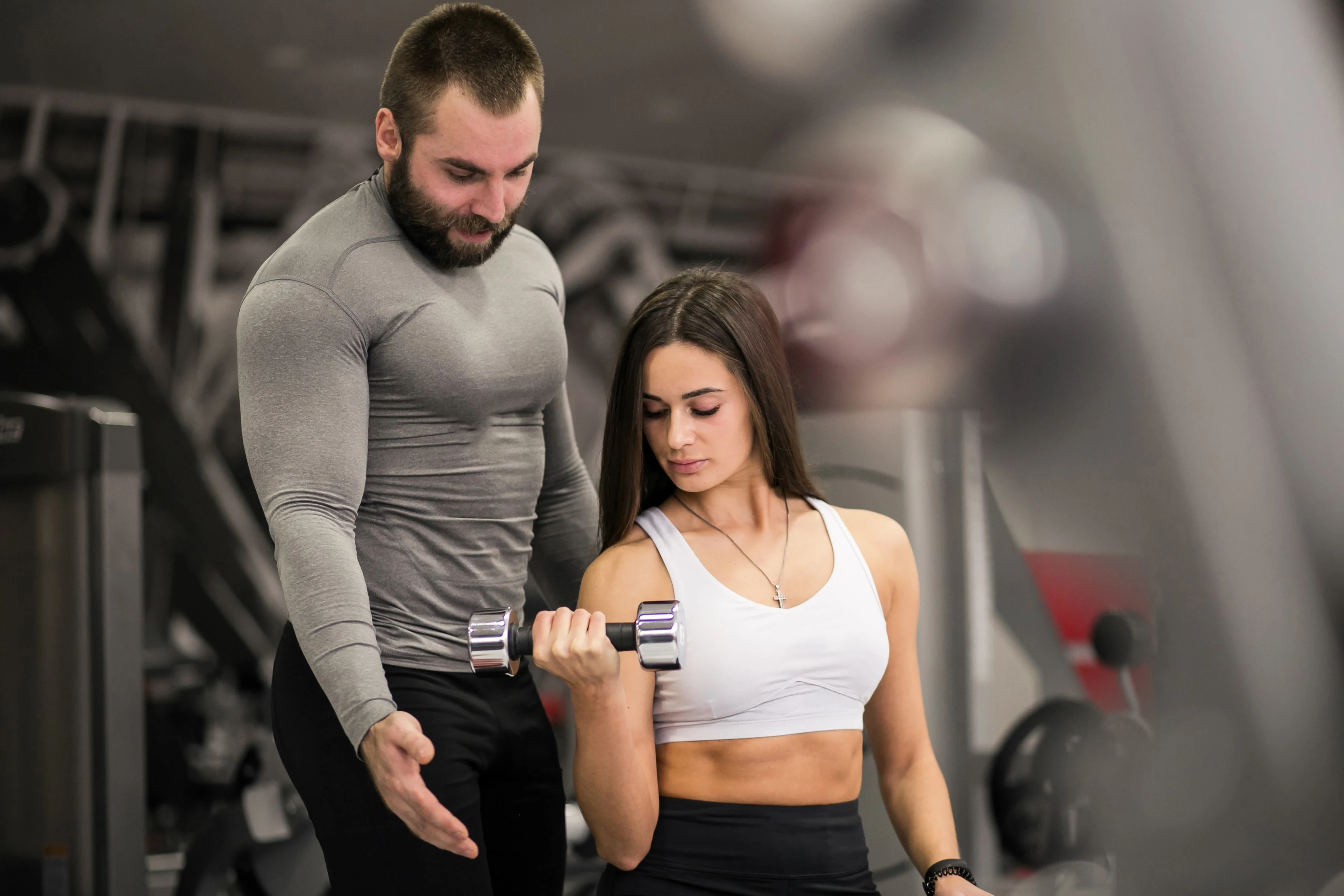 HIIT workout timer
A 20-minute HIIT workout is an effective way to improve fitness in a busy life.
HIIT workout timer
A 20-minute HIIT workout is an effective way to improve fitness in a busy life.
HIIT Structures: Tabata, EMOM, and AMRAP
Tabata (20/10)
Structure:
- 20 seconds at maximum effort
- 10 seconds of rest
- 8 rounds = 4 minutes
Example (20 min):
- Tabata 1: Burpee (4 min)
- Rest: 1 min
- Tabata 2: Jump squat (4 min)
- Rest: 1 min
- Tabata 3: Mountain climber (4 min)
- Rest: 1 min
- Tabata 4: Push-up (4 min)
- Cool-down: 1 min
EMOM (Every Minute On the Minute)
Structure:
- Complete a set number of reps at the start of each minute
- Rest = remaining time in the minute
- Repeat minute by minute
Example (20 min):
| Minute | Exercise | Reps |
|---|---|---|
| 1, 5, 9, 13, 17 | Burpee | 8 |
| 2, 6, 10, 14, 18 | Jump squat | 12 |
| 3, 7, 11, 15, 19 | Push-up | 10 |
| 4, 8, 12, 16, 20 | Mountain climber | 20 (10/side) |
AMRAP (As Many Rounds As Possible)
Structure:
- Complete as many rounds as possible within the time limit
- No prescribed rest — rest as needed
- Log your rounds and try to beat the score next time
Example (20-min AMRAP):
Complete as many rounds as possible of:
- 10 burpees
- 15 squats
- 20 mountain climbers
- 10 push-ups
Goal: Record your round count and try to improve next time.
Weekly Schedule: 20-Minute HIIT Workouts
Beginner Weekly Schedule
| Day | Workout | Duration |
|---|---|---|
| Mon | HIIT Beginner A | 20 min |
| Tue | Rest or light walk | — |
| Wed | HIIT Beginner B | 20 min |
| Thu | Rest | — |
| Fri | HIIT Beginner A | 20 min |
| Sat | Light activity (walk, stretching) | 20–30 min |
| Sun | Rest | — |
Intermediate Weekly Schedule
| Day | Workout | Duration |
|---|---|---|
| Mon | HIIT Intermediate A | 20 min |
| Tue | HIIT Intermediate B (legs) | 20 min |
| Wed | Rest or light cardio | — |
| Thu | HIIT Intermediate C (core) | 20 min |
| Fri | HIIT Intermediate A | 20 min |
| Sat | Active recovery | 30 min |
| Sun | Rest | — |
Advanced Weekly Schedule
| Day | Workout | Duration |
|---|---|---|
| Mon | HIIT Advanced A (Inferno) | 20 min |
| Tue | HIIT Intermediate B (active recovery) | 20 min |
| Wed | HIIT Advanced B (Beast Mode) | 20 min |
| Thu | Rest or yoga | — |
| Fri | HIIT Advanced C (Tabata) | 20 min |
| Sat | HIIT Intermediate (optional) | 20 min |
| Sun | Rest | — |
HIIT and Fat Burning
Why Does HIIT Burn Fat Effectively?
1. High calorie expenditure in a short time
A 20-minute HIIT session can burn 250–400 calories depending on intensity and bodyweight.
2. Afterburn effect (EPOC)
After HIIT your body continues burning calories at an elevated rate for up to 24–48 hours. Research suggests EPOC can increase total energy expenditure by 6–15% (LaForgia et al., 2006).
3. Preserves muscle mass
Long steady cardio can eat into muscle mass. HIIT preserves and even builds muscle, keeping metabolism elevated.
4. Improves fat metabolism
HIIT trains your body to use fat as a fuel source more efficiently (Boutcher, 2011).
HIIT vs. Steady Cardio for Fat Loss
| Factor | HIIT | Steady Cardio |
|---|---|---|
| Calories/min | Higher | Lower |
| EPOC | Significant | Minimal |
| Muscle preservation | Good | Poor |
| Time efficiency | High | Time-consuming |
| Abdominal fat reduction | Effective | Moderate |
Optimal HIIT for Fat Loss
- Frequency: 3–4 times per week
- Duration: 15–25 min per session
- Intensity: 80–95% of max heart rate during work intervals
- Combine with: Strength training 2–3×/week
Remember: Fat loss also requires a calorie deficit from your diet!
Most Common Mistakes and How to Avoid Them
1. Skipping the Warm-Up
Mistake: Jumping straight into full-intensity training.
Risk: Injury, reduced performance.
Fix: Always warm up for 2–3 minutes before HIIT.
2. Training Too Frequently
Mistake: HIIT every day chasing "maximum results."
Risk: Overtraining, injury, hormonal disruption.
Fix: Maximum 4–5 HIIT sessions per week, ideally 3–4.
3. Not Enough Intensity
Mistake: "I'm doing HIIT" but heart rate doesn't rise enough.
Result: You don't get HIIT's benefits.
Fix: During work intervals it should be hard to talk. If you can hold a conversation easily, push harder.
4. Sacrificing Technique for Speed
Mistake: Speed takes priority over form.
Risk: Injury, less power output.
Fix: Learn movements properly first. Speed comes after technique.
5. Insufficient Recovery
Mistake: HIIT + strength training + running + ... with no rest days.
Result: Overtraining, deteriorating results.
Fix: 1–2 full rest days per week, adequate sleep.
6. Always the Same Exercises
Mistake: The exact same workout month after month.
Result: Body adapts, progress plateaus.
Fix: Vary exercises and structures regularly.
7. No Progression
Mistake: Same structure and intensity forever.
Fix: Gradually increase the challenge:
- Shorten rest periods
- Extend work intervals
- Add more rounds
- Choose harder exercises
FAQ
How often should I do HIIT?
3–4 times per week is optimal for most people. More can lead to overtraining. Give yourself at least 1–2 rest days per week.
Can HIIT replace strength training?
Partially. HIIT develops some strength, but doesn't replace traditional resistance training for building muscle mass. Best combination: HIIT 3×/week + strength 2–3×/week.
Does HIIT burn more fat than running?
In the same amount of time, yes. 20 min of HIIT typically burns more than 20 min of steady running. But a long run (60+ min) may burn more total calories overall.
Can HIIT be done at home?
Absolutely! All the workouts in this guide are designed to be done at home with no equipment.
What's the best time of day to do HIIT?
Whichever fits your schedule. Research doesn't show a significant difference between morning and evening for results. Consistency is what matters most.
Can I do HIIT as a beginner?
Yes, but start lighter. Use a longer work ratio (30/30), choose easier exercises, and increase intensity gradually.
How quickly will I see results?
After 2–4 weeks of consistent training you'll notice fitness improvements. Body composition changes (fat loss) become visible after 4–8 weeks combined with sensible nutrition.
Does HIIT have to be exactly 20 minutes?
No. HIIT can be 10–30 minutes. 20 minutes is the sweet spot — long enough for an effective session, short enough to fit into a busy schedule.
Summary
A 20-minute HIIT workout with no equipment is one of the most effective ways to improve fitness and burn fat — and it fits into anyone's schedule.
Key takeaways:
- 20 minutes is enough — science backs the effectiveness of short, intense sessions
- No equipment needed — bodyweight is sufficient for a complete workout
- Always warm up — 2–3 minutes prepares the body and prevents injury
- Intensity is the key — work intervals genuinely need to be hard
- Progression works — gradually increase the challenge (shorter rest, longer work)
- Recovery is part of training — 1–2 rest days per week
- Combine with strength training — HIIT + weights = optimal results
Start today:
- Choose one workout appropriate for your level (beginner/intermediate/advanced)
- Set a timer (use your phone or a Tabata app)
- Warm up for 3 minutes
- Complete the workout at full effort
- Repeat 3–4× per week
- Track your progress and increase the challenge
References
-
Gibala, M.J., et al. (2012). Physiological adaptations to low-volume, high-intensity interval training in health and disease. The Journal of Physiology, 590(5), 1077–1084. PubMed
-
Trapp, E.G., et al. (2008). The effects of high-intensity intermittent exercise training on fat loss and fasting insulin levels. International Journal of Obesity, 32(4), 684–691. PubMed
-
LaForgia, J., et al. (2006). Effects of exercise intensity and duration on the excess post-exercise oxygen consumption. Journal of Sports Sciences, 24(12), 1247–1264. PubMed
-
Weston, K.S., et al. (2014). High-intensity interval training in patients with lifestyle-induced cardiometabolic disease. British Journal of Sports Medicine, 48(16), 1227–1234. PubMed
-
Boutcher, S.H. (2011). High-intensity intermittent exercise and fat loss. Journal of Obesity, 2011, 868305. PubMed
-
Wilson, J.M., et al. (2012). Concurrent training: a meta-analysis examining interference of aerobic and resistance exercises. Journal of Strength and Conditioning Research, 26(8), 2293–2307. PubMed
-
Jelleyman, C., et al. (2015). The effects of high-intensity interval training on glucose regulation and insulin resistance. Obesity Reviews, 16(11), 942–961. PubMed
Want a personalized HIIT program? Join Tsemppi — our AI builds you a tailored training plan that includes HIIT workouts, strength training, and a progressive roadmap. 7-day free trial, no credit card required.


