

Succeeding in a Hyrox race requires mastering eight different movements. Each station challenges the body in a unique way — and each demands its own technique and strategy. Research shows that efficient movement reduces energy expenditure and lowers injury risk (Brandt et al., 2025). This guide covers every Hyrox station in detail: correct technique, the most common mistakes, and training tips.
Why Technique Matters in Hyrox
In my first Hyrox simulation, I did everything wrong. I pushed the sled with my back, pulled the SkiErg with only my arms, and ran every kilometer flat out. The result? I collapsed at the wall balls station and finished with a terrible time.
My second simulation was a different story. I had trained each movement individually. I knew exactly how to conserve energy on the sled, how to maintain a steady rhythm on the SkiErg, and how to break up the wall balls into manageable sets. My time improved by 15 minutes — even though my fitness level was essentially the same.
Technique isn't just "nice to know" — it's the difference between a good performance and a great one. In Hyrox, every second saved and every bit of energy conserved compounds across eight stations and eight kilometers.
"In Hyrox, strength and endurance matter — but technique decides. The right movement pattern saves energy at every station, and that energy is worth its weight in gold in the final stretch." – Pietari Risku, Founder of Tsemppi
Table of Contents
- Hyrox race structure
- Station 1: SkiErg (1000m)
- Station 2: Sled Push (50m)
- Station 3: Sled Pull (50m)
- Station 4: Burpee Broad Jump (80m)
- Station 5: Rowing (1000m)
- Station 6: Farmer's Carry (200m)
- Station 7: Sandbag Lunges (100m)
- Station 8: Wall Balls (75/100 reps)
- Weights by division
- Training program for Hyrox movements
- Most common mistakes and how to avoid them
- FAQ
- Summary
Hyrox Race Structure
Before diving into the movements, here's the overall race format:
Race Flow
| Order | Run | Functional Station |
|---|---|---|
| 1 | 1 km | SkiErg 1000m |
| 2 | 1 km | Sled Push 50m |
| 3 | 1 km | Sled Pull 50m |
| 4 | 1 km | Burpee Broad Jump 80m |
| 5 | 1 km | Rowing 1000m |
| 6 | 1 km | Farmer's Carry 200m |
| 7 | 1 km | Sandbag Lunges 100m |
| 8 | 1 km | Wall Balls 75/100 reps |
Why the Order Matters
The Hyrox stations are deliberately sequenced:
- SkiErg first — raises heart rate without destroying your legs
- Sleds in the middle — heaviest stations while energy reserves are still available
- Burpee Broad Jump — full-body, breaks your rhythm
- Rowing — gives the legs a partial rest
- Farmer's Carry and Lunges — legs suffer, prepares you for the final push
- Wall Balls last — a mental and physical test when you're completely spent
Station 1: SkiErg (1000m)
What Is the SkiErg?
The SkiErg simulates cross-country skiing. You pull handles downward against resistance. In Hyrox, you complete 1000 meters.
Technique
Starting position:
- Stand hip-width apart
- Keep knees slightly bent
- Grip the handles from the top
Movement pattern:
- Start: Raise arms overhead, extend the whole body
- Pull: Drive the handles down powerfully
- Power generation: Use the whole body — hips, core, arms
- Return: Let the handles rise back up in a controlled manner, don't "throw" them
Key points:
- Power comes from the hips, not the arms
- Hinge at the hips forward during the pull
- Keep the core braced throughout
- Steady rhythm > individual hard pulls
Most Common Mistakes
| Mistake | Problem | Fix |
|---|---|---|
| Arms only | Burns biceps and forearms early | Engage hips and core |
| Too fast start | Blow up mid-way | Start conservatively |
| Straight knees | Loss of power | Keep knees slightly bent |
| Short range of motion | Less power per stroke | Drive all the way up and down |
Target Times
| Level | Time |
|---|---|
| Beginner | 5:00–6:00 |
| Intermediate | 4:00–5:00 |
| Advanced | 3:30–4:00 |
| Elite | Sub 3:30 |
Training
Technique drill:
- 3×500m, focus on technique
- 2 min rest between sets
- Focus: steady pace, hip drive
Endurance workout:
- 5×250m, 30 sec rest
- Maintain same wattage across all sets
Race-pace workout:
- 2×1000m at race pace
- 5 min rest between sets
Station 2: Sled Push (50m)
What Is the Sled Push?
Pushing the sled 50 meters forward. This is one of the toughest stations in Hyrox.
Weights
| Division | Men | Women |
|---|---|---|
| Open | 152 kg | 102 kg |
| Pro | 202 kg | 152 kg |
Technique
Starting position:
- Grip the high handles (upright push) or low handles (low push)
- Back straight, hips low
- Weight shifted onto the front foot
Pushing technique:
High handle grip:
- Easier for beginners
- Less strain on the lower back
- Better visibility
Low handle grip:
- More power output
- Better ground contact
- Requires stronger core
Movement:
- Take short, quick steps
- Keep feet on the ground — don't "run"
- Drive with your legs, not your back
- Eyes forward, not down
Most Common Mistakes
| Mistake | Problem | Fix |
|---|---|---|
| Steps too long | Loss of power | Short, quick steps |
| Rounded back | Risk of back injury | Keep chest up |
| Stopping | Restarting costs more energy | Keep moving continuously |
| Upper body only | Not enough force | Drive through the legs |
Race Strategy
- Don't stop — a moving sled is easier to keep moving
- Steady pace — don't go out too hard
- Breathe — breathe steadily, don't hold your breath
- Mental splits — break 50m into segments (2×25m or 5×10m)
Training
If you have a sled:
- 5×50m at race weight, 2 min rest
- 3×25m heavier (+20%), technique focus
- Compromised: 400m run + 50m sled push ×4
If you don't have a sled:
- Leg press: 4×15 heavy
- Walking lunges with weights: 4×20m
- Wall push isometric hold: 3×30 sec at full effort
 Sled Push technique
Sled Push demands solid technique — drive with your legs, keep your back straight, and take short steps.
Sled Push technique
Sled Push demands solid technique — drive with your legs, keep your back straight, and take short steps.
Station 3: Sled Pull (50m)
What Is the Sled Pull?
Pulling the sled with a rope over 50 meters. A different challenge from the push — demands grip strength and pulling endurance.
Weights
| Division | Men | Women |
|---|---|---|
| Open | 103 kg | 78 kg |
| Pro | 153 kg | 103 kg |
Technique
Two main techniques:
1. Standing pull (recommended):
- Stand facing the sled
- Grip the rope hand over hand
- Pull the rope toward you in alternating hands
- Keep knees bent, weight on heels
2. Seated pull:
- Sit on the ground, legs extended in front
- Pull the rope hand over hand
- Use legs as an anchor
- Requires less balance
Most Common Mistakes
| Mistake | Problem | Fix |
|---|---|---|
| Rope slipping | Slows you down, tires hands | Firm grip; gloves help |
| Too upright | Not enough force | Lean back |
| Uneven rhythm | Wasted energy | Maintain a consistent pace |
| Pulls too long | Arms tire out | Shorter, faster pulls |
Race Strategy
- Choose your technique in advance — don't switch mid-station
- Gloves — many athletes use them to prevent rope burn
- Rhythm — steady "hand-hand-hand" cadence
- Don't watch the sled — focus on the movement
Training
If you have a sled:
- 5×50m at race weight, 2 min rest
- 3×50m + immediate 400m run (compromised)
- Technique drill: 10×10m, focus on rhythm
If you don't have a sled:
- Seated cable row: 4×15
- Face pulls: 3×20
- Bent-over row: 4×12
- Rope climb (if available)
Station 4: Burpee Broad Jump (80m)
What Is the Burpee Broad Jump?
A burpee combined with a standing broad jump. You perform these until you've covered 80 meters. This is one of the most mentally demanding stations.
Technique
Burpee portion:
- Stand upright
- Place hands on the ground
- Jump or step feet back to a plank position
- Lower chest to the ground (mandatory contact)
- Push back up
- Jump feet toward hands
Broad jump portion:
- Get into a loaded stance (feet hip-width apart)
- Swing arms back
- Jump forward explosively off both feet
- Land in a controlled position
- Repeat immediately
Most Common Mistakes
| Mistake | Problem | Fix |
|---|---|---|
| Chest doesn't touch the ground | Doesn't count, judge will call no-rep | Always lower all the way |
| Jumps too short | Takes much longer | Focus on jump distance |
| Going out too hard | Blow up before the finish | Steady pace from the start |
| Poor breathing | Explode early | Breathe on every rep |
Race Strategy
- Quality > speed — longer jumps = fewer reps
- Breathing — inhale at the top, exhale at the bottom
- Mental approach — don't count reps, track meters
- Consistent rhythm — find your pace and hold it
Target Rep Count
On average, 80m requires approximately 30–50 burpee broad jumps depending on jump distance.
- Long jump (2m): ~40 reps
- Medium jump (1.5m): ~55 reps
- Short jump (1.2m): ~70 reps
Tip: A longer jump saves reps and ultimately saves energy!
Training
Technique drill:
- 3×20 burpee broad jumps, focus on technique
- Measure jump distance — aim for 1.5–2m
Endurance workout:
- 5 min AMRAP (as many reps as possible)
- Track reps and monitor progress
Compromised workout:
- 400m run + 20 burpee broad jumps ×4
- Simulates race conditions
Station 5: Rowing (1000m)
What Is the Rowing Station?
A rowing machine effort over 1000 meters. This station gives your legs a partial break after the sleds — but it's still a demanding effort.
Technique
The four phases of the rowing stroke:
-
Catch (start):
- Knees bent, shins vertical
- Arms straight, grip on the handle
- Slight forward lean in the torso
-
Drive (power phase):
- Initiate with the legs — push off the footplate
- Once legs extend, lean back
- Finish by drawing the handle to the lower chest
- Sequence: LEGS → BACK → ARMS
-
Finish:
- Legs extended
- Slight backward lean
- Handle at chest height, elbows back
-
Recovery:
- Reverse the sequence: ARMS → BACK → LEGS
- Controlled return, don't rush
- Prepare for the next stroke
Most Common Mistakes
| Mistake | Problem | Fix |
|---|---|---|
| Arms first | Loses leg drive | Legs ALWAYS initiate |
| Recovery too fast | Wasted energy | 1:2 ratio (drive:recovery) |
| Rounded back | Back pain | Chest up, shoulders back |
| Handle too high | Arms tire early | Pull to lower chest |
Target Times
| Level | Time |
|---|---|
| Beginner | 4:30–5:30 |
| Intermediate | 3:45–4:30 |
| Advanced | 3:15–3:45 |
| Elite | Sub 3:15 |
Race Strategy
- Start conservatively — first 250m easy
- Hold a steady pace — consistent 500m split
- Final 250m — push harder if you have anything left
- Stroke rate — 24–28 strokes/min is optimal for most athletes
Training
Technique drill:
- 4×500m, focus on technique
- Keep stroke rate below 22/min
- 2 min rest
Race-pace workout:
- 3×1000m at race pace
- 4 min rest
- Log your splits
Interval workout:
- 8×250m hard, 30 sec rest
- Builds speed endurance
Station 6: Farmer's Carry (200m)
What Is the Farmer's Carry?
Carrying two weights in your hands for 200 meters. Deceptively simple but brutal — tests grip strength and core stability.
Weights
| Division | Men | Women |
|---|---|---|
| Open | 2×24 kg | 2×16 kg |
| Pro | 2×32 kg | 2×24 kg |
Technique
Picking up the weights:
- Stand between the weights
- Squat down — back straight
- Grip the handles firmly
- Drive through the legs to stand, not the back
- Stand tall, shoulders pulled back and down
Carrying:
- Keep shoulders back and down
- Eyes forward
- Short, quick steps
- Core braced
- Breathe steadily
Setting down (if necessary):
- Squat down in a controlled manner
- Don't drop the weights
- Shake out your hands quickly
- Pick them back up immediately
Most Common Mistakes
| Mistake | Problem | Fix |
|---|---|---|
| Hunched posture | Back fatigues early | Shoulders back, chest up |
| Steps too long | Weights swing | Short, quick steps |
| Unnecessary drops | Costs time | Don't set down unless forced to |
| Weak grip | Weights slip | Train grip strength |
Race Strategy
- Don't put the weights down — every pick-up costs time
- 200m unbroken is the goal — train for this specifically
- If you MUST drop — do it fast, max 5 seconds down
- Corners — slow slightly, don't tip the weights
Training
Baseline workout:
- 4×50m at race weight, 90 sec rest
- 3×100m, 2 min rest
- Goal: 200m without setting down
Grip strength:
- Dead hang (from a pull-up bar): 3× max hold
- Plate pinch: 3×30 sec
- Farmer's hold (stationary): 3×45 sec at race weight
Compromised:
- 400m run + 100m farmer's carry ×4
- Simulates carrying while fatigued
Station 7: Sandbag Lunges (100m)
What Is the Sandbag Lunge?
Walking lunges for 100 meters with a sandbag on your shoulders. For many athletes, this is the toughest Hyrox station — legs are burning and balance is compromised.
Weights
| Division | Men | Women |
|---|---|---|
| Open | 20 kg | 10 kg |
| Pro | 30 kg | 20 kg |
Technique
Bag placement:
- Bag rests on the shoulders, NOT on the neck
- Hold the ends of the bag
- Keep chest upright
Walking lunge:
- Take a long step forward
- Lower the rear knee toward the ground (contact required!)
- Keep the front knee tracking over the toes (not past them)
- Drive up through the front leg
- Bring the rear foot forward and repeat
Key points:
- Knee TOUCHES the ground every rep
- Torso stays upright
- Eyes forward
- Consistent rhythm
Most Common Mistakes
| Mistake | Problem | Fix |
|---|---|---|
| Knee doesn't touch | Judge will no-rep you | Lower all the way |
| Steps too short | More total reps | Take longer strides |
| Leaning forward | Balance problems | Keep torso upright |
| Bag on the neck | Neck strain | Bag on the shoulders |
Race Strategy
- Steady rhythm — don't rush at the start
- Breathing — exhale as you drive up
- Mental splits — 4×25m or 5×20m
- Rest standing only — don't drop the bag unless forced to
Target Rep Count
100m typically requires 80–120 lunges depending on stride length.
Training
Technique drill:
- 4×25m with the bag, technique focus
- 90 sec rest
Endurance workout:
- 3×50m, 2 min rest
- 2×100m (race simulation)
Without a bag:
- Barbell walking lunges: 4×20 steps
- Goblet lunge: 4×12 per leg
- Bulgarian split squat: 3×10 per leg
Station 8: Wall Balls (75/100 reps)
What Are Wall Balls?
Throwing a medicine ball against a wall from a squat. The final station — and for many the hardest, because you arrive completely exhausted.
Reps and Weights
| Division | Men | Women |
|---|---|---|
| Open | 100 reps, 6 kg, 3m target | 75 reps, 4 kg, 2.7m target |
| Pro | 100 reps, 9 kg, 3m target | 75 reps, 6 kg, 2.7m target |
Technique
Starting position:
- Stand roughly one arm's length from the wall
- Ball at chest height, elbows down
- Feet shoulder-width apart
Movement:
- Squat: Lower until thighs are parallel (or below)
- Drive: Explode upward
- Throw: Use leg power to propel the ball up
- Target: Ball must hit the target zone
- Catch: Receive the ball and go directly into the next squat
Key points:
- Power comes from the legs, not the arms
- Smooth, continuous motion
- Don't pause at the top
- Catch → immediately into the squat
Most Common Mistakes
| Mistake | Problem | Fix |
|---|---|---|
| Squat too shallow | No-rep called | Thighs to parallel |
| Throwing with arms | Arms burn out | Drive with the legs |
| Too far from wall | Ball lands far away | Step closer |
| No breaks | Blow up mid-set | Break into planned sets |
Race Strategy
Breaking into sets:
Don't try to do 100 reps unbroken. Divide into sets:
| Strategy | Split | Best for |
|---|---|---|
| Conservative | 20-20-20-20-20 | Beginners |
| Steady | 25-25-25-25 | Intermediate |
| Aggressive | 30-30-25-15 | Advanced |
| Unbroken | 100 straight | Elite |
Rest duration:
- Max 5–10 seconds per break
- Breathe and shake out hands
- Don't drop the ball to the floor if possible
Training
Technique drill:
- 5×20 reps, technique focus
- 2 min rest
Endurance workout:
- 3×50 reps, 3 min rest
- 2×75/100 reps (race simulation)
Compromised workout:
- 400m run + 25 wall balls ×4
- Simulates race conditions
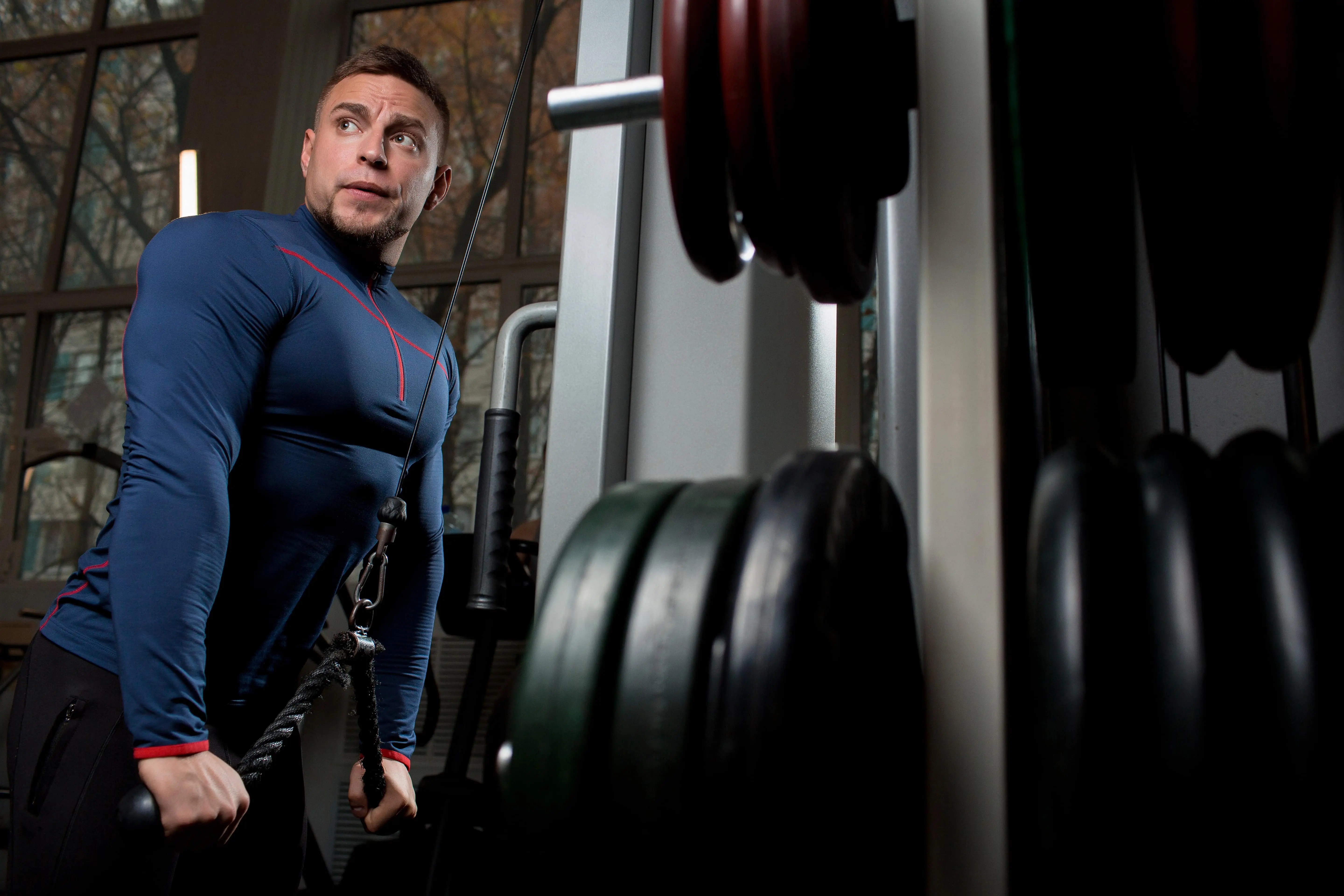 Wall Balls technique
Wall Balls is Hyrox's final station — proper technique and smart set breaks are the keys to finishing strong.
Wall Balls technique
Wall Balls is Hyrox's final station — proper technique and smart set breaks are the keys to finishing strong.
Weights by Division
Summary Table
| Station | Open M | Open W | Pro M | Pro W |
|---|---|---|---|---|
| SkiErg | 1000m | 1000m | 1000m | 1000m |
| Sled Push | 152 kg | 102 kg | 202 kg | 152 kg |
| Sled Pull | 103 kg | 78 kg | 153 kg | 103 kg |
| Burpee Broad Jump | 80m | 80m | 80m | 80m |
| Rowing | 1000m | 1000m | 1000m | 1000m |
| Farmer's Carry | 2×24 kg | 2×16 kg | 2×32 kg | 2×24 kg |
| Sandbag Lunges | 20 kg | 10 kg | 30 kg | 20 kg |
| Wall Balls | 100×6kg/3m | 75×4kg/2.7m | 100×9kg/3m | 75×6kg/2.7m |
Why Weights Matter
Train with actual race weights for at least the final 4–6 weeks. Many athletes underestimate:
- Sled Push 152 kg — feels genuinely heavy
- Farmer's Carry 2×24 kg — grip fails faster than expected
- Wall Balls 100 reps — the volume surprises people
Training Program for Hyrox Movements
4-Week Technique Phase
If you're new to Hyrox, start here before moving into race-specific prep.
Weekly Structure
| Day | Focus |
|---|---|
| Mon | SkiErg + Rowing technique |
| Tue | Rest |
| Wed | Sled Push + Pull technique |
| Thu | Rest or easy run |
| Fri | Burpee Broad Jump + Wall Balls |
| Sat | Farmer's Carry + Sandbag Lunges |
| Sun | Rest |
Sample Session (Monday)
SkiErg:
- 5×200m, technique focus
- 90 sec rest
- Focus: hip hinge
Rowing:
- 5×200m, technique focus
- 90 sec rest
- Focus: legs first!
6-Week Race Preparation
Once technique is solid, move to this program.
Weeks 1–3: Base Endurance
3× per week Hyrox movements:
- 2–3 sets per station
- Race weights or slightly lighter
- Focus on endurance
Weeks 4–5: Compromised Training
2× per week combination workouts:
Example A:
- 500m run
- 500m SkiErg
- 500m run
- 25 wall balls
- 500m run
- 50m farmer's carry
- 500m run
Example B:
- 500m run
- 50m sled push
- 500m run
- 50m sled pull
- 500m run
- 20 burpee broad jumps
- 500m run
Week 6: Simulation + Taper
Early week:
- Full Hyrox simulation
Late week:
- Easy movement only
- Rest before race day
Most Common Mistakes and How to Avoid Them
1. Not Training with Race Weights
Mistake: Training with lighter loads than you'll face in the race.
Consequence: The weights feel shockingly heavy on race day.
Fix: Use race weights for the final 4–6 weeks.
2. Neglecting Technique
Mistake: Focusing only on "surviving" each movement.
Consequence: You waste energy and time with inefficient patterns.
Fix: Train each movement individually with a technique focus.
3. Skipping Compromised Training
Mistake: Only training movements when you're fresh.
Consequence: The race reality catches you off guard.
Fix: Combine movements with running in every session.
4. Underestimating Wall Balls
Mistake: "100 reps, how bad can it be?"
Consequence: Complete collapse at the final station.
Fix: Train wall balls when tired, regularly.
5. Neglecting Sled Training
Mistake: No sled available, so it gets skipped.
Consequence: The sled stations cost disproportionate time.
Fix: Find a gym with a sled, or substitute with leg press.
FAQ
Which Hyrox station is the hardest?
For most athletes, Sandbag Lunges and Wall Balls, because they come late in the race when fatigue is highest. Research found that wall balls were rated as the most demanding station by athletes (Brandt et al., 2025).
Can I train without specialized equipment?
Yes, partially:
- SkiErg → no direct substitute, but you can build general endurance
- Sled Push → leg press, walking lunges
- Sled Pull → seated cable row, bent-over row
- Rowing → rowing machines are common in most gyms
- All other stations work with basic equipment
How long does it take to get race-ready for each movement?
Learning technique: 2–4 weeks with consistent practice. Reaching race readiness: 6–12 weeks depending on your starting point.
Do I need to train every movement every week?
Not necessarily. Focus on your weaknesses. If wall balls are your weak point, train them more often. If the sled feels strong, maintain that level.
What's the most important movement to train?
If time is limited, prioritize:
- Running — 50% of the race
- Wall Balls — last station and hardest
- Sled Push — heaviest individual station
Do I need gloves for Hyrox?
It's optional. Many athletes use gloves specifically for the Sled Pull because the rope can tear up your hands. Test them in training before race day.
How do I train the sled without a sled?
- Sled Push: Heavy leg press, walking lunges, isometric wall push
- Sled Pull: Seated cable row, bent-over row, face pulls, rope climb
Summary
Hyrox movements are straightforward to learn but take dedicated practice to master under race conditions. Here are the key takeaways:
Remember these:
- Technique saves energy — train each movement individually
- Use race weights — train at competition loads for the final weeks
- Compromised training — always combine movements with running
- Wall balls and lunges decide the race — they come when you're most fatigued
- Plan your strategy at every station — know exactly how you'll execute
- Break up your sets — especially wall balls, don't go unbroken and blow up
8 movements in training priority order:
- Running (50% of the race!)
- Wall Balls (hardest, comes last)
- Sled Push (heaviest station)
- Sandbag Lunges (legs are destroyed)
- Sled Pull (grip endurance)
- Farmer's Carry (200m is a long way)
- SkiErg (technique is crucial)
- Rowing (most familiar for most athletes)
Also check out our full guide on the Hyrox training program and Hyrox for beginners.
References
-
Brandt, M., et al. (2025). Acute physiological responses and performance determinants in Hyrox©. Frontiers in Physiology. PMC
-
Hyrox Official Website. (2025). Competition Standards. hyrox.com
-
Claudino, J.G., et al. (2018). CrossFit Overview: Systematic Review and Meta-analysis. Sports Medicine - Open, 4(1), 11. PubMed
-
Thompson, W.R. (2023). Worldwide Survey of Fitness Trends for 2023. ACSM's Health & Fitness Journal, 27(1), 9-18.
-
Seiler, S. (2010). What is Best Practice for Training Intensity and Duration Distribution in Endurance Athletes? International Journal of Sports Physiology and Performance. PubMed
Want a personalized training program for Hyrox? Join Tsemppi — the AI builds a custom plan that develops both your technique and endurance, tailored to your specific goals. Start your 7-day free trial today, no credit card required.


